


There are storms that pass through quickly — rain, wind, inconvenience — and then there are storms that sit with you. They linger. They make you listen. Hurricane Melissa was that kind of storm. Not just destructive, but unsettling in its intelligence. It gathered itself slowly, fed on warm water, stalled, strengthened, and then moved with intent. It didn’t rush. It chose its path. Black River felt it first. Westmoreland bore the brunt. Montego Bay watched it pass, knowing it had come close enough to remind us how thin the line really is.
Living through it wasn’t dramatic in a cinematic sense. It was quieter than that. More internal. The kind of fear that comes from waiting, from watching trees bend in ways they shouldn’t, from listening to roofs creak, from checking the same updates again and again while pretending you’re calm. It was the kind of fear that humbles you — because no amount of planning ever fully prepares you for nature when it decides to assert itself.
And yet, in the middle of that fear, something familiar surfaced. Not panic. Not hysteria. But reflection.
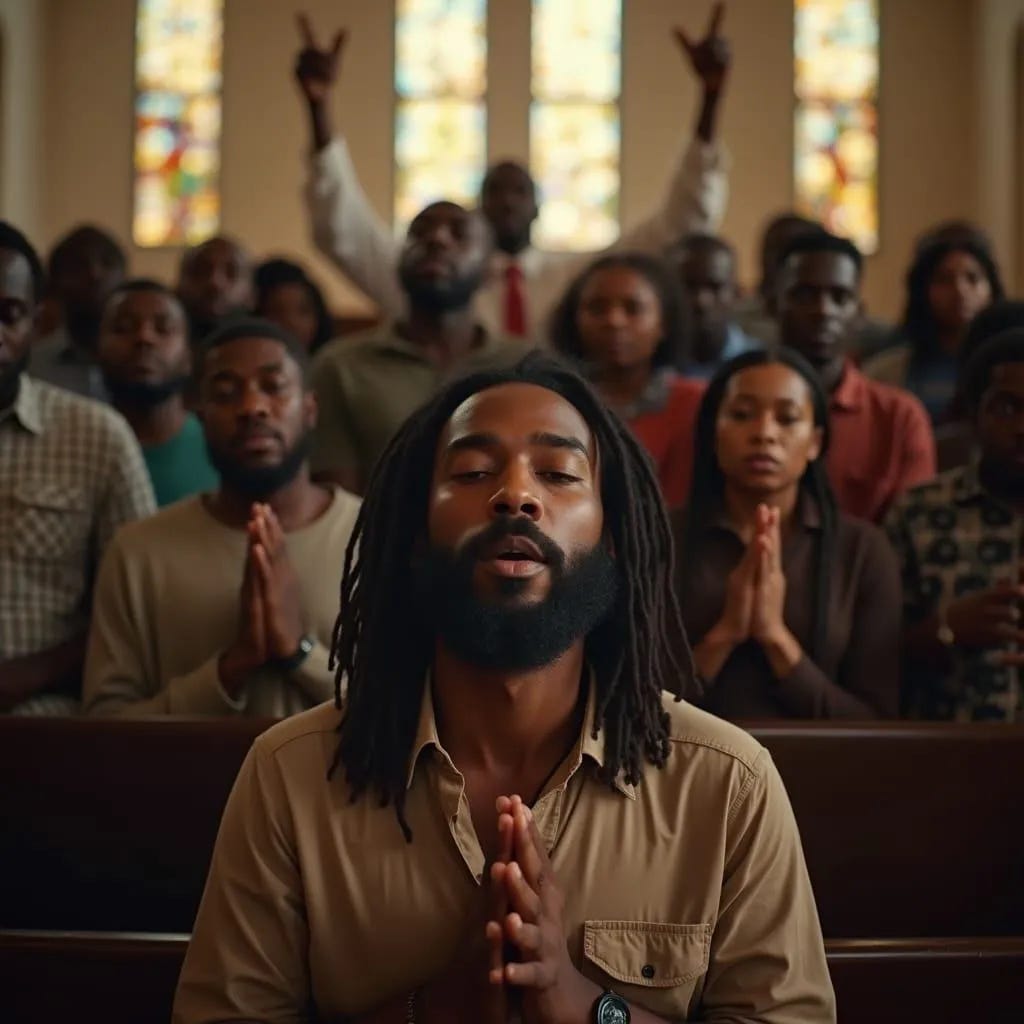
“Hear my cry, O Lord… when my heart is overwhelmed, lead me to the Rock that is higher than I.”
This isn’t about doctrine. It never really is in Jamaica. Faith here has always been less about labels and more about instinct. It’s cultural muscle memory. When things get hard, people pray — sometimes formally, sometimes angrily, sometimes quietly — but always honestly. Jamaica has always been spiritual long before it was organised. Long before churches had walls. Long before belief had rules.
It could have been worse. That’s not minimising damage; it’s acknowledging reality. Had the storm cut straight through the centre of the island — Kingston outward — the consequences would have been national, not regional. Shut down the capital and you don’t just interrupt traffic or offices; you interrupt coordination, decision-making, response. You interrupt the country’s nervous system. Or imagine the eye slicing clean across the island horizontally — from coast to coast — that would have rewritten history in a single night.
That didn’t happen.
Some will call it luck. Some will call it geography. Some will call it grace. Jamaica’s mountains don’t get enough credit. They break storms apart. They disrupt momentum. They weaken systems that look unstoppable on satellite images. The terrain doesn’t save us, but it softens the blow — enough to give us a fighting chance.
And that’s the thing about resilience. It doesn’t mean escaping damage. It means surviving it with enough clarity to learn something afterward.
“Resilience isn’t about pretending we’re strong,” Dean Jones once reflected.
“It’s about being honest about what breaks us — and still choosing to rebuild with intention instead of denial.”
This is where the storm stops being just a weather event and starts becoming a mirror.
Because storms don’t just expose weak roofs and poor drainage. They expose weak planning. Weak policy. Weak memory. They show us where we’ve built without respect — for land, for history, for water, for risk. They remind us that development without foresight is not progress; it’s postponed failure.
That’s especially true when we talk about land and property in Jamaica.
Real estate here has always carried weight. Emotional weight. Historical weight. Generational weight. Land is security. Land is identity. Land is inheritance. And yet, time and time again, we’ve treated it like a short-term commodity instead of a long-term responsibility. We’ve built where water wants to go. We’ve ignored flood plains because they were convenient. We’ve chased value without asking what that value costs when the rain doesn’t stop.
Land isn’t getting cheaper. It never really has. But storms force a harder question: what does “value” actually mean? Is it price per square foot, or is it resilience per generation?
“Every storm audits the country,” Dean Jones has said.
“Not just our buildings, but our thinking. It shows us whether we planned for the future or just borrowed against it.”
That’s the uncomfortable truth. Hurricanes don’t create problems — they expose them. They reveal the cracks we learned to live with. And once you’ve seen them, you can’t unsee them.
This moment — post-storm, post-shock — is not just about recovery. It’s about memory. About whether we choose to remember what this felt like when approvals are being signed, when developments are being rushed, when warnings are being dismissed as overreactions.
Optimism, the real kind, isn’t loud. It doesn’t deny risk. It doesn’t sugar-coat loss. Real optimism says: we can do better because now we know better. It believes that growth doesn’t have to be reckless, and progress doesn’t have to be fragile.
Jamaica has always found a way forward. Through storms, through scarcity, through systems that didn’t always serve its people. But forward doesn’t have to mean repeating the same mistakes with nicer language.
The cry that rises after a storm isn’t just spiritual. It’s civic. It’s generational. It’s a quiet demand that the future be built with more honesty than the past.
And maybe that’s the real lesson Hurricane Melissa left behind — not just damaged roads or flooded fields, but a reminder that resilience is not something you claim after survival. It’s something you design into the country you’re trying to become.