
 by
by 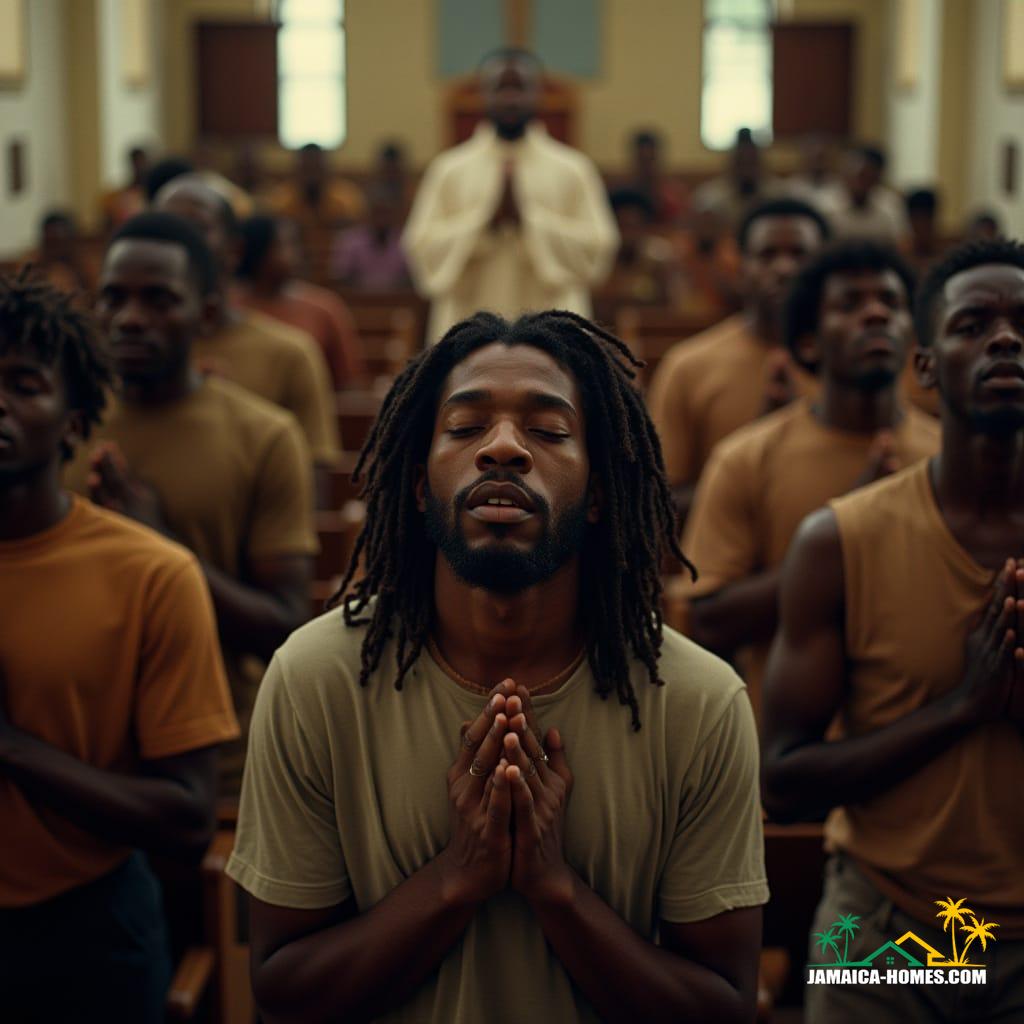
There’s something oddly mesmerising about watching a storm form — that slow ballet of cloud and sea, the delicate symmetry of destruction gathering shape. From a distance, the satellite image looks almost beautiful: a swirling masterpiece of physics and inevitability. But beauty takes on a different meaning when that spiral starts pointingPointing is when workers fill in the spaces between bricks or stones on a wall with a thick paste called mortar. This ma... More toward home.
Tonight, the name on everyone’s lips is Melissa. A storm, a threat, a moving force of air and heat and water that reminds us how small we are, and yet how deeply connected. The forecasters track her pathA path, in the context of Jamaica and real estate globally, refers to a route or passage that provides access from one p... More with precision, showing arrows and quadrants, left sides and right sides — the geometry of danger. But beneath all the graphics and pressure readings, there’s another conversation happening across JamaicaJamaica, with its vibrant culture and stunning landscapes, has a unique position in the global real estate market. The i... More: Can God turn this one around?
Because here, storms are not just weather systems. They are stories — tests of preparation, faith, and sometimes, divine intervention.
The Left, the Right, and the Eye of the Storm
Subscribe to Jamaica HomesJamaica Homes is a premier real estate company offering a comprehensive platform for buying, selling, and renting proper... More
Jamaica Homes is a reader-supported publication.
Jamaica Homes brings together peopleThe people of Jamaica embody a spirit that is at once richly diverse and unbreakably unified, as captured by the nationa... More, propertyProperty encompasses a wide range of tangible assets that individuals or entities can own, utilize, or invest in, includ... More, and place News, insight, and real opportunities—straight to your inbox.
Meteorology is, at its heart, a science of movement. In the Northern Hemisphere, hurricanesHurricanes, powerful tropical storms characterized by strong winds and heavy rains, significantly impact both Jamaica an... More rotate counter-clockwise, a grand gesture of planetary physics. This rotation means that the right-front side of a storm, the one leading its direction, packs the fiercest punch — the maximum winds, the surging tides, the violent gusts that rip roofs clean off. The left side, meanwhile, tends to be calmer — the so-called clean side, though clean is a relative term when the sea is rising and trees are bending.
So, by logic, being on the left side of the storm should bring some comfort. And yet, as anyone who’s lived through one knows, there’s little comfort in proximity to chaos. When the eye itself drifts over your town — when that eerie stillness arrives after hours of roaring wind — there’s a kind of deceptive peace. The air goes quiet. The birds return for a moment. People peek outside, almost forgetting what came before. Then, without warning, the second half comes — wind from the opposite direction, furious and wild, as though the world has changed its mind.
If you’ve never experienced it, it’s hard to explain: the smell of salt and soil, the sound of corrugated zinc vibrating like a drum, the sight of coconut trees bowing in submission. You can feel the atmosphere thicken — not just with humidity, but with anticipation. The air itself seems to hold its breath.
And somewhere in the middle of all that, people pray.
The Science and the Soul
The scientists, of course, would explain it in terms of barometric pressure and Coriolis forces. The eye forms because warm air rises, condenses, and rotates, creating a central calm — a kind of vacuum around which everything else rages. They can measure its width, predict its track, and estimate its landfall.
But in Jamaica, where the ocean is both neighbour and threat, people add a layer of meaning that science can’t quantify. There’s always talk that the storm might turn. That God might spare us. That what seems inevitable could still, somehow, change course in the night.
It’s easy for an outsider to dismiss that as superstition, but it isn’t that simple. Faith, here, isn’t blind optimism — it’s woven into the rhythm of survival. On an island that has endured centuries of trial — slaverySlavery in Jamaica, which began in the early 17th century following the island's colonization by the British, was a brut... More, earthquakesEarthquakes, natural events caused by the sudden release of energy in the Earth's crust, can have significant impacts on... More, political unrest, economic struggle — belief in divine intervention isn’t a sign of naïveté. It’s a declaration of resilience.
You can board up your windows, reinforce your roof, secure your goats and your generator. You can follow every instruction from the Met Office. But when the power cuts, and the only light left is from a trembling candle, you’ll still hear someone whisper, “God, turn it back out to sea.”
And sometimes, the storm listens.
The Mystery of Turning
Meteorologists talk about steering currents — invisible flows of air in the upper atmosphere that guide hurricanes along their tracks. A shift in those currents can make a storm veer off course, grazing instead of striking. They call it recurvature when a storm turns away from landIn real estate, land is a foundational element that significantly impacts the value and potential of a property. It enco... More.
But locals don’t call it recurvature. They call it mercy.
There have been nights when Jamaica braced for the worst, only to wake and find the sea strangely calm, the winds subsiding, the headlines reading, “Storm moves north.” And in those moments, a nation breathes a collective sigh that feels less like relief and more like thanksgiving.
Of course, not every storm turns. Some come straight for us, relentless. Roofs fly, rivers rise, and communities are torn apart. But even then, amid the wreckage, there’s a language of gratitude that feels almost paradoxical — people thanking God despite what’s been lost. The faith here is not transactional. It’s relational. It says: even if the eye widens, even if the wind rages, God is still God.
Faith and Preparation: A Dance Between Worlds
There’s an art to living in the path of hurricanes. It’s a choreography between preparation and surrender.
We check the forecasts. We know the quadrants. We calculate where the right side might fall, where the storm surge might rise, how wide the eye could be. The data matters — it saves lives. But beyond the data, there’s the matter of the human spirit.
Every JamaicanThe term "Jamaican" encompasses the citizens of Jamaica and their descendants in the Jamaican diaspora, representing a d... More household has its own version of the “storm routine.” Filling containers with water. Charging every phone and radio. Securing the car. Checking on the elderly neighbour. Saying a prayer. Singing a hymn. These acts blend science and spirit in equal measure — the rational and the sacred, side by side.
Because deep down, we understand something the satellites can’t capture: that our relationship with nature isn’t one of control, but of coexistence. The same sea that gives us fish and beauty can also rise up to test us. The same breeze that cools our skin can turn violent. We live on the edge of wonder and danger — and that edge keeps us humble.
When the Island Holds Its Breath
As Hurricane MelissaHurricane Melissa
(noun) Definition:
Hurricane Melissa is a historic and catastrophic tropical cyclone that struck... More edges closer, mapsMaps are essential tools that provide a visual representation of geographical and spatial information, each serving a di... More show her swirling eye — a pale circle roughly thirty miles across, surrounded by the fiery red bands of satellite intensity. To the untrained eye, it looks distant. But to islanders, every kilometre of shift matters.
In homes across Jamaica, there’s a quiet intensity. Radios murmur, children sleep uneasily, and elders recall storms long past — Gilbert, Dean, Ivan, Beryl. They remember how quickly fear can turn into awe, and awe into gratitude.
A pastor in ClarendonClarendon is a parish situated in central Jamaica, known for its diverse landscape that includes fertile plains and roll... More once said during a storm, “Faith doesn’t mean you won’t feel the wind. It means you’ll still sing when it passes.” That sentiment captures the spirit of this island. We don’t deny the storm. We face it, eyes open, hearts steady, hoping for the turn.
The ArchitectureArchitecture is the art and science of designing and constructing buildings and spaces that reflect cultural, functional... More of Hope
If you think about it, faith and architecture share something profound: both are about structure under pressure. A building must flex but not fall. A belief must bend but not break.
In the same way that a builder knows the integrity of a roof only after a storm, faith too is tested in the moments when the rain comes sideways and the lights go out. When the zinc sheets rattle like drums, when the radio crackles with updates, when you feel the walls tremble — that’s when you find out what’s been built inside you all along.
The people of Jamaica have built something remarkable in that regard: a collective resilience that doesn’t just survive storms, but grows through them. It’s in the neighbour who checks on you mid-tempest, in the church that becomes a shelter, in the child who laughs as buckets catch the leaks. There’s a kind of faith here that’s architectural — rooted, designed for weathering.
After the Eye
When the eye passes — if it passes — there’s always a moment of stillness. The kind that feels almost sacred. You step outside, cautiously, into that fragile calm. The air is heavy but quiet. You see broken branches, scattered leaves, the debris of life rearranged. And for a few minutes, it feels as if the island itself is exhaling.
Then the wind returns, from the opposite side. The noise resumes. The storm hasn’t finished speaking.
And yet, even as it rages, you know this: every storm eventually runs out of rain. Every wind, no matter how furious, willIn Jamaica, a will is a legal document created by an individual to specify how their assets, including their belongings ... More lose its breath. The question is never just if it will end, but what we will be when it does.
That’s where hope lives — not in the denial of the storm, but in the certainty that after it passes, we’ll rebuild, replant, and retell the story.
When God Turns the Storm
It’s said, almost casually here, that “God can turn the storm.” Some say it with conviction, others with quiet hope, others still with a shrug that says, we’ve seen it before. But beneath that phrase lies something profound: a belief in possibility, in mercy, in change.
Whether it’s a sudden shift in wind shear or a literal act of divine intervention, the result feels the same — deliverance. And when it happens, JamaicansJamaicans are a resilient and vibrant people with a deep-rooted history defined by courage, resistance, and cultural ric... More don’t just breathe relief; they give thanks aloud. Radios fill with praise. People say, “God good, eh?” And they mean it.
This is not a naïve faith. It’s the faith of a people who have watched nature both bless and batter them, and who have chosen, over and over, to believe in goodness.
The Calm Beyond
When Melissa finally drifts away — whether by God’s hand, by steering currents, or by the natural mercy of physics — there will be clean-up, reflection, and, inevitably, the retelling. People will recount where they were when the wind peaked, what they prayed, what they lost, what was spared.
And through those stories runs a single thread: that we are never fully in control, but we are never fully alone either.
The storms remind us that we belong to something larger — the weather, the world, and the quiet will of God. They humble us, but they also unite us.
So, as the winds rise and the nation holds its breath, we stand in that tension between fear and faith — the place where the meteorologist meets the mystic, and the island waits, still believing that maybe, just maybe, the storm will turn back to sea.
DisclaimerA disclaimer is a statement that serves to limit or exclude liability, usually found in legal documents, websites, produ... More:
The views and reflections expressed in this article are for informational and inspirational purposes only. While every effort has been made to ensure accuracy regarding Hurricane Melissa and Jamaica’s response, weather conditions and official updates may change rapidly. Readers are encouraged to follow guidance from the Meteorological Service of Jamaica, the Office of Disaster Preparedness and Emergency Management (ODPEMThe cornerstone of Jamaica's approach to disaster management is the Office of Disaster Preparedness & Emergency Mana... More), and other official authorities for the latest advisories and safety instructions. The spiritual and cultural perspectives shared here reflect personal and collective interpretations within Jamaica and are not intended as scientific or emergency advice.
Discover more from Jamaica Homes
Subscribe to get the latest posts sent to your email.
Discover more from Jamaica Homes
Subscribe to get the latest posts sent to your email.

Join The Discussion