
 by
by 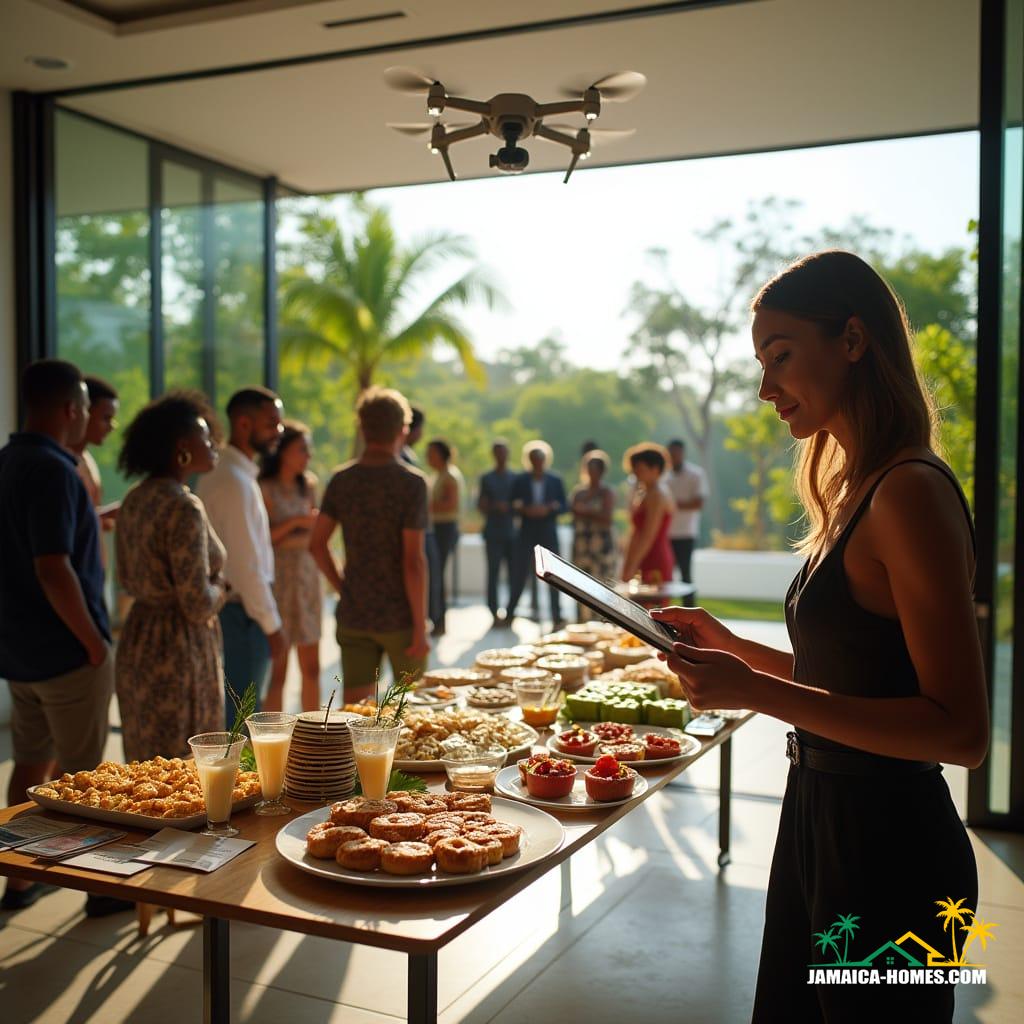
“Every yardIn Jamaican Patois, the term "yard" carries a special significance beyond its literal meaning of a plot of land. Traditi... More sign, every open door, only real ones survive the floor.” — inspired by Junior Reid’s License
Real estateReal estate refers to property consisting of land and the structures on it, such as buildings and homes. It also include... More has always had a rhythm — a pulse that beats to the desires of buyers and sellers. And if you listen closely, the story of the modern open houseAn Open House in Jamaica real estate is an event where a property for sale is open to the public, allowing potential buy... More is like a reggaeReggae is a genre of music that originated in Jamaica in the late 1960s, characterized by its distinct rhythm, offbeat t... More track: evolving, layered, and still carrying the weight of its roots.
In 2025, digital tools dominate. Buyers swipe through listings on apps, compare prices with AIArtificial Intelligence, or AI, is like a super-smart computer that can think and learn to do things humans usually do, ... More calculators, and tour homes virtually. But despite this high-tech world, open houses remain a cornerstone of propertyProperty encompasses a wide range of tangible assets that individuals or entities can own, utilize, or invest in, includ... More marketingThe process of determining, generating, and providing value to a target market in order to fulfill the demands of that m... More. Why? Because nothing replaces the feel of a home in person: the sunlight spilling into the kitchen, the breeze through an open window, the sense of space you can’t get on a screen.
The Wild West Era: Open Houses Were Born in Chaos
Imagine a time before licenses, before regulations — the early 1900s. A “Wild West era” of real estateIn Jamaican real estate, an estate refers to the total collection of assets and property owned by an individual, especia... More, where anyone could declare themselves a brokerIn the real estate world, brokers are essential intermediaries who help buyers and sellers navigate property transaction... More. If a home was for sale, dozens of signs could litter the lawn, each promising the best deal, each vying for attention.
Potential buyers had to navigate this chaos, picking agents by reputation, luck, or sometimes, throwing a dart at the signs. As Frederik Heller of the National Association of Realtors®The National Association of REALTORS® (NAR) is a globally respected organization representing real estate professionals... More described it, “The early 1900s were a sort of Wild West era for real estate brokerageBrokerage is the business of helping people buy and sell things, like houses or stocks. In real estate, whether in Jamai... More. PeopleThe people of Jamaica embody a spirit that is at once richly diverse and unbreakably unified, as captured by the nationa... More trying to make an honest living had to distinguish themselves from curbstoners.”
By 1910, the first recorded “open for inspection” events began. BrokersBrokers are licensed professionals who help connect buyers and sellers in various markets, most commonly in real estate.... More used exclusive contracts to gain access to properties, inviting the public to tour homes in a structured way. These early open houses lasted hours, sometimes days, and introduced buyers to modern conveniences like electric lighting and innovative kitchen layouts.
Evolution of the Open House

Through the decades, the open houseA house serves as a fundamental structure designed for residential living, providing shelter and a place for individuals... More transformed:
- 1925: Brokers began staging fully furnished homes.
- 1930s–1940s: AgenciesAgencies play a crucial role in Jamaica's development process, acting as the stewards and regulators of various aspects ... More grew, multiple agents could handle multiple listings.
- Post-WWII: Sunday became the standard open-house day due to “blue laws” and rising family demand.
- 1952: Creative incentives appeared — soft drinks, Cadillacs, and over 30,000 visitors for a single Dallas event.
Yet, even as technologyTechnology, in its original definition, refers to the application of scientific knowledge for practical purposes, often ... More surged forward, the core formula endured. Modern open houses, while sometimes lavish — with live bands, cocktails, or glow-in-the-dark parties — still revolve around the simple principle: let buyers experience the home for themselves.
Open Houses in 2025: The Pinnacle Example
Fast forward to The Pinnacle Open House in Montego BayMontego Bay, often referred to as MoBay, is one of Jamaica's most popular tourist destinations, known for its stunning b... More, held earlier this year. Over two Sundays, 180+ people attended, including local buyers, investors, and international visitors. This wasn’t just an event — it was an experience.
At the heart of it, The PinnacleThe Pinnacle can refer to both an ambitious modern real estate development in Jamaica and a historic site with deep cult... More Open House combined traditional hospitality with modern digital outreach, creating an engaging experience that made it one of the most talked-about property events of the year.
“Open houses are more than showings — they’re an opportunity to build trust, create excitement, and make connections that turn interest into offers,” says Dean JonesDean Jones is a chartered builder, project manager, licensed real estate professional and the founder of Jamaica Homes, ... More, founder of Jamaica HomesJamaica Homes is a premier real estate company offering a comprehensive platform for buying, selling, and renting proper... More.
From catered refreshments to professional staging, photography, and drone footage, the Pinnacle team ensured every detail mattered. And the results spoke for themselves: strong buyerA buyer is an individual or entity that acquires goods, services, or properties through a transaction, motivated by a ne... More engagement, social media buzz, and genuine sales leads.
Why Open Houses Still Matter
Even in 2025, when digital marketing is king, open houses offer unique advantages:
- Tactile Experience: Buyers see, touch, and feel the home. Screens can’t replicate sunlight, airflow, or spatial flow.
- Trust and Transparency: In-person events reduce doubts, showing honesty in staging and presentation.
- Networking & Buzz: Open houses create excitement, drawing in buyers who might not respond to digital listings alone.
- Sales Intelligence: Agents can gauge interest, collect feedback, and refine marketing strategies in real-time.
As Junior Reid might put it in a lyrical twist: “License fiFi in Jamaican Patois is a possessive term meaning "for" or "belonging to" and is essential in expressing ownership or a... More show di"Di" is one of the most frequently used words in Jamaican Patois, serving as a definite article similar to the English w... More home, real ones step in di zone. Tech nahMeaning: "Nah" is a common Jamaican Patois term meaning "not" or "no," often used as a negation in response to a questio... More replace di tone, only touch mek it known.”
The Costs and Planning of a Modern Open House
While open houses are effective, they can be resource-intensive. Sellers must account for:
- Catering and refreshments
- Printed materials (flyers, brochures, signage)
- Professional services (photography, drone coverage, event staff)
- SecurityIn Jamaican real estate, security refers to assets pledged to back a loan or financial obligation. Typically, the proper... More and crowd management
- Venue rental, if necessary
To simplify planningPlanning in Jamaica involves managing land, resources, and infrastructure to support economic growth, social development... More, JamaicaJamaica, with its vibrant culture and stunning landscapes, has a unique position in the global real estate market. The i... More Homes launched the Open House Budget Planner. This free, online tool calculates costs based on guest numbers, catering, services, and venue needs. UsersIn Jamaica's real estate market, as in the rest of the world, "users" refer to the individuals or entities interacting w... More get instant breakdowns by category, making budgetingBudgeting for a project, like building a house or a building, means making a plan for how much money you’ll need and h... More transparent and stress-free.
Dean Jones explains:
“Open houses are powerful, but they must be planned strategically. The budget planner ensures sellers know what they need, so nothing is overlooked.”
Merging History with Modern Strategy
The evolution from Wild West chaos to today’s sophisticated events mirrors the evolution of the real estate industry itself:
- Early 1900s: Anyone could sell, competition was chaotic.
- 1910s–1950s: Open houses became structured, staged, and focused on buyer experience.
- Today: Open houses integrate digital marketing, social media, and data-driven planning tools like Jamaica Homes’ budget planner.
And just as Junior Reid celebrates authenticity and “holding license,” modern agents must respect the craft, the rules, and the buyer’s experience.
Tips for Hosting a Successful Open House in 2025
- Plan Early: Use tools like the Open House Budget Planner to outline all costs.
- Leverage Digital: Promote the event on social media, email lists, and property platforms.
- Create Experience: Staging, refreshments, and ambiance matter.
- Collect Feedback: Engage visitors with sign-ins and surveys to follow up efficiently.
- Safety First: Include security if expecting high-profile or large crowds.
As Jones notes, it’s about blending technology, professionalism, and hospitality — a formula that has worked for over a century and continues to evolve.
The Beat Goes On
Open houses are the heartbeat of real estate marketing. From the chaotic Wild West era to the digital era, their rhythm remains: show, engage, connect, and sell.
The Pinnacle Open House proved that even in 2025, when apps and virtual toursVirtual tours are like taking a walk through a place using your computer or phone, without actually being there. Imagine... More dominate, nothing replaces real people in real spaces, experiencing a home for themselves. And with tools like the Open House Budget Planner, agents and sellers can plan smarter, reduce riskA risk is the possibility of an adverse outcome or loss arising from uncertainty or potential hazards. It represents the... More, and elevate the buyer experience.
In a sense, the story of open houses is like a reggae track — it moves with the times, layers experience and rhythm, and resonates with anyone who cares to listen.
“Open house, fi real estate license… only the real ones make di buyers dance,” Dean Jones might say, echoing Junior Reid’s spirit and showing why strategy and authenticity never go out of style.
Try it yourself: Open House Budget Planner
Support Jamaica Homes
Clear, independent information helps people make better decisions about buying property, living in Jamaica, and understanding the housing market. We value whatever you can spare, but a monthly contribution makes the biggest impact, helping us continue creating guides, insights, and resources for JamaicansJamaicans are a resilient and vibrant people with a deep-rooted history defined by courage, resistance, and cultural ric... More and the diasporaIn the context of Jamaica, real estate, and the broader global sphere, diaspora refers to the community of Jamaicans liv... More. Thank you.
Discover more from Jamaica Homes
Subscribe to get the latest posts sent to your email.


Join The Discussion