


The Landscape of Memory
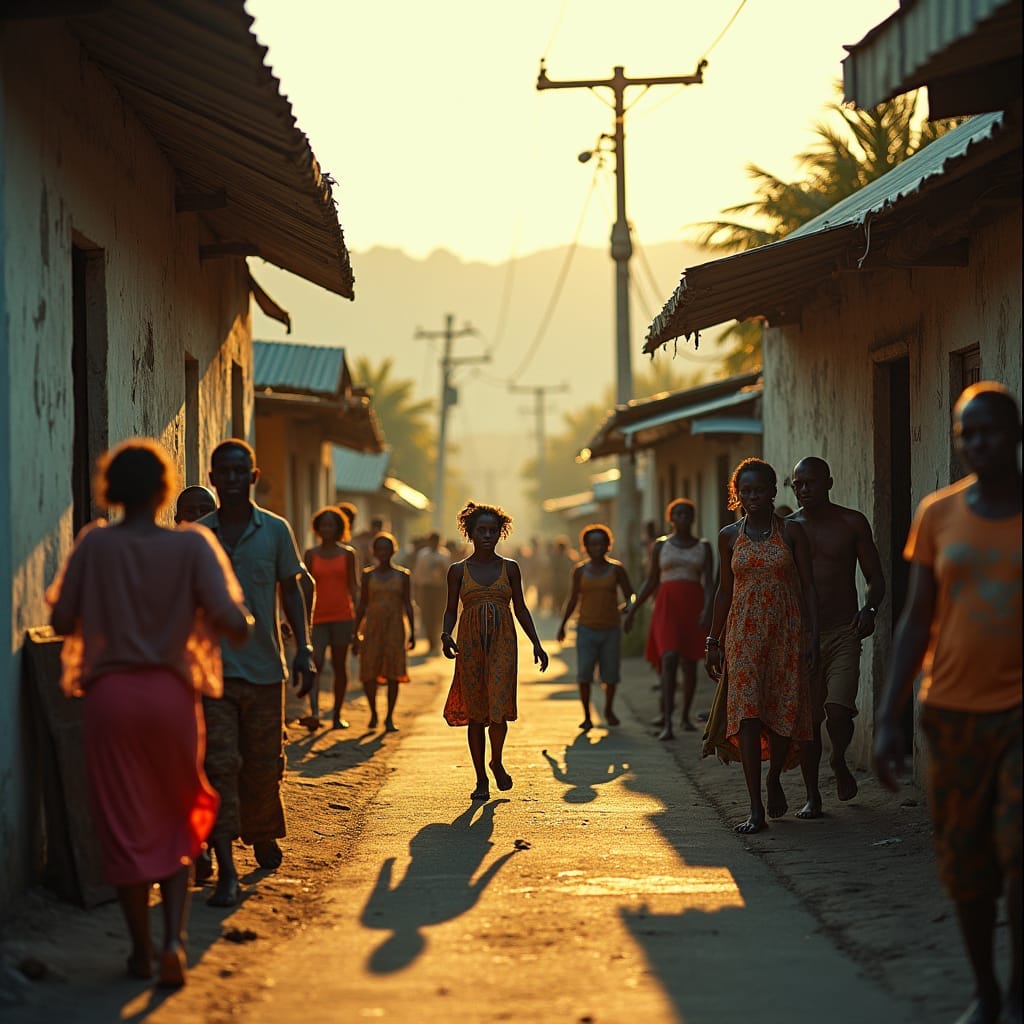
Every nation has its soul, and Jamaica’s is not easily described. It is felt—in the rhythm of its music, the pulse of its people, the taste of sugar cane cracked fresh in the fields, and the hush of the Caribbean night pierced only by the hum of crickets and the flicker of fireflies. For me, Jamaica has always been more than home—it has been a canvas upon which my life was first sketched.
As a child, freedom was my constant companion. I ran barefoot through the bush in St. Catherine, the dust warm beneath my feet. I played with chickens, to their annoyance, sometimes tugging at their eyes with the innocent cruelty only children can muster. Once, a cow gave chase—an unforgettable reminder that nature often wins. Yet these moments, equal parts peril and play, formed my first understanding of the world: that it is alive, unpredictable, and beautifully untamed.
Life was stitched together by such fragments of memory—floating on a car tyre in Hellshire, eating fried fish and festival, traveling home in the dark with “peniwhilies” bottled beside me like stolen stars. Catching lizards with twigs, racing them as though the outcome mattered. These small adventures were the blueprint of who I would become.
The Island’s Past: Roots That Refuse to Break
Jamaica’s history is one of contradiction: pain and triumph, oppression and resistance. From the Maroons who defied conquest to the enslaved who carved culture out of suffering, the island has always been defined by resilience.
In my childhood, that history was not taught through textbooks but through experience. Traveling to St. Mary and eating bananas fresh from the land was more than hunger’s remedy—it was communion with the soil that had sustained generations. Visiting Maroon Town was more than a family trip—it was a pilgrimage to strength, to the bloodline of defiance.
Folklore whispered through the night: Anancy tales spun with laughter, stories of rolling calf told by elders to keep us indoors. These were not just stories but moral compasses, cultural signposts that reminded us who we were and where we had come from.
The Jamaica of Now: A Nation in Balance
Today, Jamaica is both deeply familiar and constantly changing. The sounds of the island remain—the laughter, the music, the ever-present chatter of life—but new rhythms have joined the chorus. Technology, connectivity, and globalization are pressing in, demanding adaptation.
Yet even as the world accelerates, some truths remain. Politics is still punctuated by loyalty to colour. Nepotism still whispers its influence. And the diaspora—millions strong—still gazes homeward with longing, wondering if the time has come to return.
Jamaica stands, I believe, at a threshold. The question is not whether we can grow, but how.
Do we modernize without losing our essence?
Can we create a Jamaica where opportunity is real, not rhetorical?
Can the island embrace the talent and investment of its diaspora while also nurturing the dreams of those who never left?
The future depends on these answers.
Reimagining What Jamaica Could Be
To dream of Jamaica’s future is to engage in a daring act. It requires courage, because vision often collides with reality. But vision is essential.
I see a Jamaica where community is at the heart of design—where houses are not just shelters but homes, where streets are not just roads but connections. A Jamaica where renewable energy lights our nights, where digital systems streamline life instead of stifling it, where opportunities are as abundant as our beaches.
And at the centre of this vision is the diaspora, whose longing for home must be met with more than sentiment. We need systems that welcome them back—policies, processes, pathways to invest, to build, to belong. For Jamaica is not just an island; it is an idea, scattered across the world yet anchored in the Caribbean.
What Makes Someone Jamaican?
It is tempting to define nationality by paperwork and passports, yet Jamaica resists such simplicity. To be Jamaican is not merely to hold a birth certificate. It is to carry the cadence of the island in your speech, to understand that hardship can be laughed at, and to dance even when life insists on sorrow.
In America, citizenship can be earned through participation in its system. In Jamaica, belonging is deeper, less transactional. Even those who have not set foot on the island in decades still claim it with fierce pride. To be Jamaican is to belong to a culture so magnetic it cannot be shaken off, no matter how far one roams.
Lessons From Childhood
When I look back at my childhood, it feels like a curriculum designed by the island itself.
Community taught me that success is shared. Neighbours, churchgoers, friends—life was collective.
Resilience was learned not from books, but from plucking chickens at ten years old and preparing them for market.
Imagination flourished in the simplest of things—sticks, bottles, lizards. Where there were no toys, we invented them.
Freedom came in barefoot sprints, in sea breezes, in the salty taste of festival by the beach.
Those lessons were not trivial; they were formative – and a deliberate act by my parents to ensure i knew my roots. They prepared me for the realities of adulthood, for business, for vision. They prepared me for real estate, projects and business.
Real Estate: Building the Jamaica We Want
If the island is at a threshold, then real estate is the doorway. The spaces we build today will determine the kind of Jamaica that exists tomorrow.
I have come to see real estate not simply as transactions of land and property, but as architecture of identity. Each home is a story, each development a statement of what we value as a nation. Do we value affordability? Then let us create homes ordinary Jamaicans can aspire to. Do we value sustainability? Then let us build with care for our environment. Do we value community? Then let us design neighbourhoods that foster connection, not isolation.
For the diaspora, real estate is a way back in—a way to invest in the island, to contribute to its growth, to root themselves once more in the soil of their ancestors. For young professionals, it is a step toward independence. For families, it is security.
The future of Jamaica will be built—literally—brick by brick, policy by policy, dream by dream. And I intend to play my part in shaping that landscape.
Closing Reflection
Jamaica, to me, is a memory, a reality, and a vision all at once. It is barefoot runs through the bush, it is the hum of sound systems in the night, it is the determination of a people who have always refused to be small and pushed into a corner.
We are bigger than our size, greater than our struggles, and richer than our resources suggest. But we must act with courage, imagination, and purpose.
The homes we build, the communities we design, the opportunities we create—these will tell the story of the Jamaica yet to come. And if we dare to do it right, that story will be as remarkable as the memories that shaped me, and as powerful as the dreams that still lie ahead.