


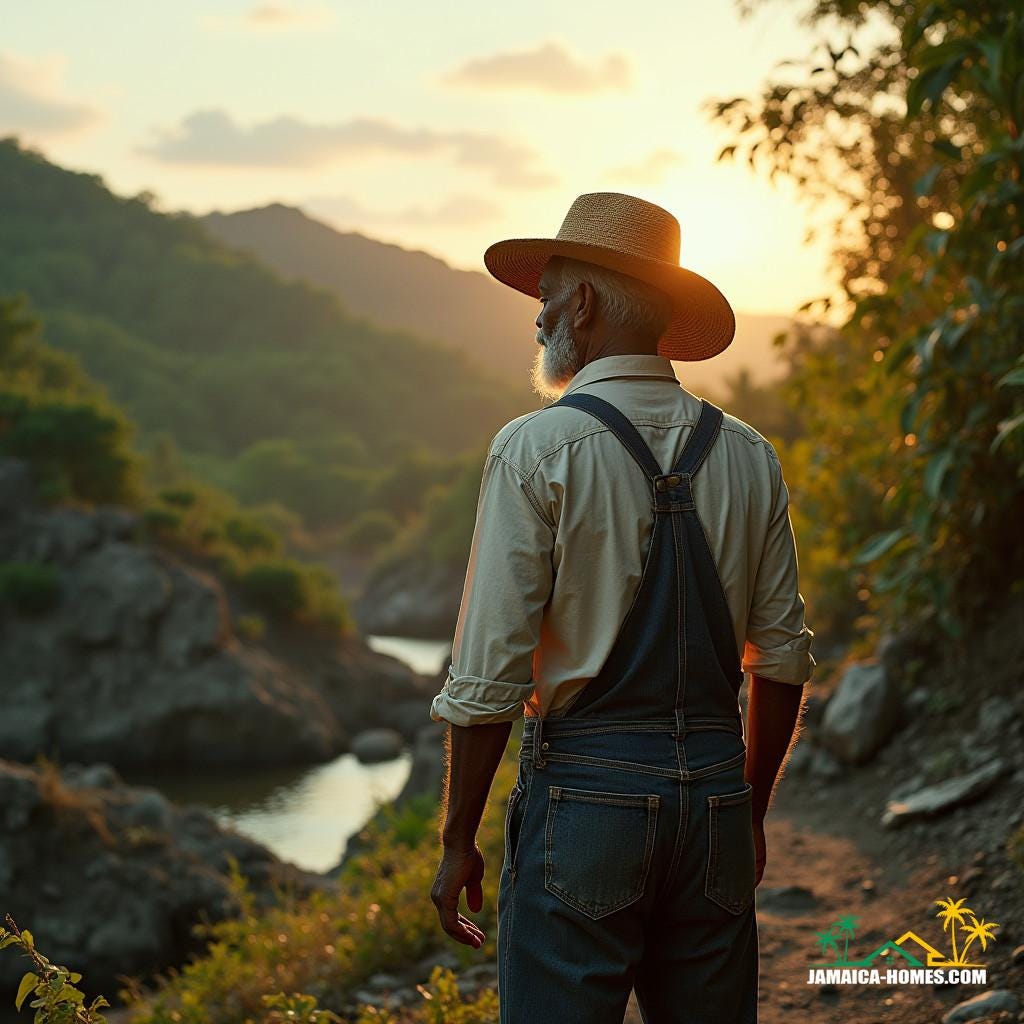
There are some songs that do more than entertain; they seem to echo across time, threading themselves through the veins of a people scattered far from home. When Mikey Spice sang “I Am… I Said”, he captured the paradox of the Jamaican abroad—caught between the familiarity of foreign streets and the lingering ache of a homeland carried deep inside. For every Jamaican who has ever gazed out of a window in London, New York, Toronto, or Los Angeles, the words strike a nerve: here is life, but it is not home.
This sense of displacement—of being lost between shores—shapes the way many in the diaspora dream of Jamaica. It is why, despite building lives in distant lands, the call to return manifests not only in family visits and cultural festivals but also in real estate. A house, a piece of land, a patch of soil in Jamaica is more than property; it is the anchor that moors us to identity.
Dean Jones, founder of Jamaica Homes and Realtor Associate at Coldwell Banker Jamaica Realty, has long said that buying in Jamaica is not simply a financial transaction, but an act of reclaiming connection. “When we invest in Jamaican real estate,” he explains, “we’re not just buying walls and roofs. We’re investing in memory, heritage, and the future of our families.”
The Diaspora’s Song of Return
Diasporic Jamaicans know the strange dissonance of belonging everywhere and nowhere. Abroad, opportunity abounds, but the rhythm of life feels different—measured in subways and skyscrapers rather than sea breezes and the soft call of the market woman at dawn. The song captures this ache, reminding us that even while life may be fine overseas, it never truly feels like home.
This emotional tug has fueled one of the strongest trends in Jamaican real estate over the last fifty years: the returnee market. Generations who left in the 1950s, 60s, and 70s to build lives in the UK, US, and Canada are now turning their eyes back toward the island. Their reasons go far beyond economics. For many, a house in Jamaica represents healing, belonging, and permanence.
History itself explains this impulse. Our people were displaced centuries ago, taken from Africa, then shaped by colonial legacies that fragmented family structures and land rights. The Jamaican psyche is one that understands loss deeply—but also resilience. Perhaps this is why ownership in the land of one’s birth carries a special kind of weight: it feels like reclamation.
Real Estate as Legacy
The decision to buy a home in Jamaica is not made in isolation; it is a continuation of a historical narrative. Every deed, every key turned in a lock, is a statement: I belong here, still.
For the returnee, a house becomes more than shelter. It becomes the embodiment of a family’s legacy. Dean Jones often reminds his clients that Jamaican real estate, whether a townhouse in Kingston, a villa in Montego Bay, or a modest family home in St. Elizabeth, has a value that transcends the market. “A home in Jamaica holds stories,” Jones reflects. “It’s where family recipes are cooked again, where children learn Patois naturally, and where generations reconnect with the soil that once cradled their ancestors.”
This is why the emotional pull of songs like I Am… I Said continues to resonate. They capture the void one feels when roots are stretched too thin. And owning a piece of Jamaica is one way to fill that void.
Between Loneliness and Belonging
There is a poignant line in the song about speaking into silence, about words that fall unheard. That is the loneliness many in the diaspora confess to feeling. In foreign lands, accents are misheard, traditions are exoticized, and cultural pride is sometimes mistaken for otherness. But when one stands on Jamaican soil, there is no need for explanation. Here, the patter of rain on zinc, the chatter of vendors, the rhythm of a drumline—these are all reminders that one is not alone.
A home amplifies that feeling. It gives permanence to belonging. No longer does Jamaica exist only as a memory in the heart; it becomes tangible—a veranda, a mango tree, a view of the Blue Mountains. That permanence is priceless.
The Practical Side of the Dream
Of course, dreams must meet reality, and real estate is also a practical investment. Jamaica’s property market has shown consistent growth, driven by tourism, infrastructure development, and increasing interest from both local and overseas buyers. Areas like Kingston’s business districts, Montego Bay’s coastal enclaves, and the emerging markets in St. Ann and Portland continue to attract attention.
Dean Jones emphasizes that while emotional connections bring Jamaicans abroad to the table, the financial returns keep them there. “The Jamaican real estate market has proven resilient,” Jones notes. “Whether through rental income, property appreciation, or long-term family planning, the island continues to reward those who invest in it.”
For those who left Jamaica decades ago, investing now is also about securing the future for children and grandchildren. It ensures that generations to come will have not only a cultural connection but also a tangible inheritance rooted in the island.
A People Shaped by Island and Song
To understand why buying a home in Jamaica matters, one must understand the people themselves. Jamaicans are not easily defined. We are a people of paradox: shaped by hardship but exuberant in joy, forged in displacement but deeply rooted in belonging, global in presence but fiercely national in pride.
Music has always been the vessel for this complexity. From the drumbeats of Africa to the reggae rhythms that conquered the world, and even in the soulful covers of ballads like I Am… I Said, Jamaicans have expressed their yearning, resilience, and hope through song. That is why real estate—land, home, soil—becomes more than economics. It is cultural, spiritual, and profoundly personal.
The Call to Come Home
For those abroad who feel caught between two shores, buying in Jamaica is more than a financial move—it is a return to the self. The act of walking through your own gate, tending to your own garden, or simply hearing crickets in the night instead of sirens on a city street is transformational. It bridges the loneliness.
Dean Jones sums it up best: “Every key handed over is more than a sale—it’s a homecoming.”
And so, just as Mikey Spice gave voice to that aching space between where we are and where we belong, Jamaicans abroad continue to respond not only in song but in action. Through real estate, they root themselves again, ensuring that Jamaica is not just in the heart but underfoot, lived, and loved.
Because at the end of it all, Jamaica is not a place we ever truly leave. It is the chorus that follows us, the rhythm that shapes us, and the soil that waits patiently for our return.
Disclaimer: This blog is for informational purposes only and does not constitute financial or legal advice. Interested buyers should consult with a licensed realtor and attorney in Jamaica before making property decisions.