


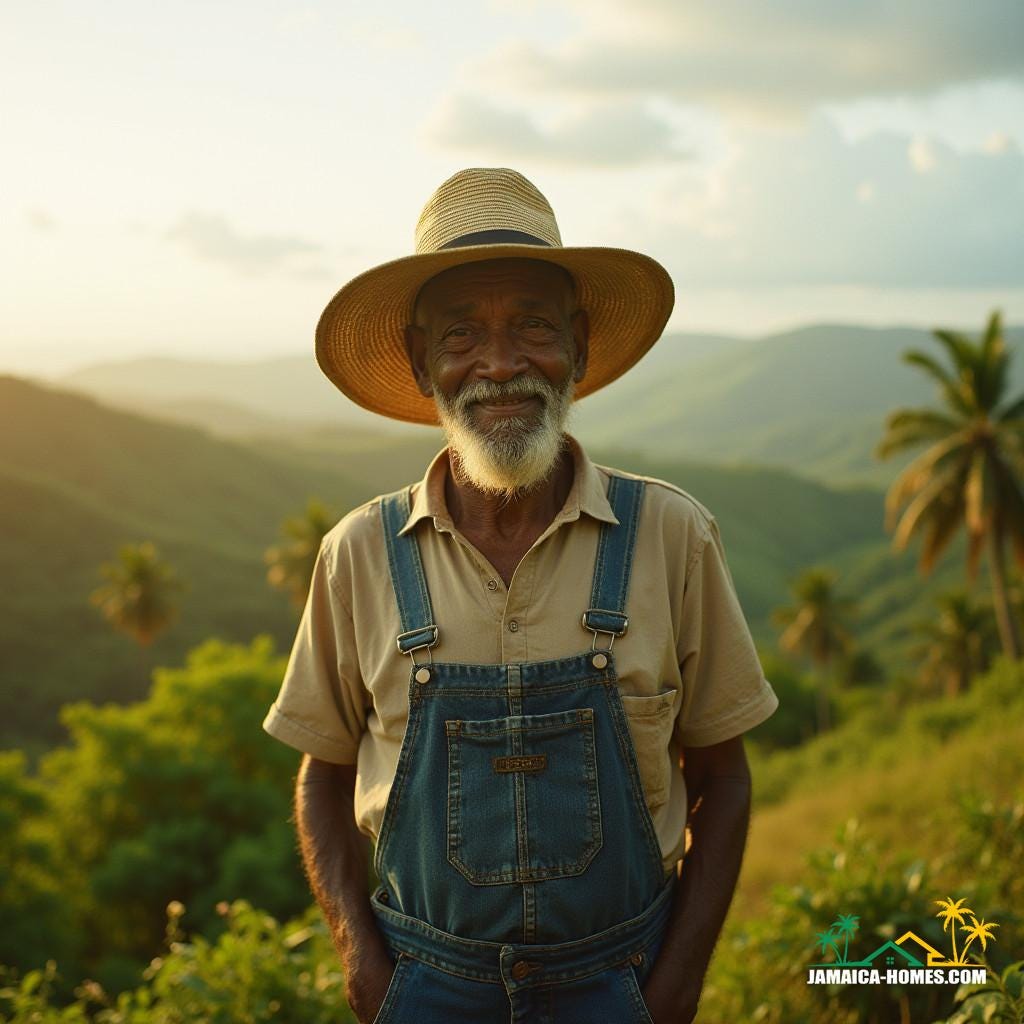
“Nanny didn’t just fight for freedom. She fought for land. And to this day, we dishonour that legacy when we let that land go to waste.” — Dean Jones
Across the winding hills of St. Mary, the red dirt paths of Portland, and the sun-drenched plains of Clarendon, there are stories buried in the soil—of courage, migration, hardship, and above all, ownership. As a direct descendant of the Maroons, and as someone who has walked many of these ancestral lands, I understand that what we possess beneath our feet is more than property—it is power, provision, and protection.
This article is a call—not just to buy land, but to reclaim, protect, and invest in the future of Jamaica. It’s for those in Jamaica, and those abroad whose bloodlines trace back to it. If you have roots here, then this message is for you.
The Land That Tells Our Story
Land in Jamaica is not just dirt and stone. It tells a story. It carries the echoes of freedom fighters, the toil of returning migrants, and the hopes of those who laboured abroad, sending barrels home to help their families survive and build. And yet, today, much of that land is being lost—not to foreign investment per se, but to neglect.
Thousands of Jamaicans—both here and in the diaspora—are sitting on inherited land, sometimes 10, 20, even 100 acres, with little to no engagement. Titles are stashed in safes, sometimes taxes go unpaid, and in many cases, no one visits. Squatters move in. After 12 years, if they’ve made the land their home and followed the legal process, they can claim adverse possession. The land is gone. Just like that.
“We’re sitting on gold mines, and yet we behave like it’s garbage heap. It’s time to dust off the title deeds and wake up.” — Dean Jones
A Crisis of Disconnection
For many, land was left behind for emotional reasons. Abuse, neglect, trauma—sometimes people fled their childhood homes in the country and never looked back. But the cost of not returning is steep. Over the years, I’ve come across situations where large plots of land, often inherited and left idle for some time, become occupied without the owner’s knowledge. In one case, when the land was finally inspected, multiple families had settled there and constructed several structures — a stark reminder of what can happen when land goes unmanaged or unmonitored.
These situations are not rare. They are increasing. And the sad truth is, once land changes hands through adverse possession, the emotional and financial battle to reclaim it can be overwhelming—if not impossible.
A Market on the Move: The Facts
Let’s look at where the Jamaican real estate market is heading, because this isn’t just about heritage—it’s about economics.
Demand is rising. In 2024, property demand in Jamaica surged by 15%, particularly in areas like St. Catherine, St. Elizabeth, and St. Thomas, where infrastructural investments like highways and tech parks are underway.
Foreign investment is booming. Chinese infrastructure investments, coupled with returning diaspora buyers and increased interest from North America and Europe, are pushing up land prices.
Inventory is shrinking. The saying goes: “Buy land—they’re not making any more of it.” That is especially true in Jamaica. With coastline developments and urban sprawl increasing, accessible land is becoming scarce.
Prices are rising. Between 2018 and 2024, land values in areas like Mandeville, Spanish Town, and Montego Bay have risen by up to 50%.
So what does this mean? It means if you’ve been putting off that land purchase or ignoring that inheritance—you’re losing money and legacy by the day.
A New Mindset: Collaboration Over Competition
Ownership doesn’t always have to be solo. In fact, some of the most powerful examples of generational wealth in Jamaica come from collective investment.
Let’s say five family members each invest JMD $5 million. Together, they purchase three to four acres in the country. Over time, each builds their own home, little by little. As each home is completed, the value of the area increases. Infrastructure is added. The result? That $25 million property could easily become worth $100 million or more in a decade.
“There are many roads to wealth, but land is the one road paved with generational impact.” — Dean Jones
This collaborative approach can take the sting out of high upfront costs. It can unite families. It can reclaim entire districts. And it’s being done, quietly, across the island.
But we need more of it.
The Global Jamaican
This isn’t just a local issue. Jamaica’s strength lies in its people, scattered across the globe. The Windrush Generation, our Jamaican-British, Jamaican-Canadian, and Jamaican-American relatives—many of whom have retired with wealth, want to reconnect with the island. They built lives abroad with sweat and sacrifice. They paid off mortgages in 10 years, sometimes less. Their grit is unparalleled.
But now, many of their descendants are disconnected from Jamaica, seeing it only as a holiday spot. That must change.
If your grandparents were Jamaican and migrated abroad for your betterment—don’t let their legacy rot in the bush. Get involved. Visit. Ask about the family land. Look into the title. Pay the taxes. Reinvest in what is rightfully yours.
Let’s not forget: many foreigners are now buying land and building second homes in Jamaica. That’s fine. We welcome investment. But don’t let outsiders see the value before you do.
What Needs to Happen Now
Investigate what you own.
Talk to your elders. Search old trunks. Visit the National Land Agency (NLA). You might be surprised at what turns up.Pay the taxes.
Even if you’re not building yet, keeping the taxes current can save you from costly legal fights down the line.Survey the land.
Get a certified surveyor’s report. Many families know they “have land” but have no idea where it begins or ends.Build collaboratively.
Use partnerships to split costs. You don’t have to be rich to own land—just smart and organized.Guard your legacy.
Post signage. Visit regularly. Fence if you can. Show that someone is watching. Adverse possession loves neglect.Get legal advice.
Talk to an attorney to ensure your name is on the title or find out what’s needed to claim or transfer ownership legally.
Don’t Wait. Stake Your Claim.
Land is power. It’s stability. It’s legacy. And Jamaica is one of the last places on Earth where you can still own lush, fertile land at relatively affordable prices.
Don’t wait for a foreigner to show you the value of your own country. Don’t wait for the price to triple. Don’t wait until the only thing left is the memory of what once was.
The best time to buy land in Jamaica was 20 years ago. The second-best time is now.
The worst time? When you’re standing in front of a sold-out sign, bawling and saying, “Mi did a go buy it, man!”
You’ve been warned. Don’t cry later.
Prices are rising, demand is heating up, and guess what?
No more land is being made.
Own a piece of history. Leave a legacy.
Stake your claim—before someone else does it for you.
Final Words
Jamaica is ripe for transformation—but it must be a transformation led by its people. Whether you live in Kingston or Canada, Montego Bay or Miami, this is your home. If you’ve been away for a long time, it’s not too late. Return. Reinvest. Reclaim.
Let us honour our ancestors—not just in speech or song—but through action. Let us build a Jamaica where ownership is widespread, wealth is generational, and our people live with pride and purpose.
Because land is not just land. It is who we are. And who we choose to become.
If you want help finding, reclaiming, or securing land in Jamaica, visit Jamaica Homes and take the first step to building your legacy today.