

Reimagining Jamaica’s Church Buildings: Preserving Heritage While Embracing Innovation

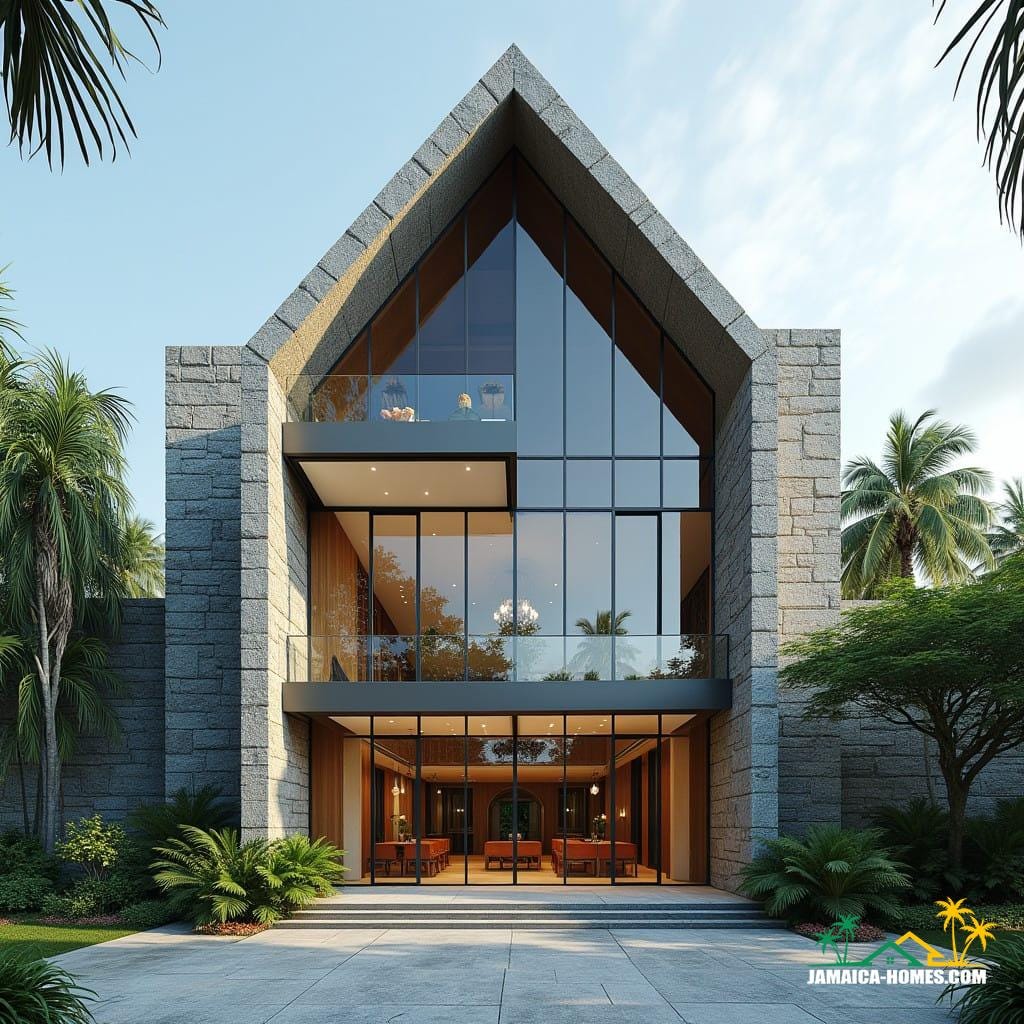
Church leaders across the world including Jamaica are being urged to reimagine the future of their church buildings, as a global wave of church property transitions intensifies. According to the book Gone for Good? Negotiating the Coming Wave of Church Property Transition, as many as 100,000 church-owned buildings worldwide may be sold or repurposed by 2030. While Saturday and Sunday attendance in some regions has rebounded partially from the COVID-19 pandemic, decades-long declines in participation have left many congregations struggling to maintain underutilized and costly properties around the world.
A report from the Hartford Institute for Religion Research highlights that the financial pressures on churches have only worsened in the post-pandemic economy. Jamaican churches, many of which are pillars of their communities, are not immune to these challenges. The upkeep of large sacred spaces, rising costs, and years of deferred maintenance have left many congregations grappling with difficult decisions. “We keep going by the grace of God, but it’s an issue,” said Jainine Gambaro of Franklin Reformed Church, reflecting sentiments that could resonate with many Jamaican churchgoers.
At a conference organized by Princeton Theological Seminary, church leaders, including real estate experts, shared strategies for reimagining church buildings. Suggestions ranged from turning community needs into grants, partnering with developers, and creating business-driven income streams to sustain ministry. Lindsay Baker, CEO of the International Living Future Institute, encouraged leaders in the USA to take advantage of new funding opportunities like the federal Inflation Reduction Act, emphasizing, “There is a lot of money for you all right now, and that’s not always the case, so that’s exciting.”
The idea of incorporating social enterprises—using business principles to address social issues while generating revenue—was a key focus. Churches worldwide have successfully revitalized their finances and missions by leasing spaces for community activities, commercial uses, and innovative partnerships.
Dean Jones, founder of Jamaica Homes, added a thoughtful perspective: “In Jamaica, churches are more than places of worship; they are community anchors. By reimagining these spaces, we have the chance to honor their heritage while addressing pressing social and economic needs. Imagine a church doubling as a daycare, a community resource hub, or a training center for young entrepreneurs. These kinds of transformations can breathe new life into our communities and ensure that these buildings remain beacons of hope.”
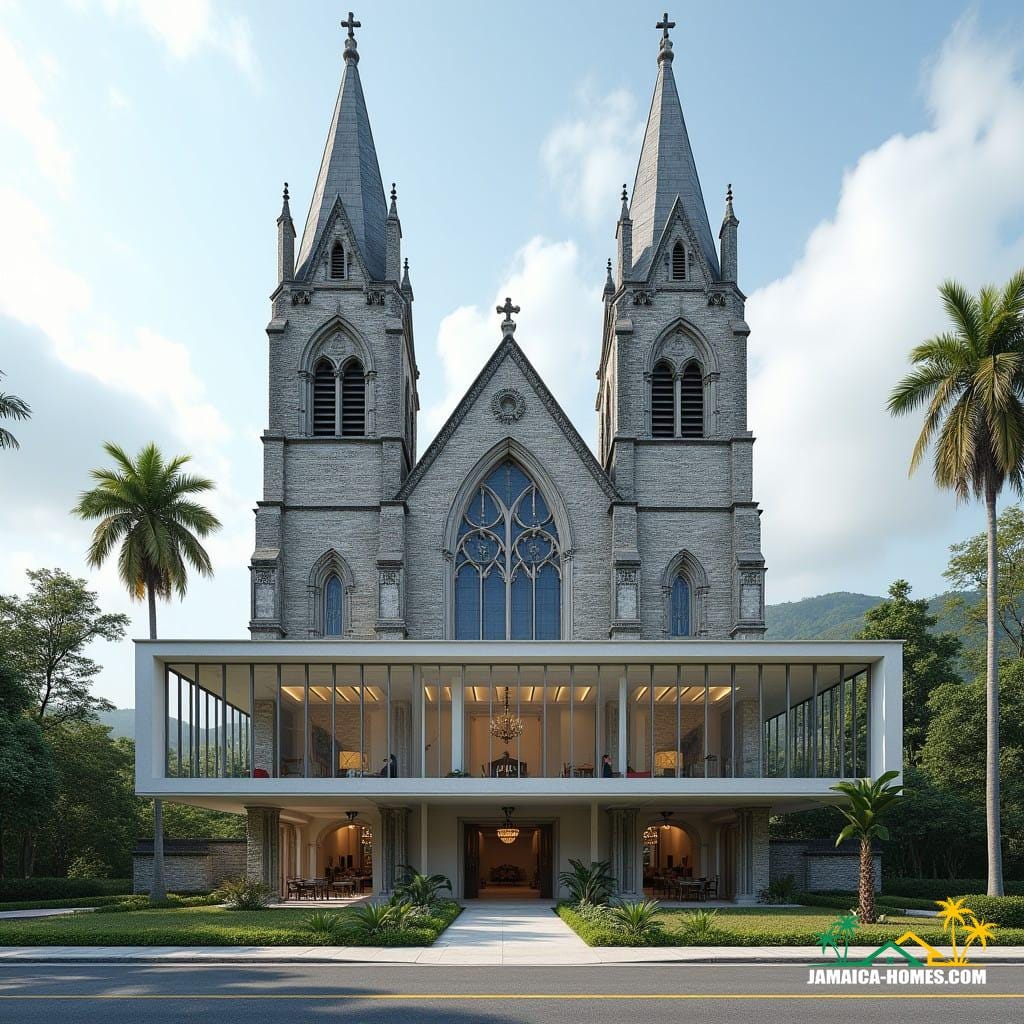
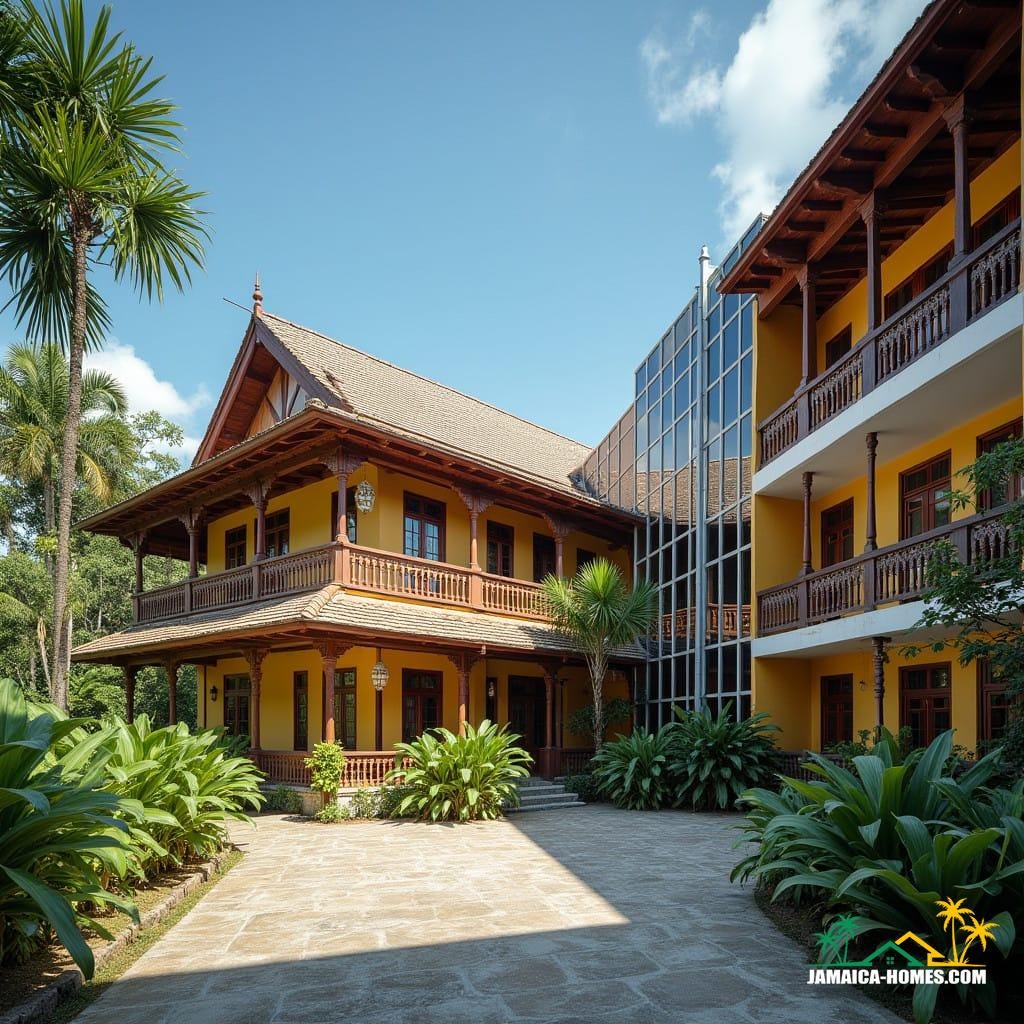
This call to action invites Jamaican church leaders to think creatively about their spaces, leveraging opportunities to serve their communities in innovative ways while preserving the spiritual and cultural essence of their sacred structures. With collaboration and vision, churches in Jamaica could turn these challenges into opportunities, fostering resilience for generations to come.
This images are intended for creative and illustrative purposes only. Any references to architectural designs, heritage buildings, or church properties in Jamaica are purely fictional and not based on any specific real-world locations or structures.