In recent years, Jamaica has witnessed a paradigm shift in its approach to education, particularly in the realms of science, technology, engineering, and mathematics (STEM). The government’s announcement regarding the construction of six new STEM schools across the country marks a pivotal moment in this transformation. These schools are set to revolutionize the educational landscape, not only enhancing learning experiences for students but also benefiting Jamaica as a whole.
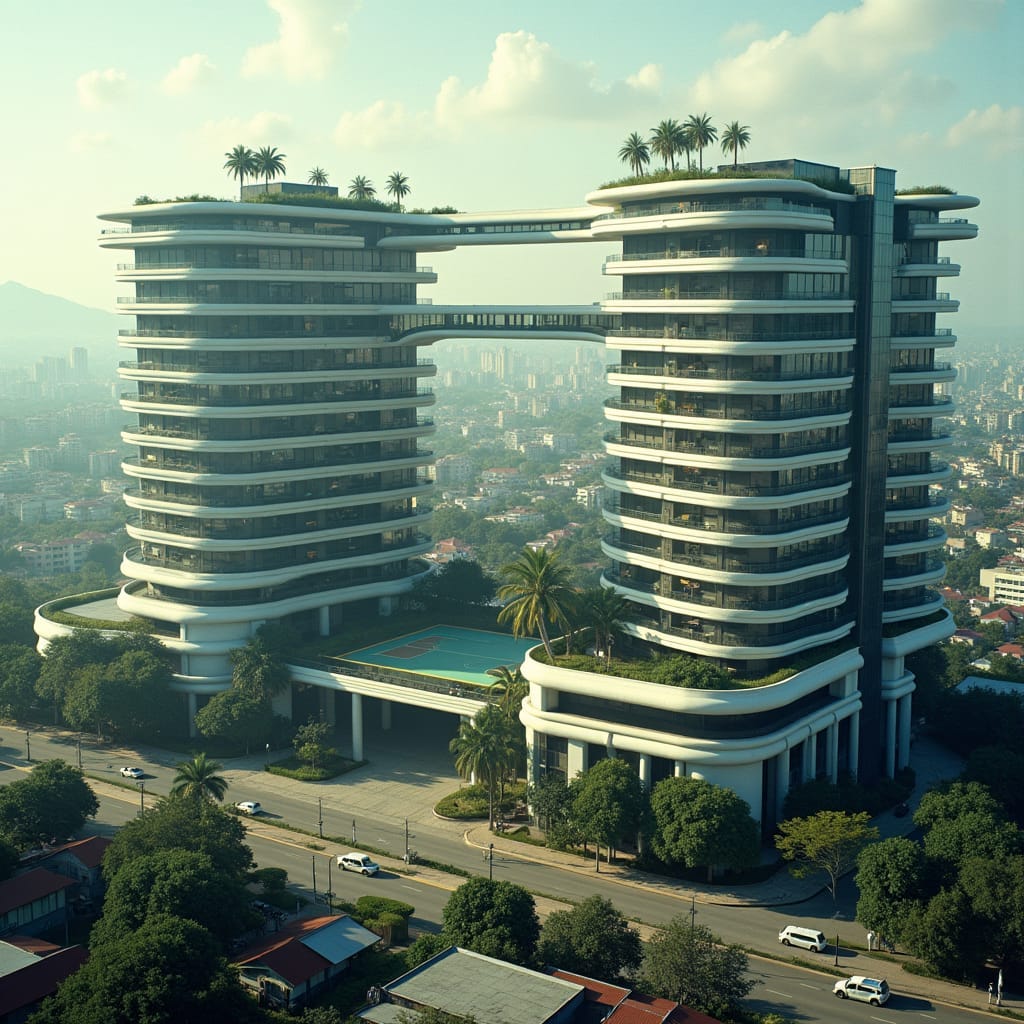
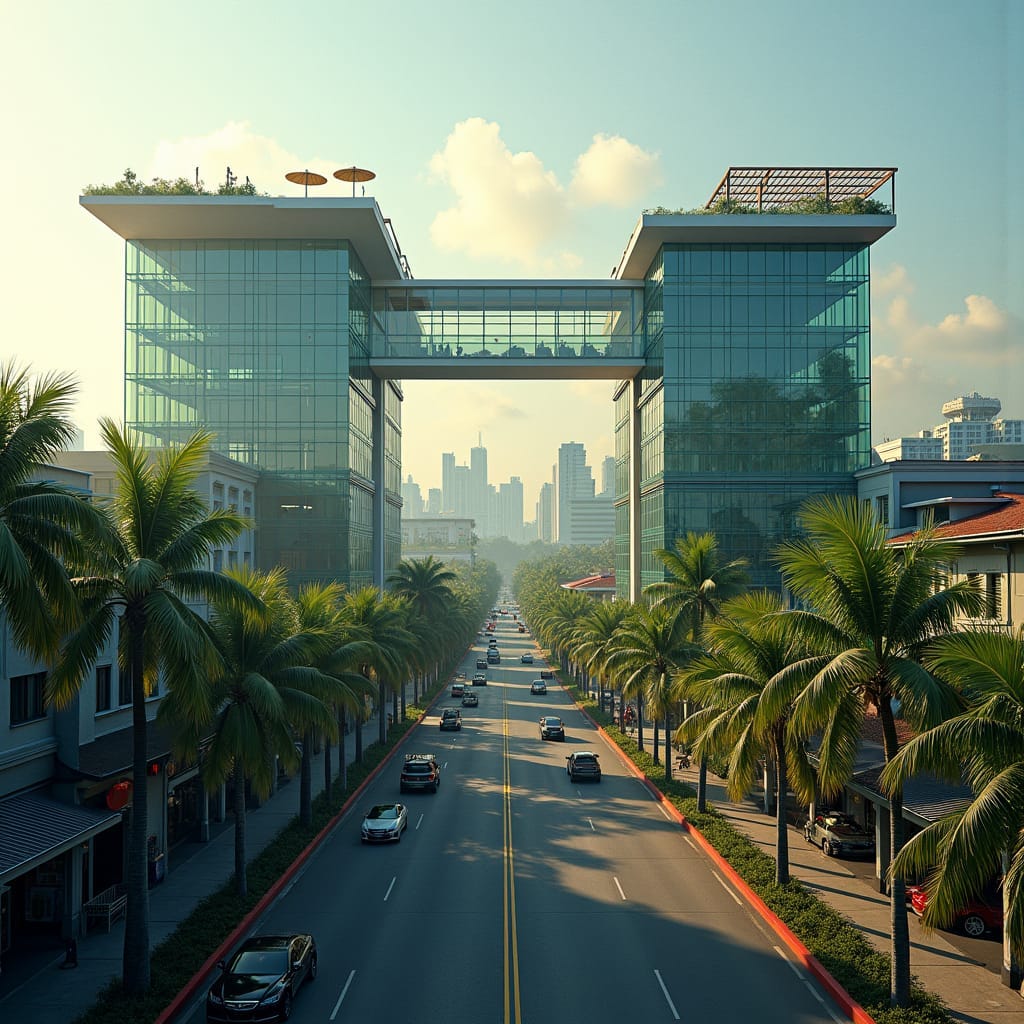
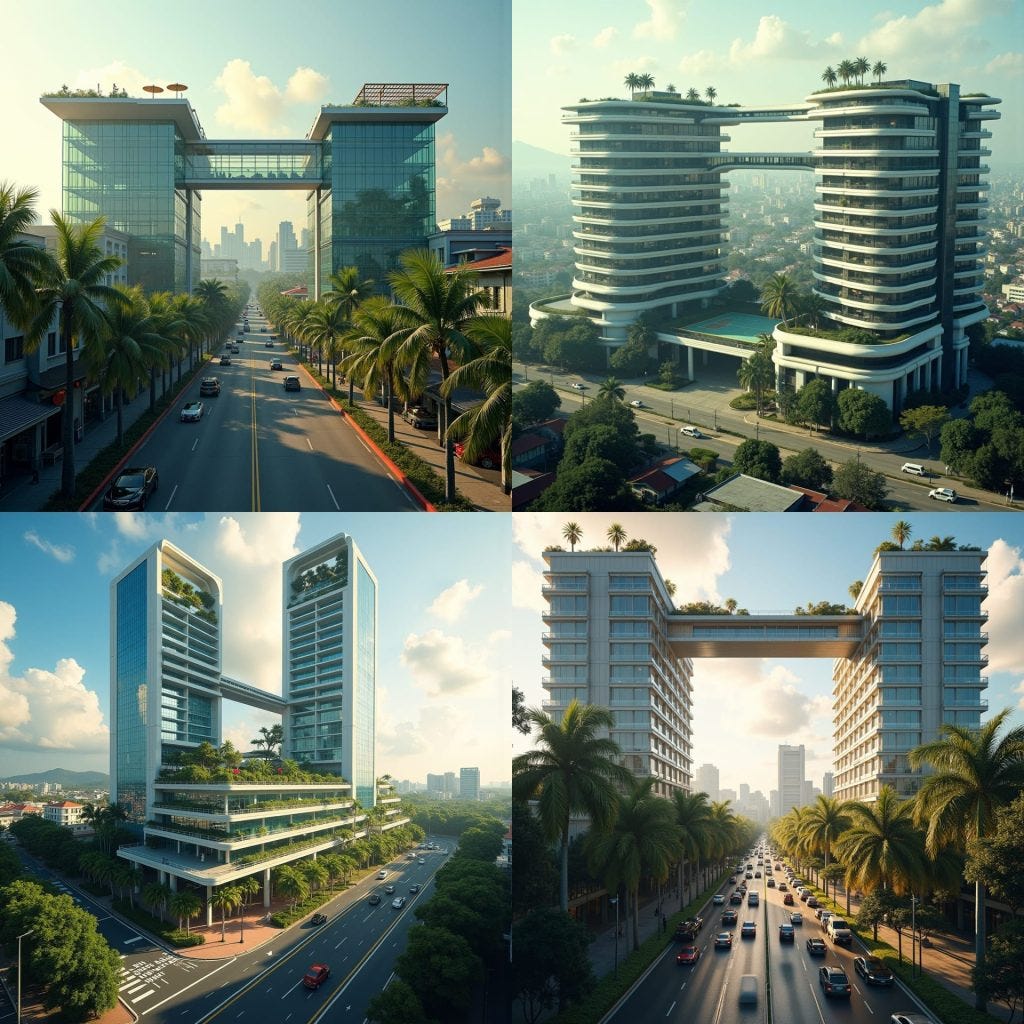
As Jamaica embraces this bold step, the future of school design must also evolve to match the innovative nature of STEM education across the globe. Imagine futuristic campuses featuring state-of-the-art architecture that challenges traditional notions of what a school should look like. Envision glass buildings with open, flexible learning spaces, towering structures connected by bridges that span busy streets, and rooftop parks where students can study surrounded by greenery. These designs can blend seamlessly with Jamaica’s natural beauty, such as schools integrated into beach landscapes or perched in the middle of bustling cities with recreational areas that promote student wellness.
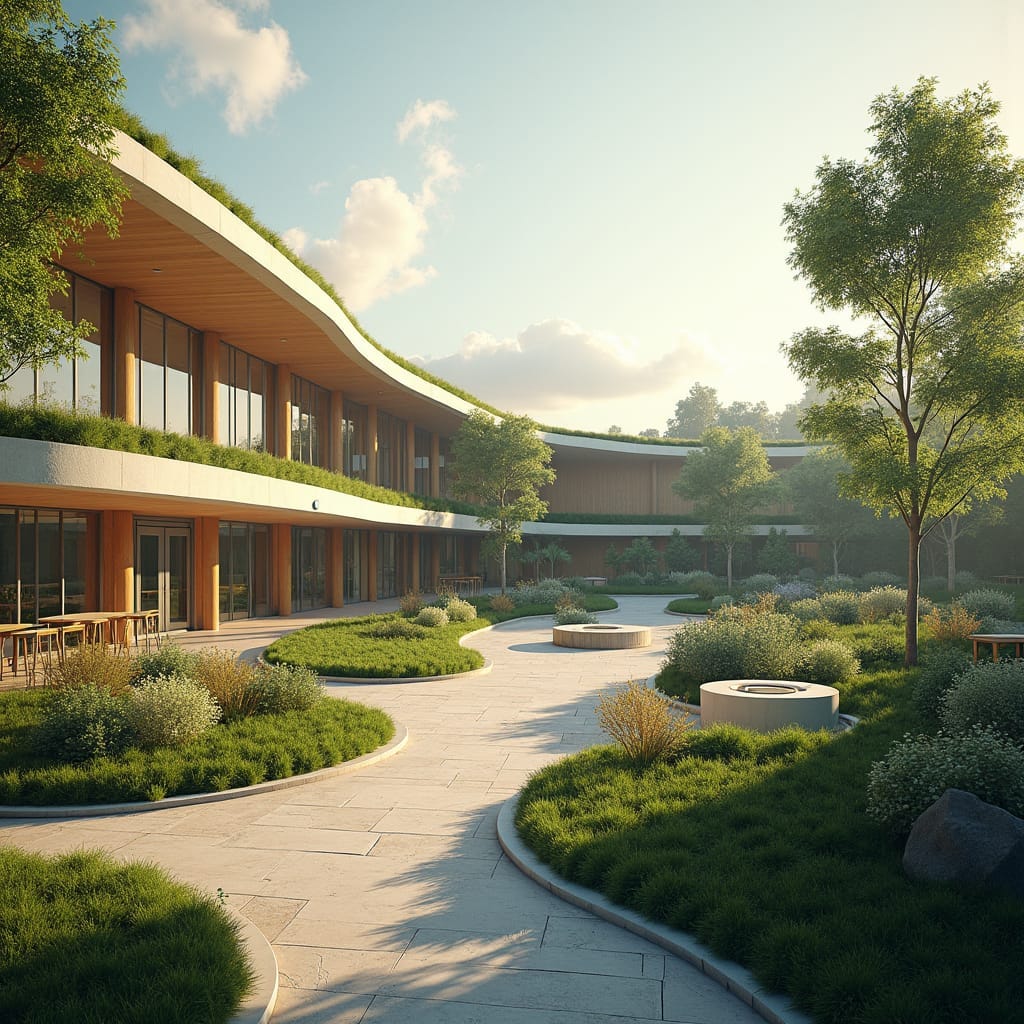
Futuristic, eco-friendly school campus with sleek, curved lines and expansive glass windows, flooding open learning spaces with natural light, juxtaposed with lush green roofs and rows of solar panels, amidst a sprawling, sustainable landscape. Outdoor classrooms seamlessly integrate with the natural surroundings, while a large central courtyard serves as a vibrant hub, fostering collaboration and community. Bamboo and recycled steel accents infuse the design with warmth and environmental responsibility. Flexible classrooms feature modular, reconfigurable layouts, adapting effortlessly to diverse teaching styles.
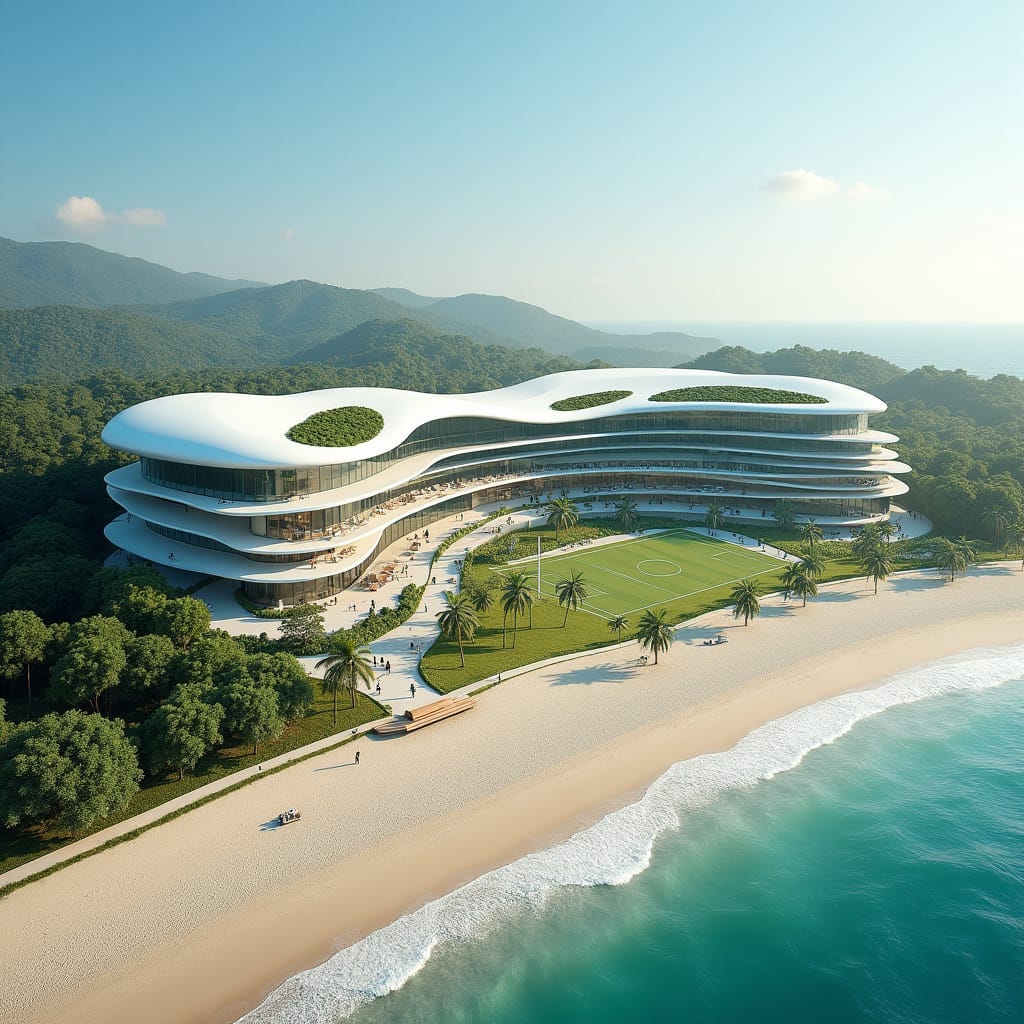
A sprawling beachfront school where modern architecture harmonizes with nature, featuring sleek, curved glass buildings that evoke the undulating flow of the ocean, as if sculpted by the waves themselves. Classrooms seamlessly transition into sandy outdoor learning areas, dissolving the boundaries between indoors and outdoors. A rooftop park, perched atop the structure, offers a breathtaking panorama of the sea, inviting students to unwind amidst lush greenery and salty sea air. Volleyball and soccer fields blend effortlessly into the surrounding beachscape, creating an organic fusion of natural and built environments. Please note: The designs and concepts of these schools and commercial spaces are purely conceptual and intended for inspiration and visualization purposes only. They do not represent actual construction plans or existing buildings.
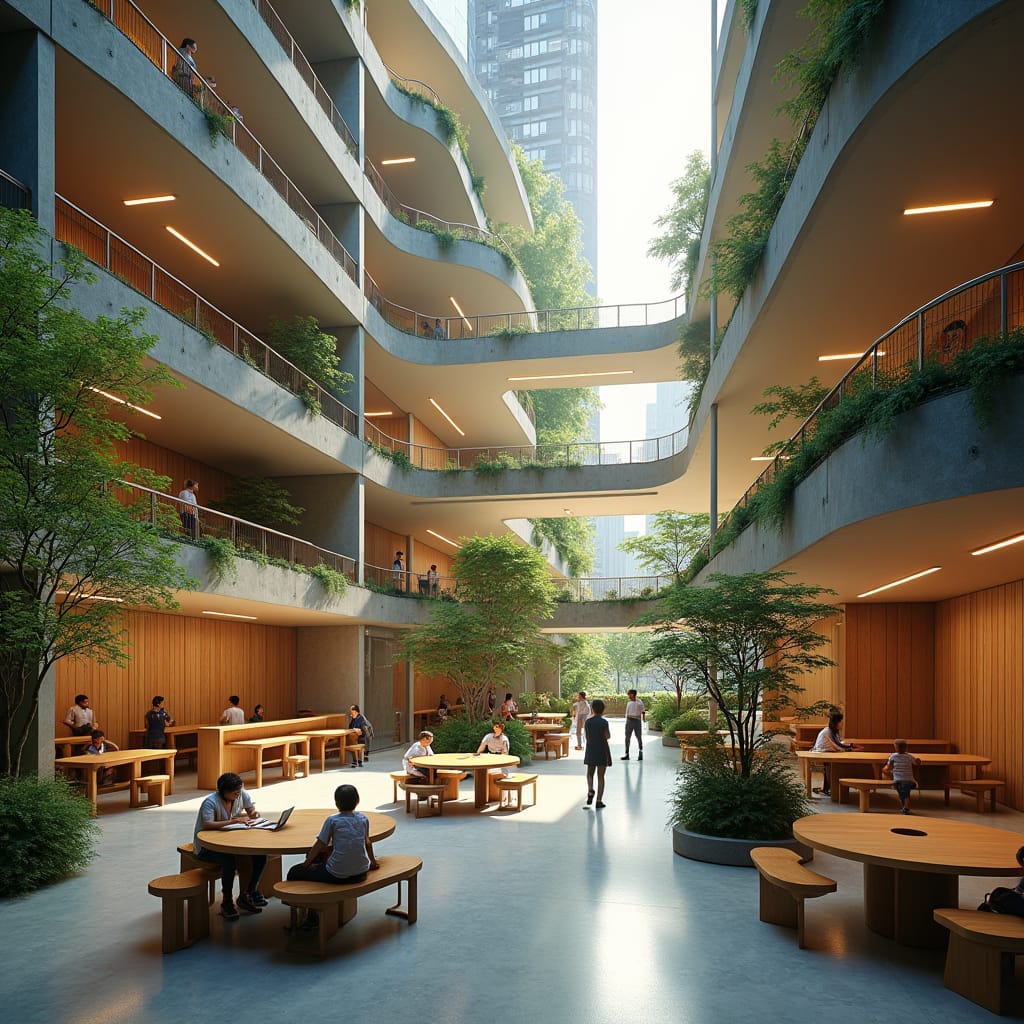
Sleek, modern urban school with vertical architecture, maximizing limited space in a densely populated area, with multi-level classrooms, rooftop playgrounds, and cutting-edge safety features. Incorporating abundant indoor greenery, serene quiet study zones, and flexible, tech-enhanced learning spaces to prioritize student wellness. Exposed concrete, glass, and reclaimed wood elements blend functionality with a contemporary aesthetic, evoking a sense of innovative, forward-thinking design. Moody, cinematic lighting casts dramatic shadows, with a warm, golden color paletteSleek, modern urban school with vertical architecture, maximizing limited space in a densely populated area, with multi-level classrooms, rooftop playgrounds, and cutting-edge safety features. Incorporating abundant indoor greenery, serene quiet study zones, and flexible, tech-enhanced learning spaces to prioritize student wellness. Exposed concrete, glass, and reclaimed wood elements blend functionality with a contemporary aesthetic, evoking a sense of innovative, forward-thinking design. Moody, cinematic lighting casts dramatic shadows, with a warm, golden color palette
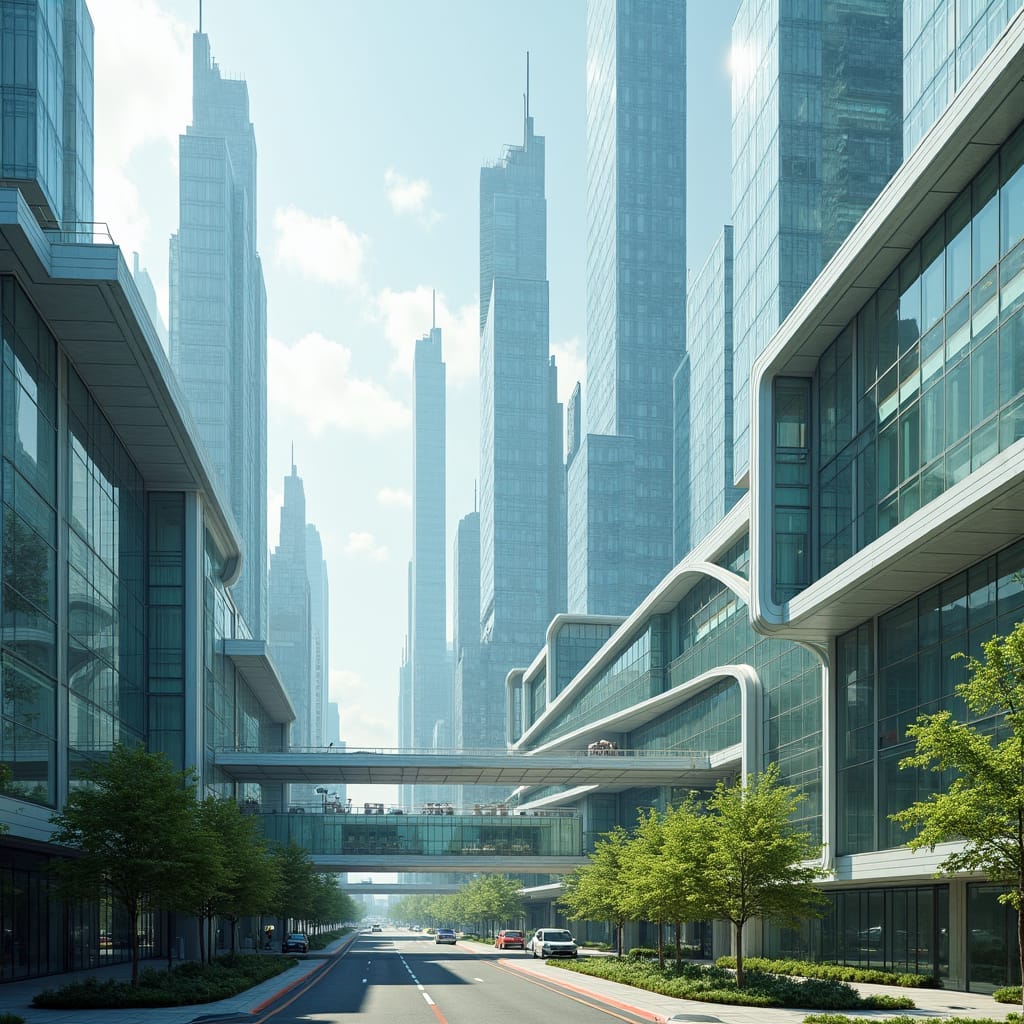
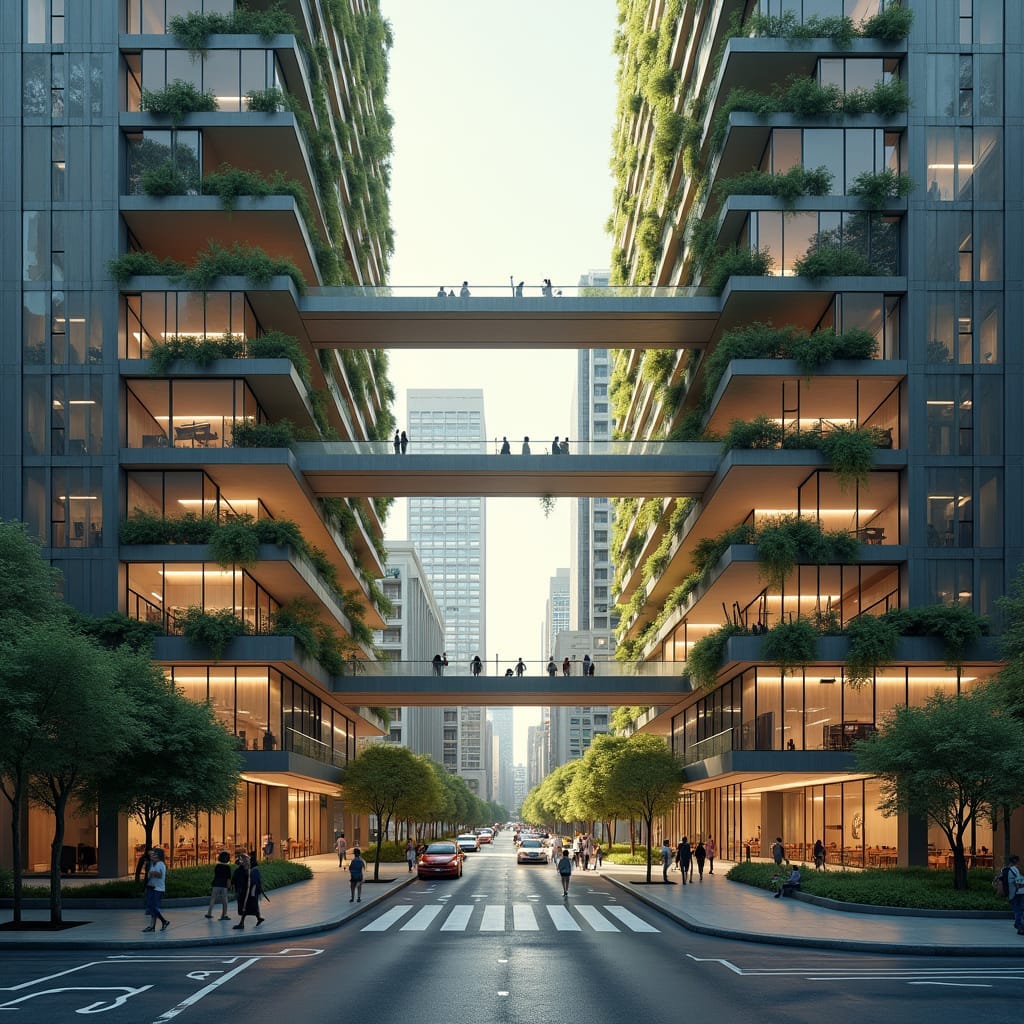
A sleek, futuristic, all-glass school campus sprawls across the urban landscape, its towering structures piercing the sky like shards of crystal, connected by elevated walkways that crisscross the complex like a network of fragile, ethereal threads. The gymnasium, a gleaming, aerodynamic protrusion from one of the towers, appears to defy gravity, its built-in basketball courts seemingly suspended in mid-air, a marvel of engineering and design. Two main school buildings, majestic and modern, span the busy street below, their rooftops hiding the bustle of the city, connected by a striking skybridge that serves as a verdant oasis, filled with lush greenery and cozy student lounges, inviting relaxation and contemplation. As natural light pours in, illuminating the airy, transparent spaces, learning areas unfold like a tapestry, offering breathtaking, panoramic views of the city’s vibrant, pulsating heart. Please note: The designs and concepts of these schools and commercial spaces are purely conceptual and intended for inspiration and visualization purposes only. They do not represent actual construction plans or existing buildings.
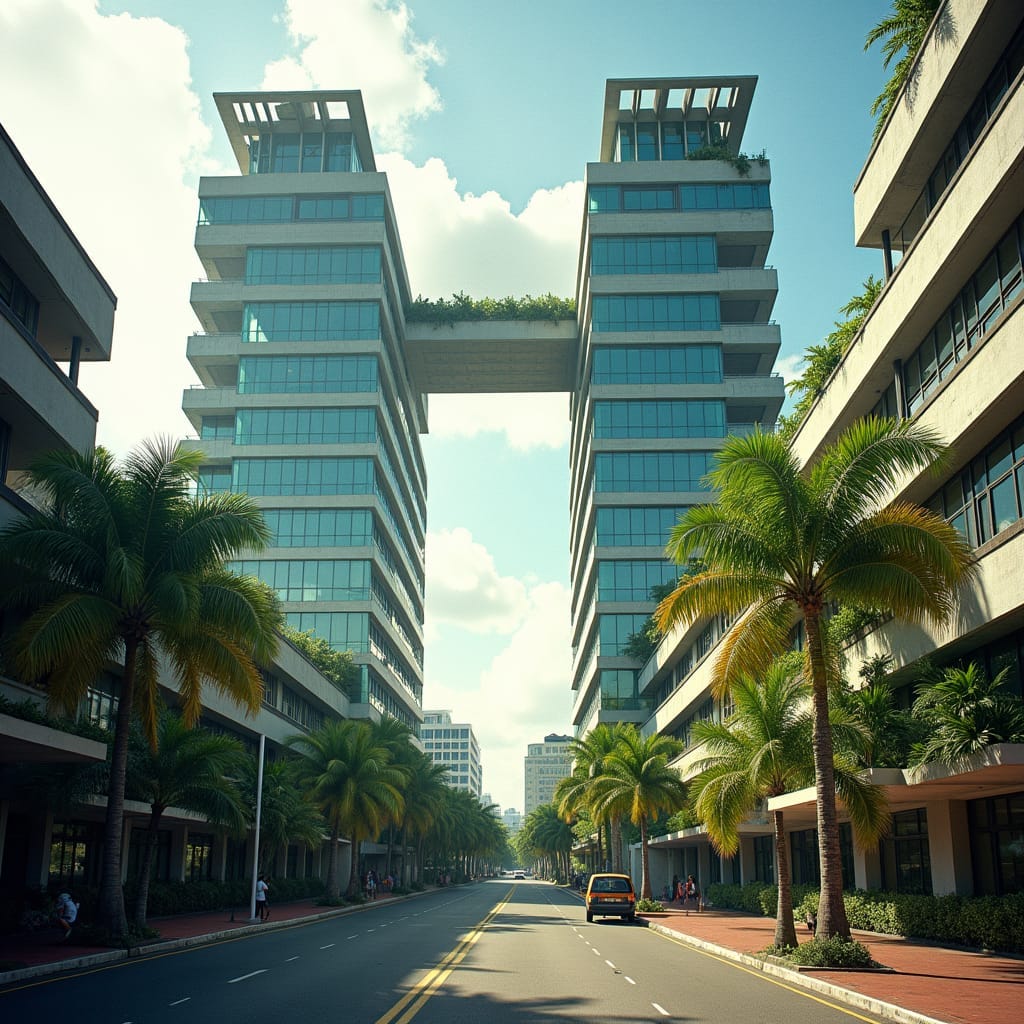
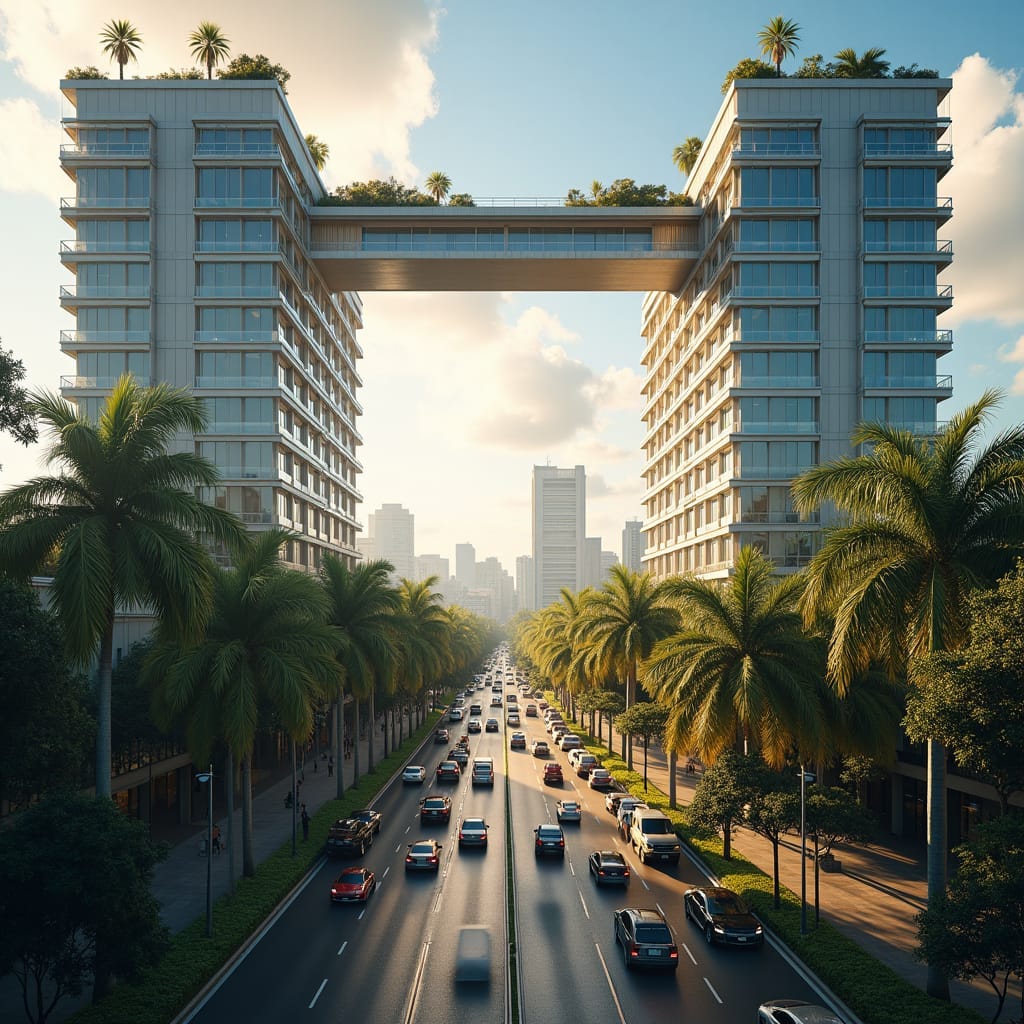
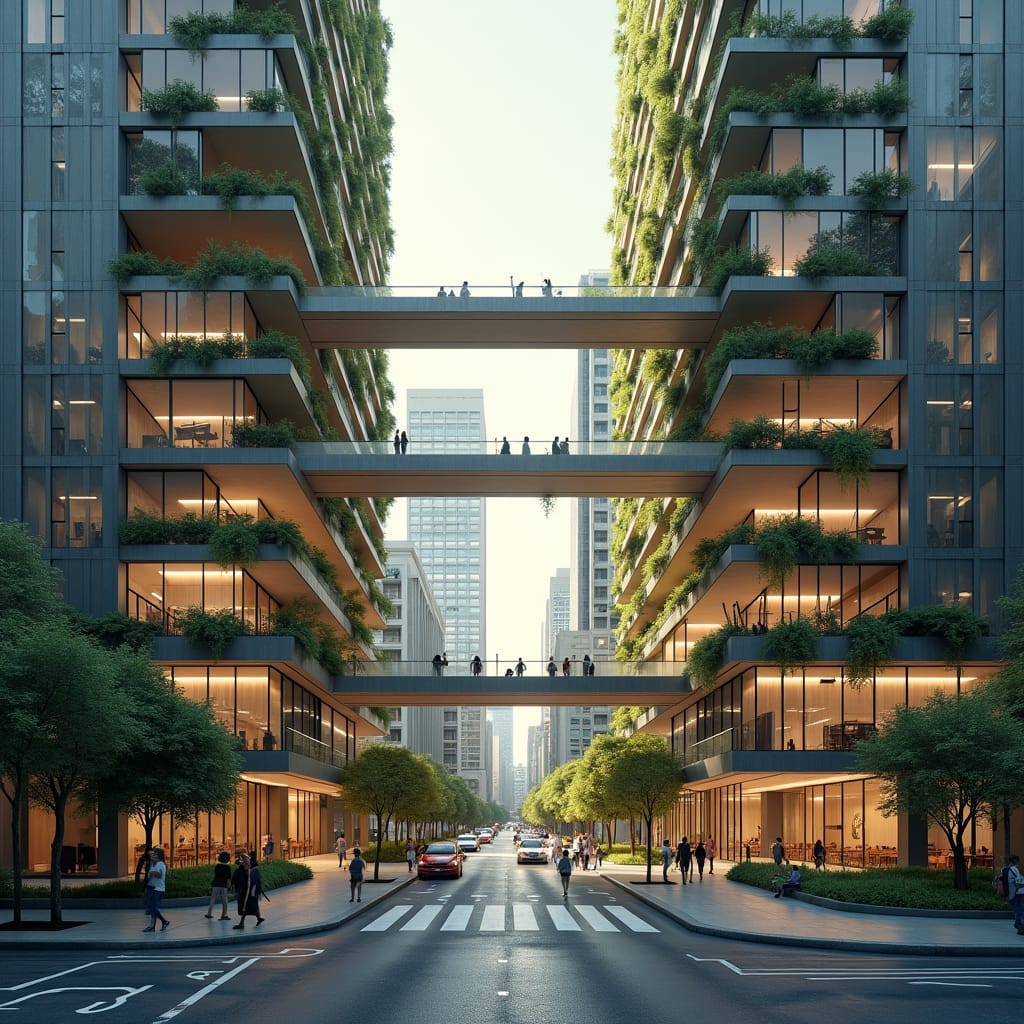
Imagine a state-of-the-art urban school with two towering buildings on either side of a busy city street, connected by a dynamic skywalk filled with student learning pods. The design should feature rooftop parks and recreational spaces, including a multi-level gym with transparent walls and a basketball court suspended between the two towers. The school should blend into the bustling city, with street-level spaces dedicated to community engagement, cafes, and open study zones. The exterior should mix glass, concrete, and lush vertical gardens to create a modern urban oasis.
The current educational landscape in Jamaica has long relied on a rigid, exam-focused system, with standardized tests such as the Grade Six Achievement Test (GSAT), Primary Exit Profile (PEP), Caribbean Secondary Education Certificate (CSEC), and Caribbean Advanced Proficiency Examination (CAPE) being the main drivers of academic success. While these exams offer a structured path, they often overlook the diverse learning styles and creative potential of many students. The new STEM schools, on the other hand, will shift the focus from rote memorization to project-based learning and interdisciplinary education. This approach mirrors modern architectural designs, where flexibility, creativity, and collaboration are encouraged by the very spaces in which students learn.
The High Tech High (HTH) model, for example, aligns with the vision of creating flexible, forward-thinking school environments. Schools built under this philosophy might feature open-plan classrooms that break down the barriers between different subjects, fostering a collaborative spirit. Transparent glass walls could open up learning spaces to natural light, while outdoor classrooms could provide hands-on learning experiences that connect students to their surroundings. These schools could take inspiration from designs where gymnasiums protrude dramatically from the sides of towers, offering stunning views and active spaces that blend both physical education and innovative design.
The Studio School model focuses on combining academic learning with real-world vocational training, and its influence could lead to schools that offer specialized workspaces—think tech labs and creative studios with cutting-edge tools, all contained within sleek, modern buildings. In urban settings, two school buildings might be connected across a street by an elevated walkway, creating a unique, futuristic campus that seamlessly blends with the surrounding city. Rooftop parks could provide spaces for relaxation and recreation, transforming the school environment into a place where both academic and social development thrive.
As Jamaica’s new STEM schools come to life, their design must be as innovative as the curriculum they deliver. These educational hubs will not only enhance learning but also contribute to Jamaica’s overall development. Flexible, tech-enhanced spaces will encourage creativity, critical thinking, and collaboration—skills crucial for the future workforce. Buildings designed with eco-friendly materials and sustainable practices will foster environmental awareness, preparing students to take on the challenges of climate change and resource conservation.
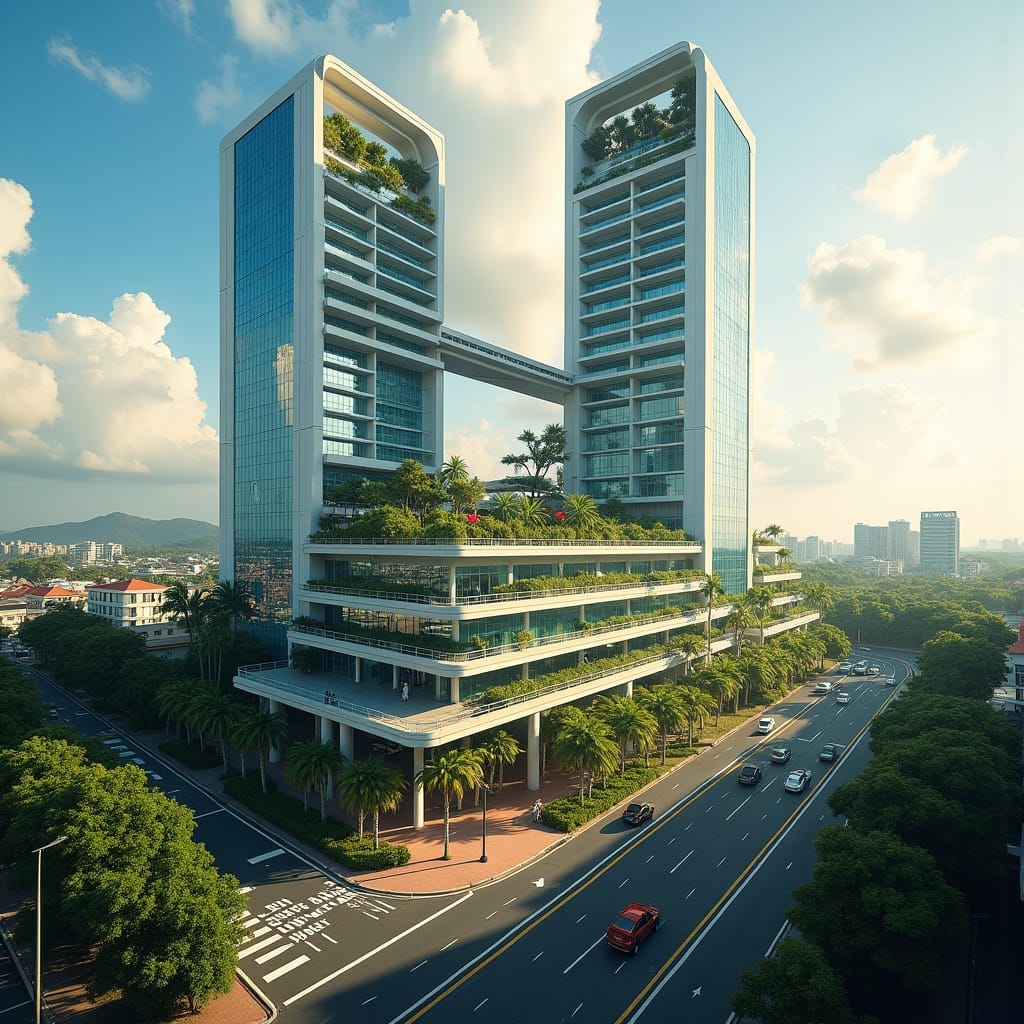
A majestic, modern school rises from the heart of Kingston, its twin sleek glass towers connected by a dramatic, elevated skybridge that soars above a bustling city street, captured in a cinematic film still with the warmth of 35mm film, rich film grain, and a subtle vignette. The rooftop oasis, filled with swaying palm trees and lush tropical plants, provides a serene escape for students, while the boldly cantilevered gymnasium offers breathtaking views of the vibrant urban tapestry below. Floor-to-ceiling windows flood the airy classrooms with natural light, framing the dynamic cityscape in a stunning display of modern, tropical design.
A majestic, modern school rises from the heart of Kingston, its twin sleek glass towers connected by a dramatic, elevated skybridge that soars above a bustling city street, captured in a cinematic film still with the warmth of 35mm film, rich film grain, and a subtle vignette. The rooftop oasis, filled with swaying palm trees and lush tropical plants, provides a serene escape for students, while the boldly cantilevered gymnasium offers breathtaking views of the vibrant urban tapestry below. Floor-to-ceiling windows flood the airy classrooms with natural light, framing the dynamic cityscape in a stunning display of modern, tropical design.
A majestic, modern school rises from the heart of Kingston, its twin sleek glass towers connected by a dramatic, elevated skybridge that soars above a bustling city street, captured in a cinematic film still with the warmth of 35mm film, rich film grain, and a subtle vignette. The rooftop oasis, filled with swaying palm trees and lush tropical plants, provides a serene escape for students, while the boldly cantilevered gymnasium offers breathtaking views of the vibrant urban tapestry below. Floor-to-ceiling windows flood the airy classrooms with natural light, framing the dynamic cityscape in a stunning display of modern, tropical design.
A majestic, modern school rises from the heart of Kingston, its twin sleek glass towers connected by a dramatic, elevated skybridge that soars above a bustling city street, captured in a cinematic film still with the warmth of 35mm film, rich film grain, and a subtle vignette. The rooftop oasis, filled with swaying palm trees and lush tropical plants, provides a serene escape for students, while the boldly cantilevered gymnasium offers breathtaking views of the vibrant urban tapestry below. Floor-to-ceiling windows flood the airy classrooms with natural light, framing the dynamic cityscape in a stunning display of modern, tropical design.
A majestic, modern school rises from the heart of Kingston, its twin sleek glass towers connected by a dramatic, elevated skybridge that soars above a bustling city street, captured in a cinematic film still with the warmth of 35mm film, rich film grain, and a subtle vignette. The rooftop oasis, filled with swaying palm trees and lush tropical plants, provides a serene escape for students, while the boldly cantilevered gymnasium offers breathtaking views of the vibrant urban tapestry below. Floor-to-ceiling windows flood the airy classrooms with natural light, framing the dynamic cityscape in a stunning display of modern, tropical design.
A majestic, modern school rises from the heart of Kingston, its twin sleek glass towers connected by a dramatic, elevated skybridge that soars above a bustling city street, captured in a cinematic film still with the warmth of 35mm film, rich film grain, and a subtle vignette. The rooftop oasis, filled with swaying palm trees and lush tropical plants, provides a serene escape for students, while the boldly cantilevered gymnasium offers breathtaking views of the vibrant urban tapestry below. Floor-to-ceiling windows flood the airy classrooms with natural light, framing the dynamic cityscape in a stunning display of modern, tropical design.
Imagine a state-of-the-art urban school with two towering buildings on either side of a busy city street, connected by a dynamic skywalk filled with student learning pods. The design should feature rooftop parks and recreational spaces, including a multi-level gym with transparent walls and a basketball court suspended between the two towers. The school should blend into the bustling city, with street-level spaces dedicated to community engagement, cafes, and open study zones. The exterior should mix glass, concrete, and lush vertical gardens to create a modern urban oasis.
Moreover, the benefits for Jamaica as a whole are substantial. These schools, with their cutting-edge design and STEM-focused curriculum, will develop a skilled, employable workforce ready to tackle the demands of a rapidly changing global economy. As students gain exposure to modern technologies and innovative learning environments, Jamaica will enhance its competitiveness on the world stage, attracting investment and fostering entrepreneurship. Equally important, these schools will promote social equity, ensuring that students from all backgrounds—whether from urban centers or rural communities—have access to top-tier educational facilities and opportunities.
Environmental sustainability will also play a key role in this transformation. Schools that incorporate green spaces, energy-efficient systems, and natural materials will teach students not just about science and technology, but also about the importance of protecting and sustaining Jamaica’s natural environment. Whether it’s a school nestled along Jamaica’s beautiful coastline, or one that integrates outdoor learning spaces with local ecosystems, students will learn the value of balancing development with environmental stewardship.
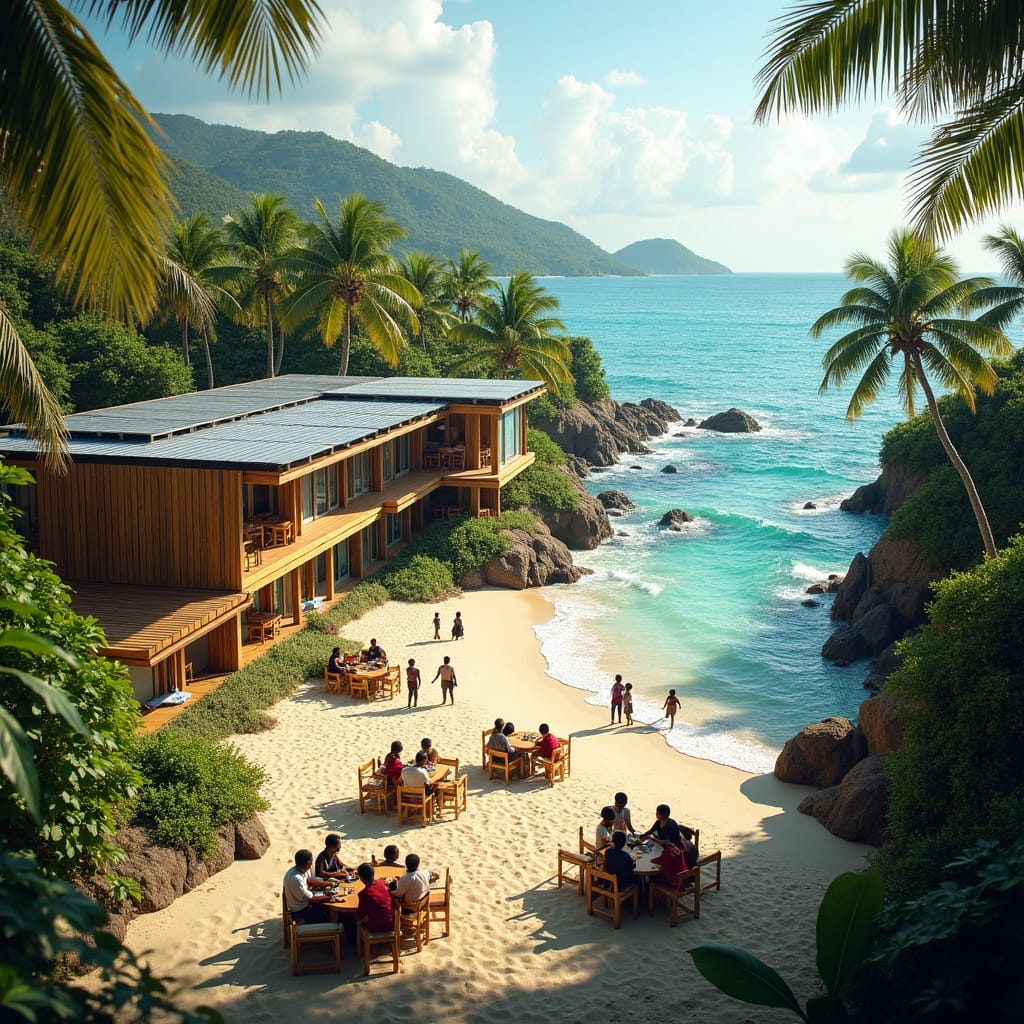
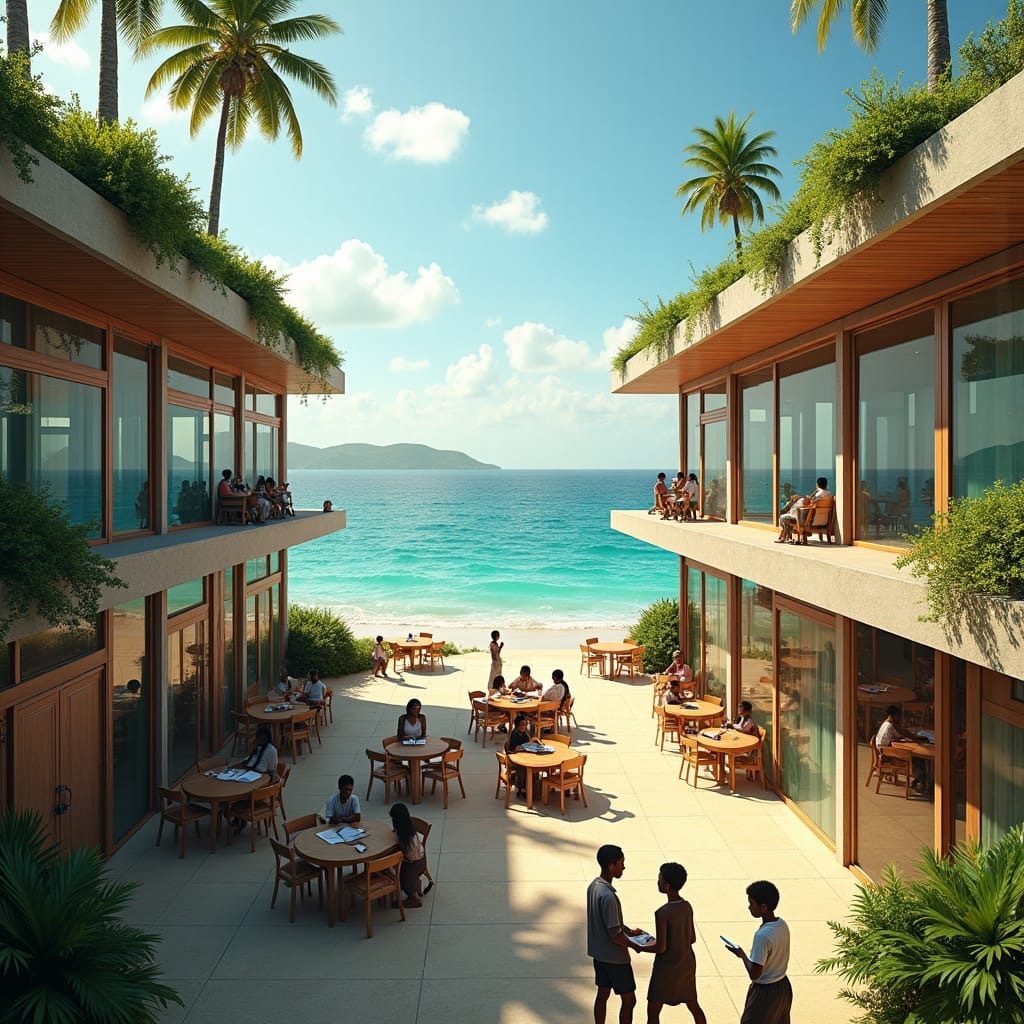
A serene coastal school on Jamaica’s northern shore, its wooden and glass buildings seamlessly blending into the sandy beaches and swaying palm trees, with floor-to-ceiling windows and open-air classrooms that invite the soothing sounds of the waves and the warm sea breeze, while students of African descent gather in groups, engaged in lively discussions in outdoor learning areas, set against the stunning turquoise ocean backdrop, as the rooftop park’s lush greenery and solar panels blend harmoniously into the surroundings, exuding a relaxed, eco-friendly tropical atmosphere.
A serene coastal school on Jamaica’s northern shore, where weathered wooden accents and sleek glass façades blend seamlessly into the sun-kissed sandy beaches and palm-fringed coastline. Classrooms with sliding glass doors and reclaimed wood interiors open out to breathtaking views of the turquoise sea, as students gather in outdoor learning areas, their lively discussions framed by the picturesque beach backdrop. Black students from diverse backgrounds mingle in groups, their faces aglow with curiosity, as they learn amidst the soothing sounds of the waves. Above, a rooftop park flourishes with lush greenery, solar panels, and comfortable seating areas, creating an eco-friendly oasis. The atmosphere is relaxed and tropical, with a warm golden light casting a sense of tranquility over the entire scene.
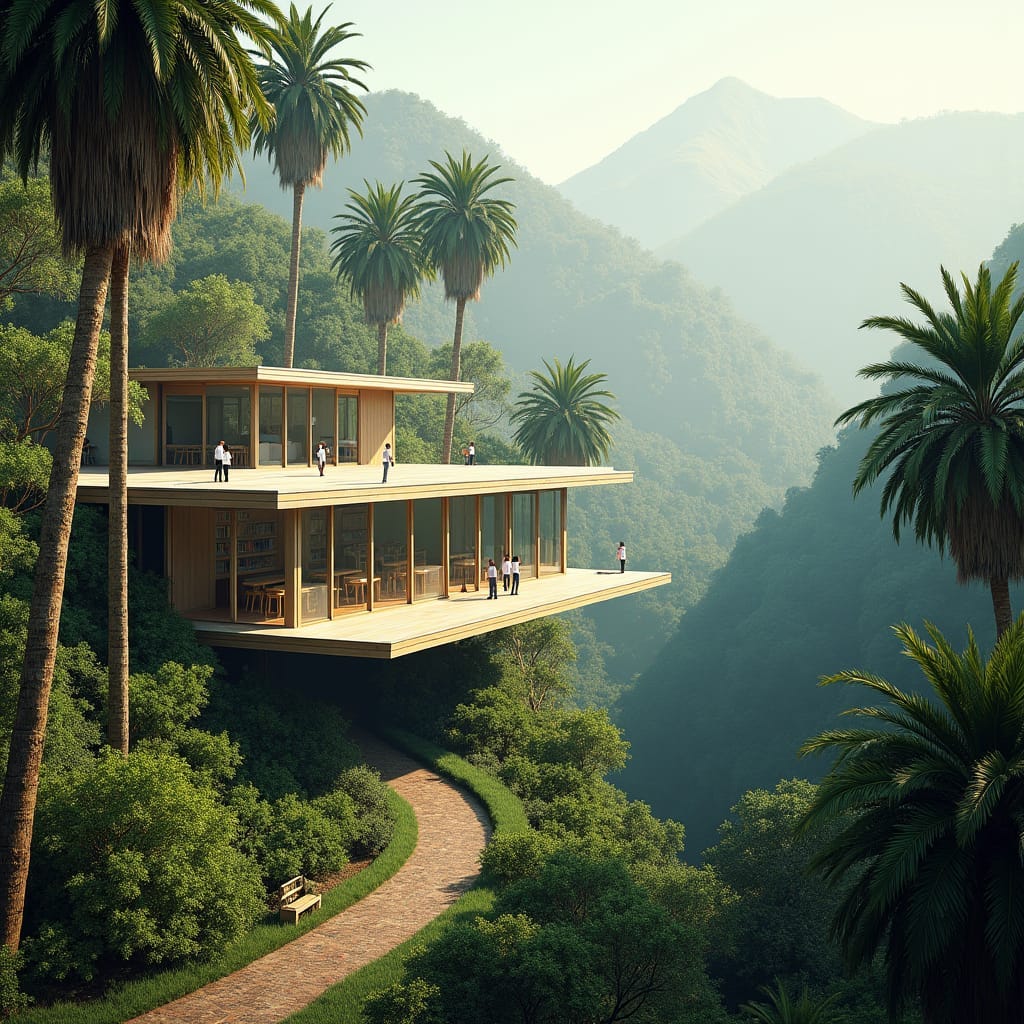
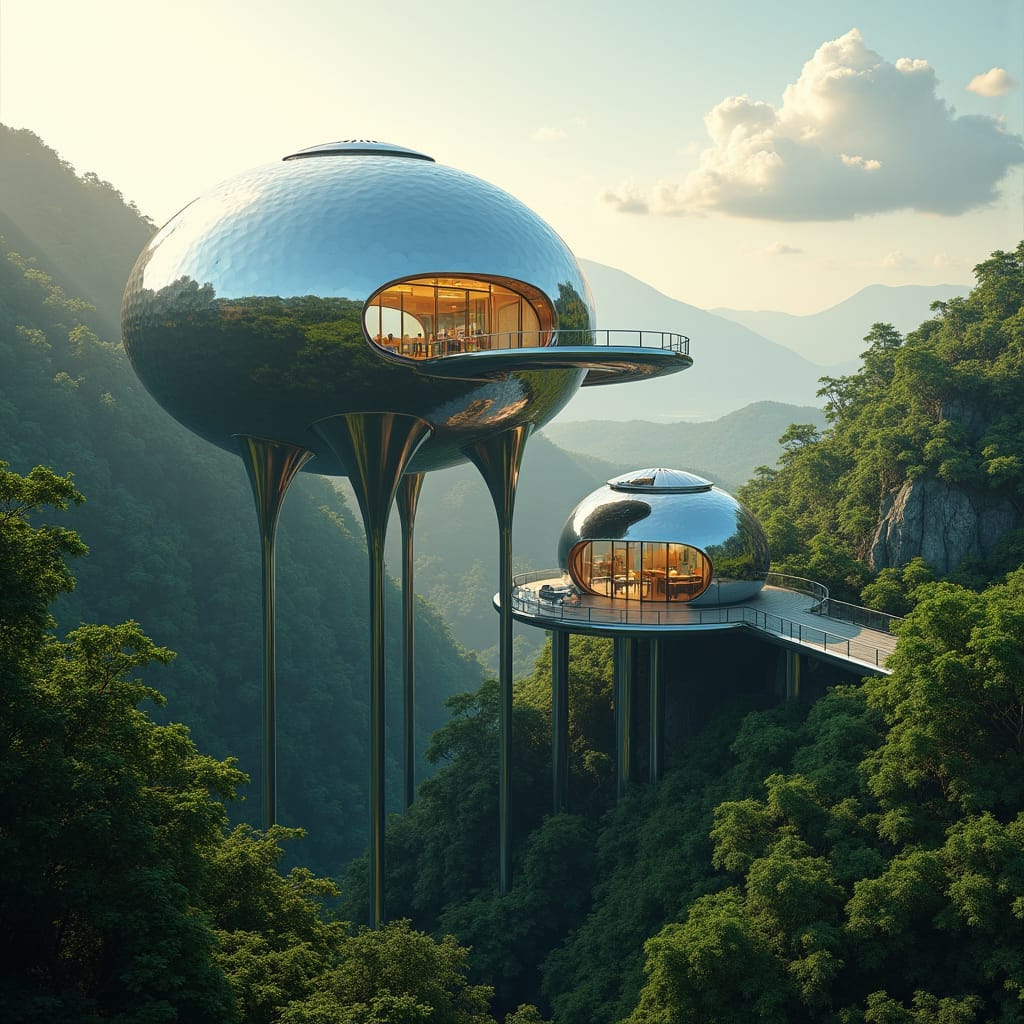
A serene school campus, with students from diverse backgrounds, nestled in the heart of the Blue Mountains, surrounded by lush green forests and towering palm trees, blending harmoniously into the natural environment. Glass-walled classrooms appear to float among the trees, connected by elevated winding pathways, while outdoor science labs overlook the valleys below.
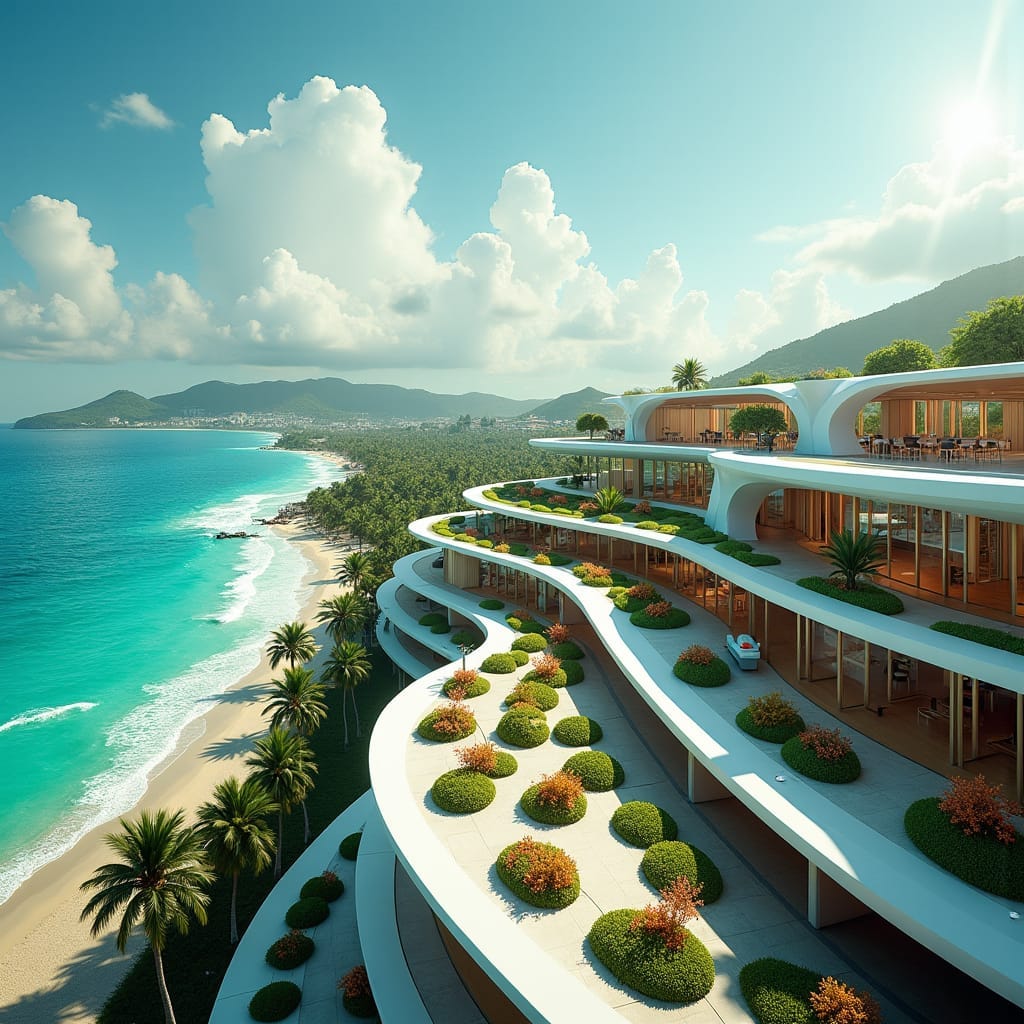
A modern, futuristic school in Montego Bay, nestled between the vibrant cityscape and the turquoise Caribbean Sea, its sleek, curved glass facades reflecting the ocean’s waves. The open, airy architecture blends seamlessly with the rooftop park’s lush tropical greenery, where shade trees and vibrant flowers thrive amidst comfortable study nooks. Inside, tech-enhanced classrooms hum with innovation, as students interact with cutting-edge digital tools on flexible, curvilinear workstations. A gleaming, cantilevered gym appears to float above the ocean’s surface, its expansive windows framing breathtaking views of the sea. Colors are cool, blue-green, with warm sandy tones and coral highlights. Inspired by the futuristic visions of Syd Mead, the atmospheric, cinematic style of Denis Villeneuve
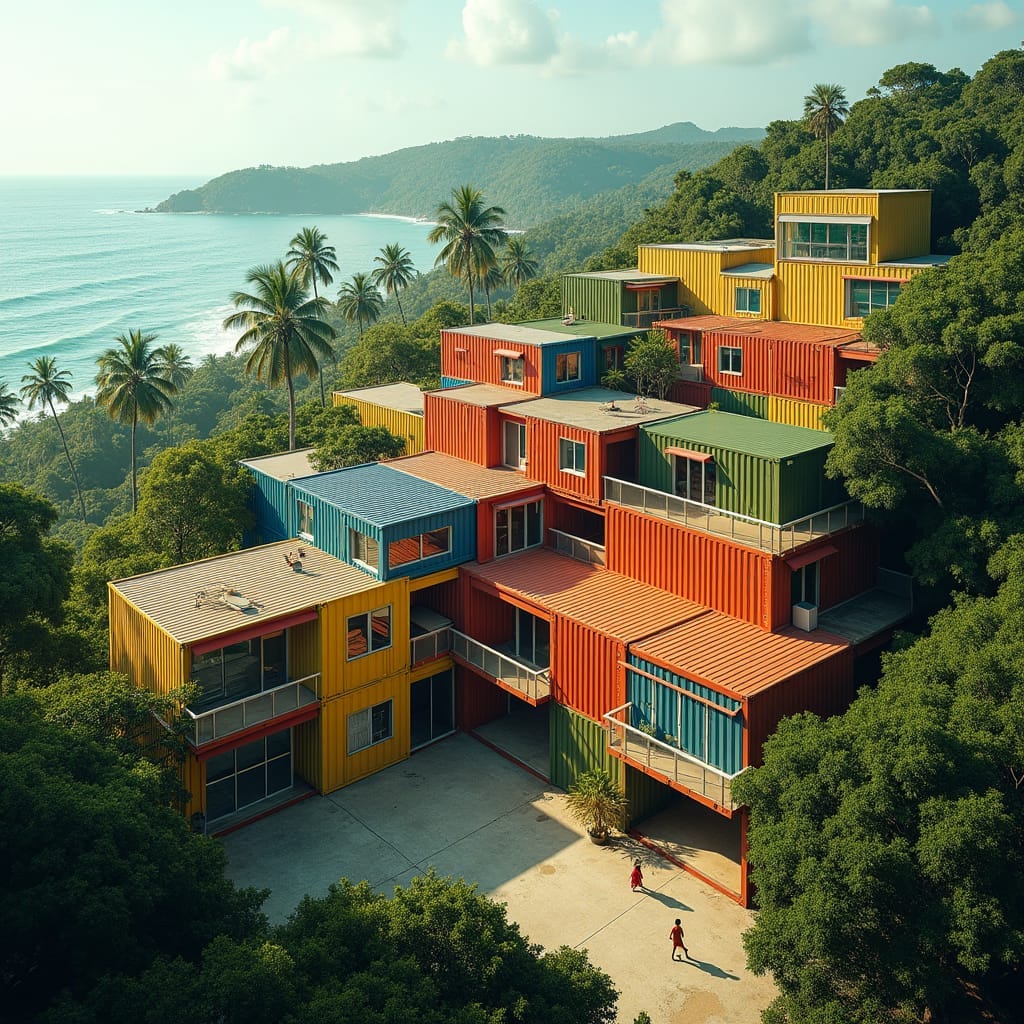
A vibrant, coastal school complex in Jamaica, comprising repurposed shipping containers in a kaleidoscopic array of colors, stacked in a dynamic, geometric pattern. Each container, now a classroom, boasts expansive glass windows that frame the turquoise ocean, inviting the sea breeze in. Lush palm trees and tropical foliage envelop the campus, fostering an eco-friendly ambiance. Green roofs and open-air walkways connect the classrooms, allowing students to revel in the island’s natural beauty
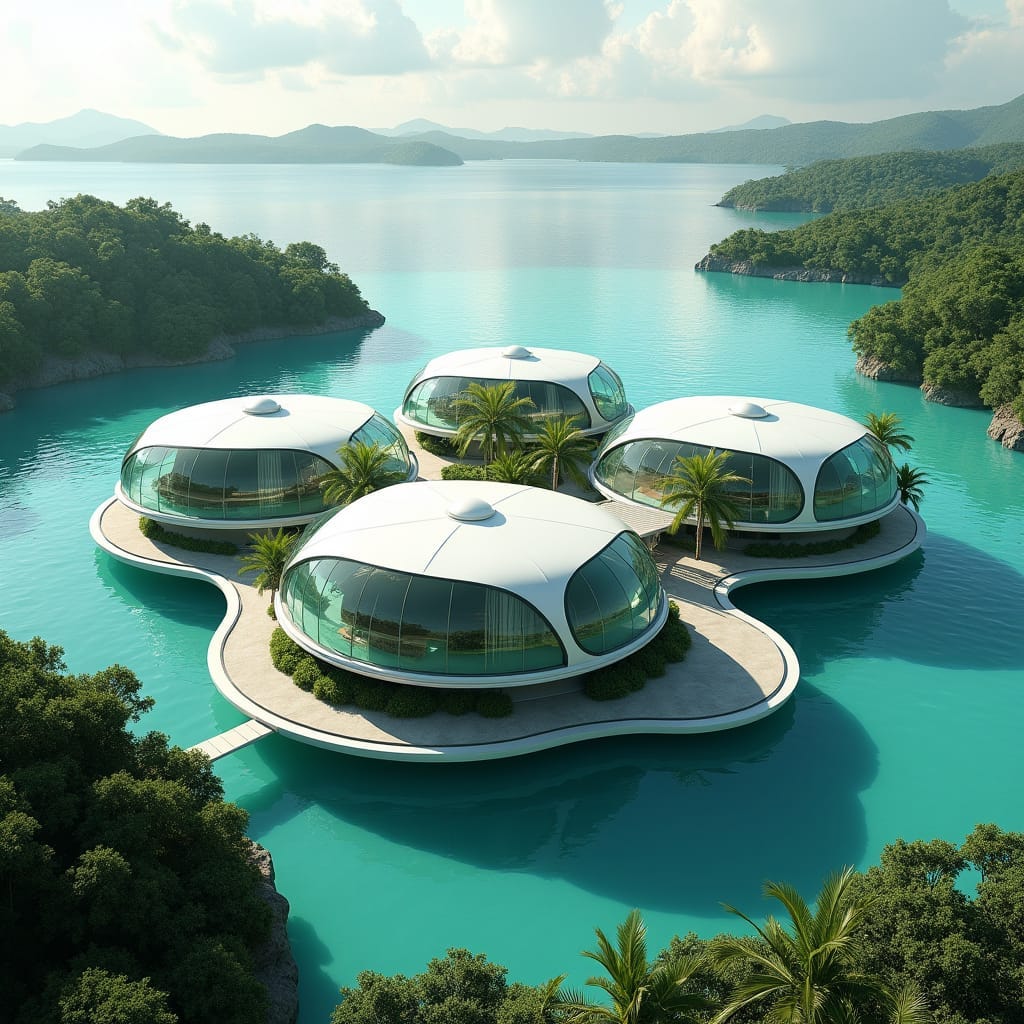
A majestic, eco-friendly school floats effortlessly on the tranquil waters of a Jamaican lagoon, its sleek, modern architecture consisting of circular pods with panoramic glass walls, minimalist and futuristic in design. Each pod-shaped structure is elevated on stilts, connected by winding, floating bridges, and surrounded by a lush tapestry of tropical greenery. The crystal-clear waters of the lagoon mirror the school’s aquatic architecture, creating a seamless fusion of nature and innovation. Shot in a cinematic style reminiscent of Syd Mead, Zaha Hadid, and Hayao Miyazaki, with a blend of sci-fi and organic elements
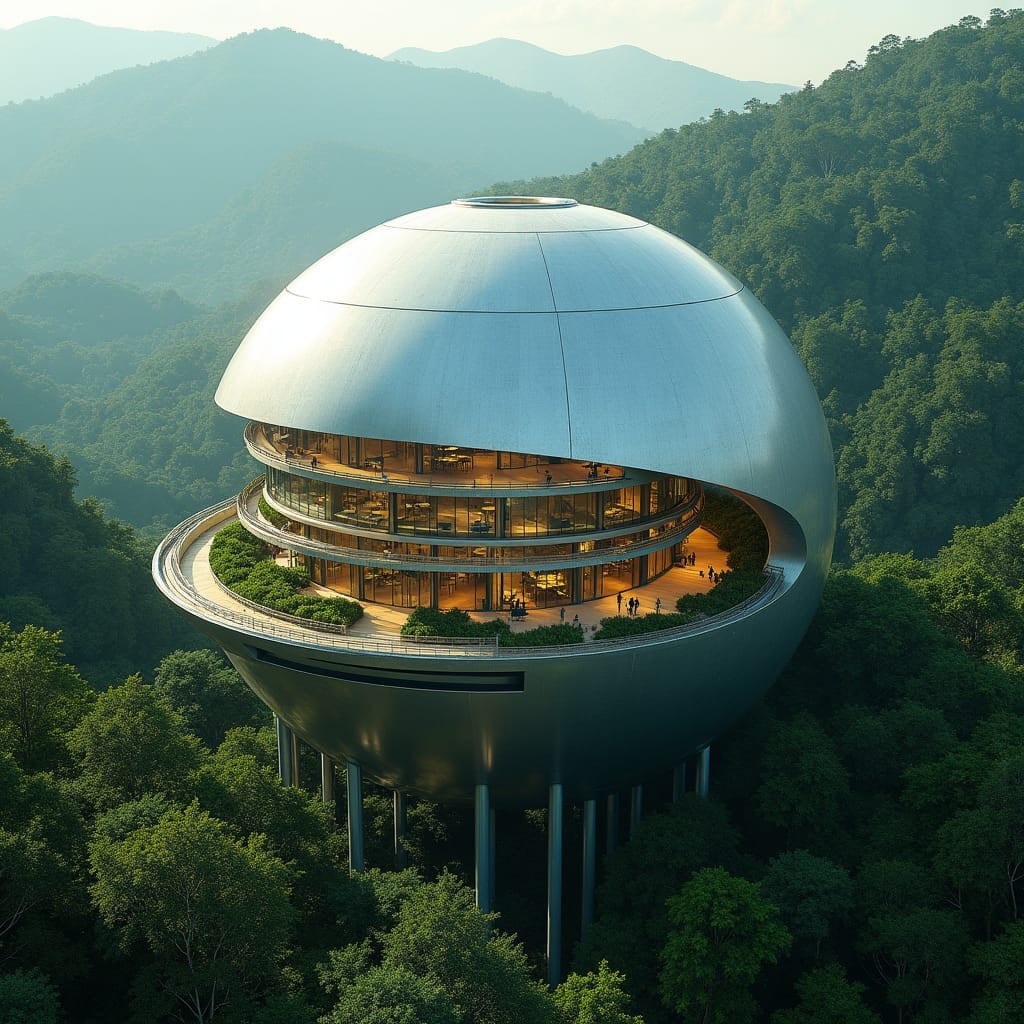
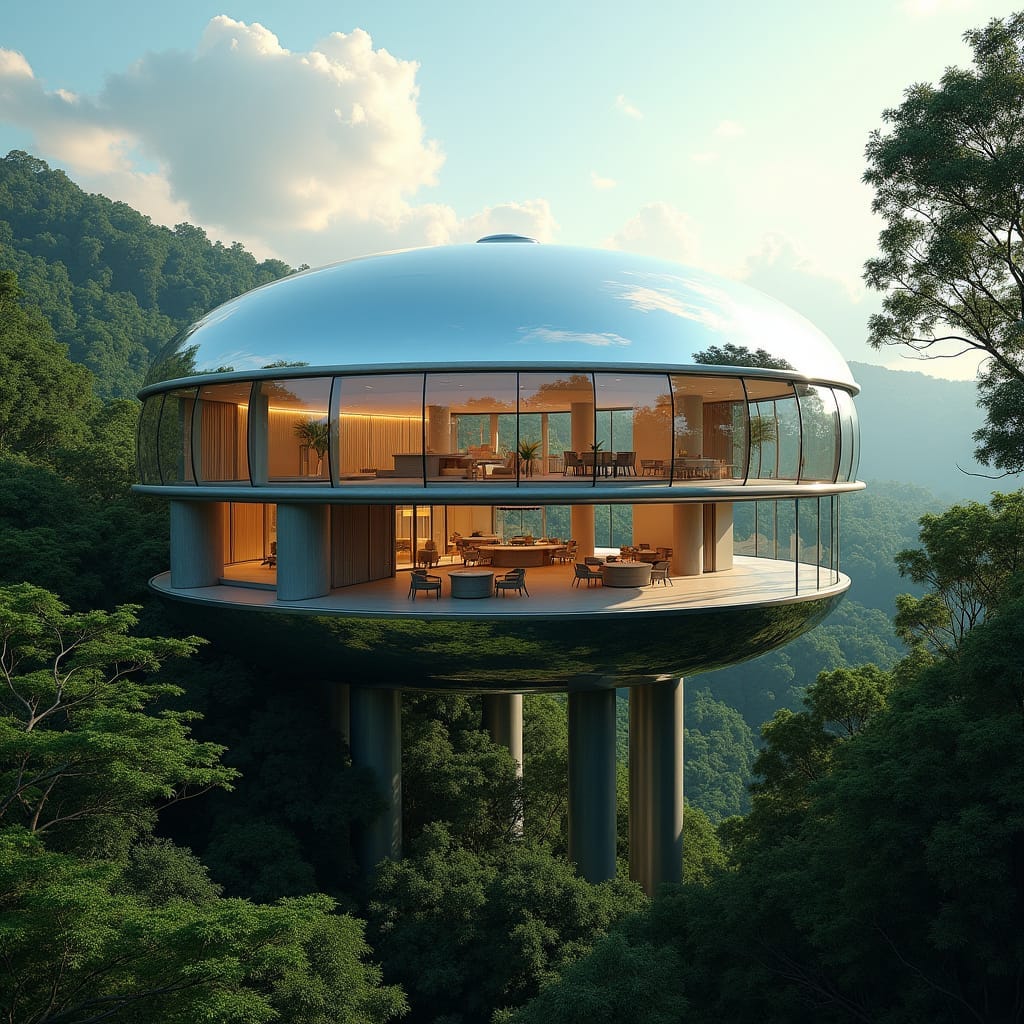
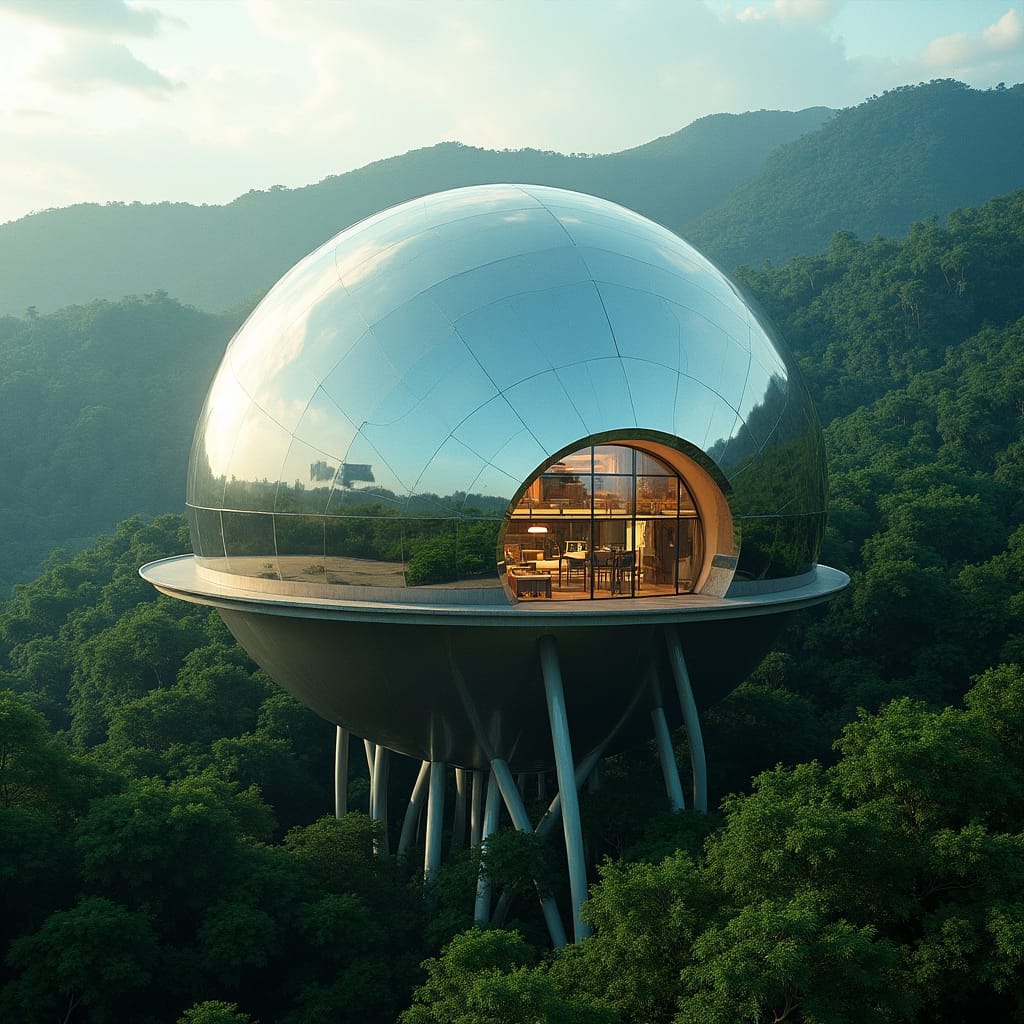
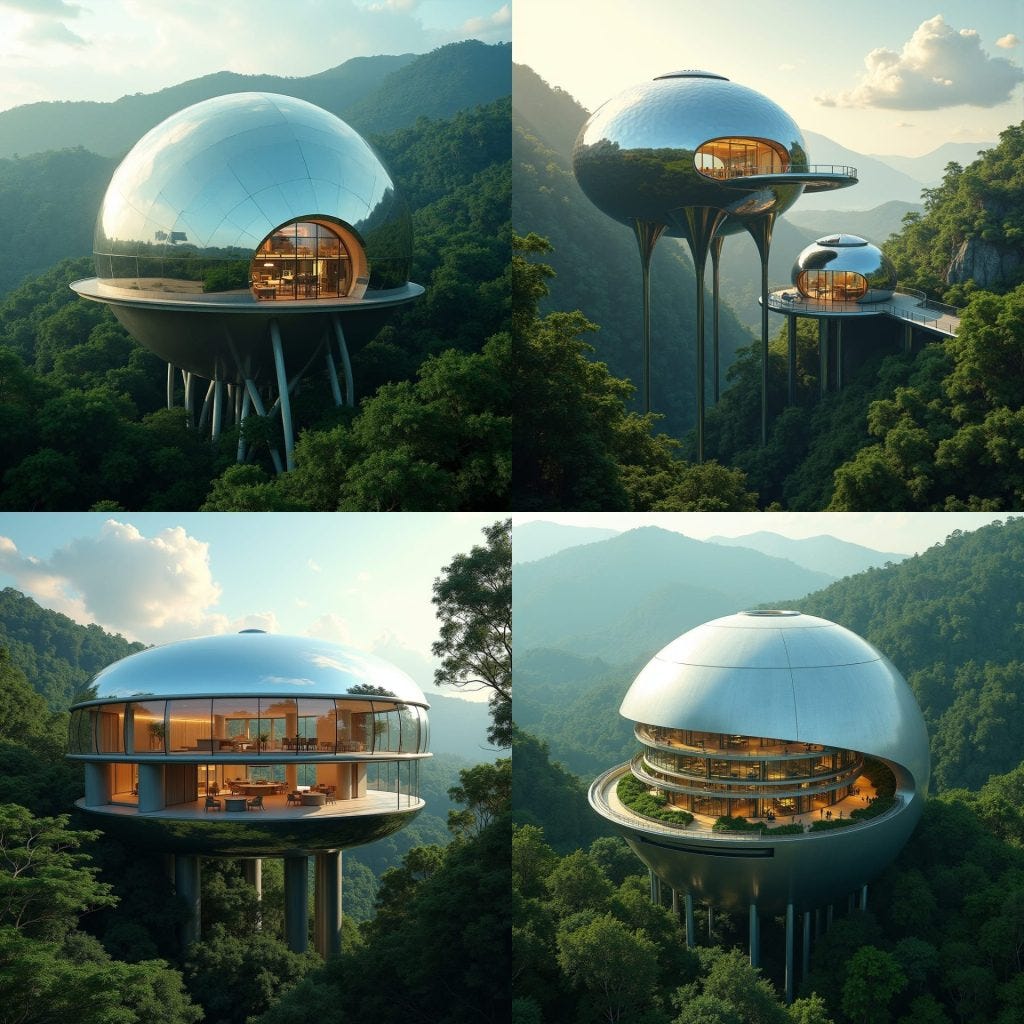
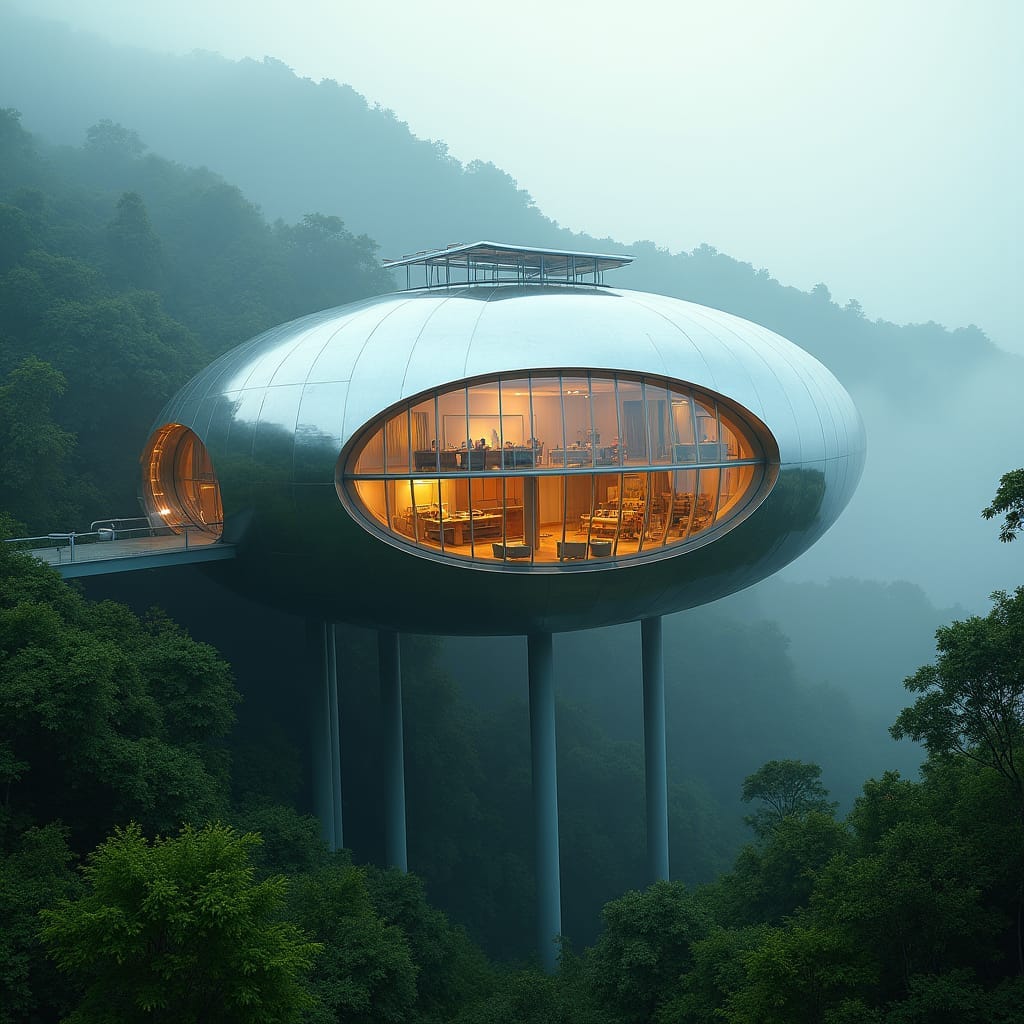
A futuristic, eco-friendly school, a massive sphere nestled into Jamaica’s lush Blue Mountains, its reflective surface mirroring the surrounding forest, elevated on slender stilts, creating the illusion of floating above the landscape, with solar panels and natural ventilation blending seamlessly into the tropical environment. Inside, circular, multi-level rooms spiral around a central core, glass walls offering breathtaking, uninterrupted views of the misty mountains.
A futuristic, eco-friendly school, a massive sphere nestled into Jamaica’s lush Blue Mountains, its reflective surface mirroring the surrounding forest, elevated on slender stilts, creating the illusion of floating above the landscape, with solar panels and natural ventilation blending seamlessly into the tropical environment. Inside, circular, multi-level rooms spiral around a central core, glass walls offering breathtaking, uninterrupted views of the misty mountains.
A futuristic, eco-friendly school, a massive sphere nestled into Jamaica’s lush Blue Mountains, its reflective surface mirroring the surrounding forest, elevated on slender stilts, creating the illusion of floating above the landscape, with solar panels and natural ventilation blending seamlessly into the tropical environment. Inside, circular, multi-level rooms spiral around a central core, glass walls offering breathtaking, uninterrupted views of the misty mountains.
A futuristic, eco-friendly school, a massive sphere nestled into Jamaica’s lush Blue Mountains, its reflective surface mirroring the surrounding forest, elevated on slender stilts, creating the illusion of floating above the landscape, with solar panels and natural ventilation blending seamlessly into the tropical environment. Inside, circular, multi-level rooms spiral around a central core, glass walls offering breathtaking, uninterrupted views of the misty mountains.
A futuristic, eco-friendly school, a massive sphere nestled into Jamaica’s lush Blue Mountains, its reflective surface mirroring the surrounding forest, elevated on slender stilts, creating the illusion of floating above the landscape, with solar panels and natural ventilation blending seamlessly into the tropical environment. Inside, circular, multi-level rooms spiral around a central core, glass walls offering breathtaking, uninterrupted views of the misty mountains.
A futuristic, eco-friendly school, a massive sphere nestled into Jamaica’s lush Blue Mountains, its reflective surface mirroring the surrounding forest, elevated on slender stilts, creating the illusion of floating above the landscape, with solar panels and natural ventilation blending seamlessly into the tropical environment. Inside, circular, multi-level rooms spiral around a central core, glass walls offering breathtaking, uninterrupted views of the misty mountains.
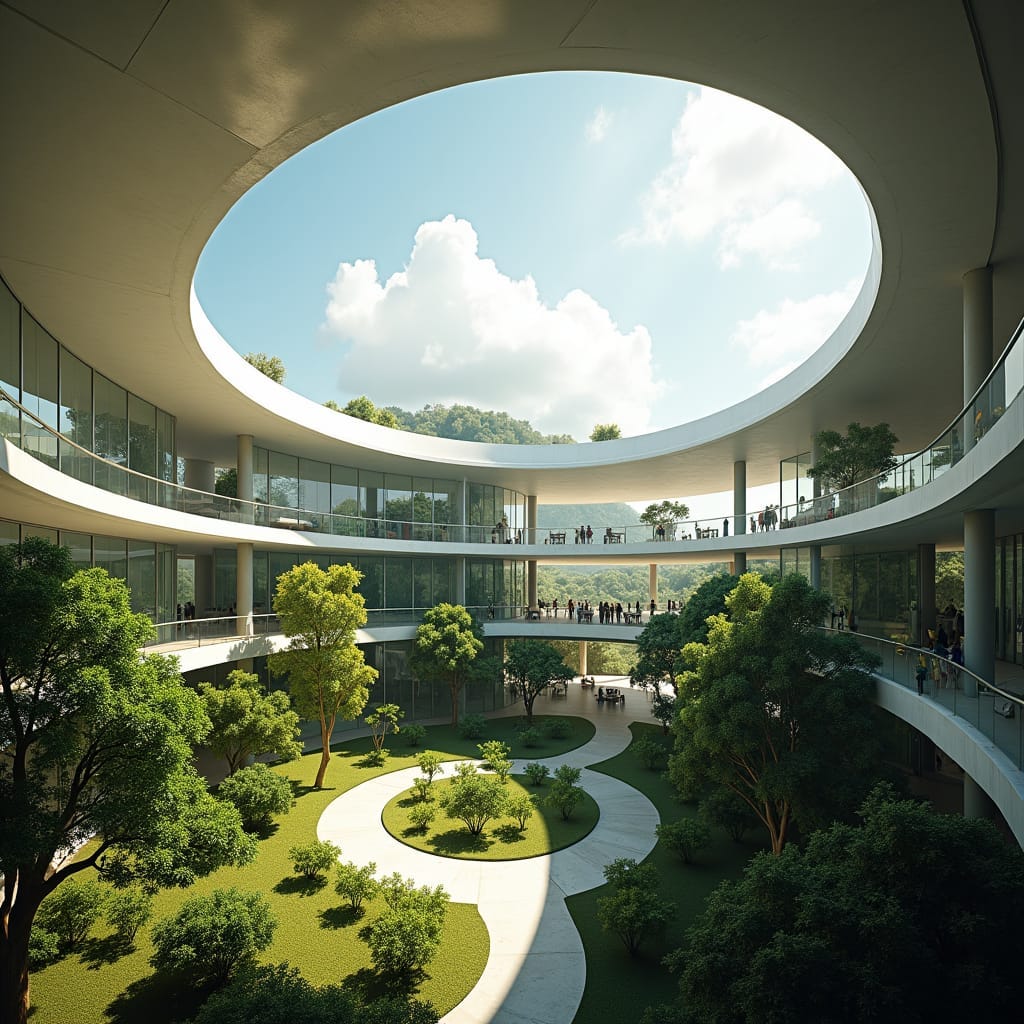
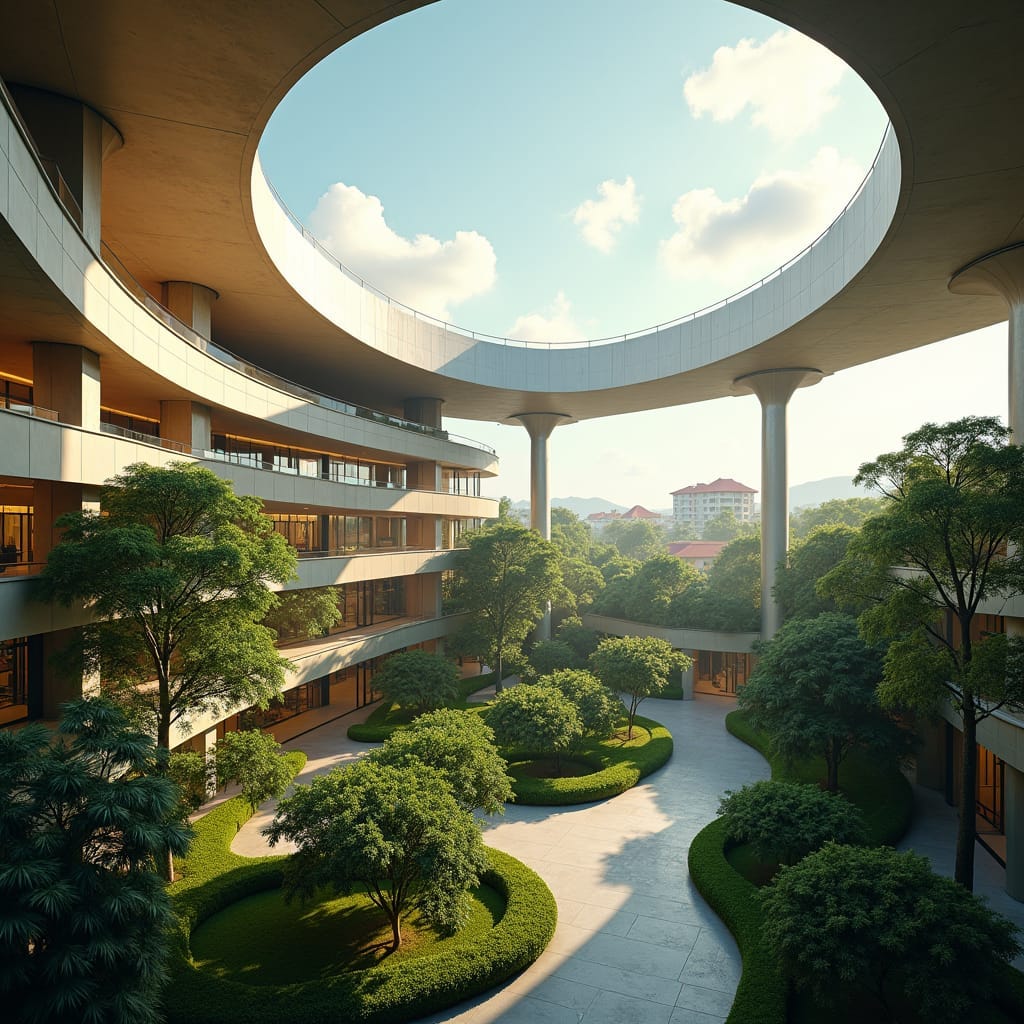
A sleek, modern U-shaped school arches over a vibrant tropical courtyard in the heart of Kingston, Jamaica, its reflective surface glinting in the light. Supported by slender steel columns, the dramatic structure creates a spacious, open area beneath, where lush greenery and meandering pathways thrive, forming a tranquil oasis amidst the urban bustle. Above, the upper floors, suspended in mid-air, house state-of-the-art labs and classrooms, with floor-to-ceiling windows offering breathtaking views of the city.
A futuristic, upside-down U-shaped school arcs over a vibrant, tropical courtyard in the heart of Kingston, Jamaica, blending seamlessly into the urban landscape. The sleek, reflective facade, reminiscent of Syd Mead’s futuristic designs, is supported by towering steel columns, creating a spacious, airy atmosphere beneath. Lush greenery and meandering pathways fill the courtyard, evoking the tranquil ambiance of a hidden oasis. Suspended upper floors, with floor-to-ceiling windows, house state-of-the-art labs and classrooms, offering breathtaking views of the city.
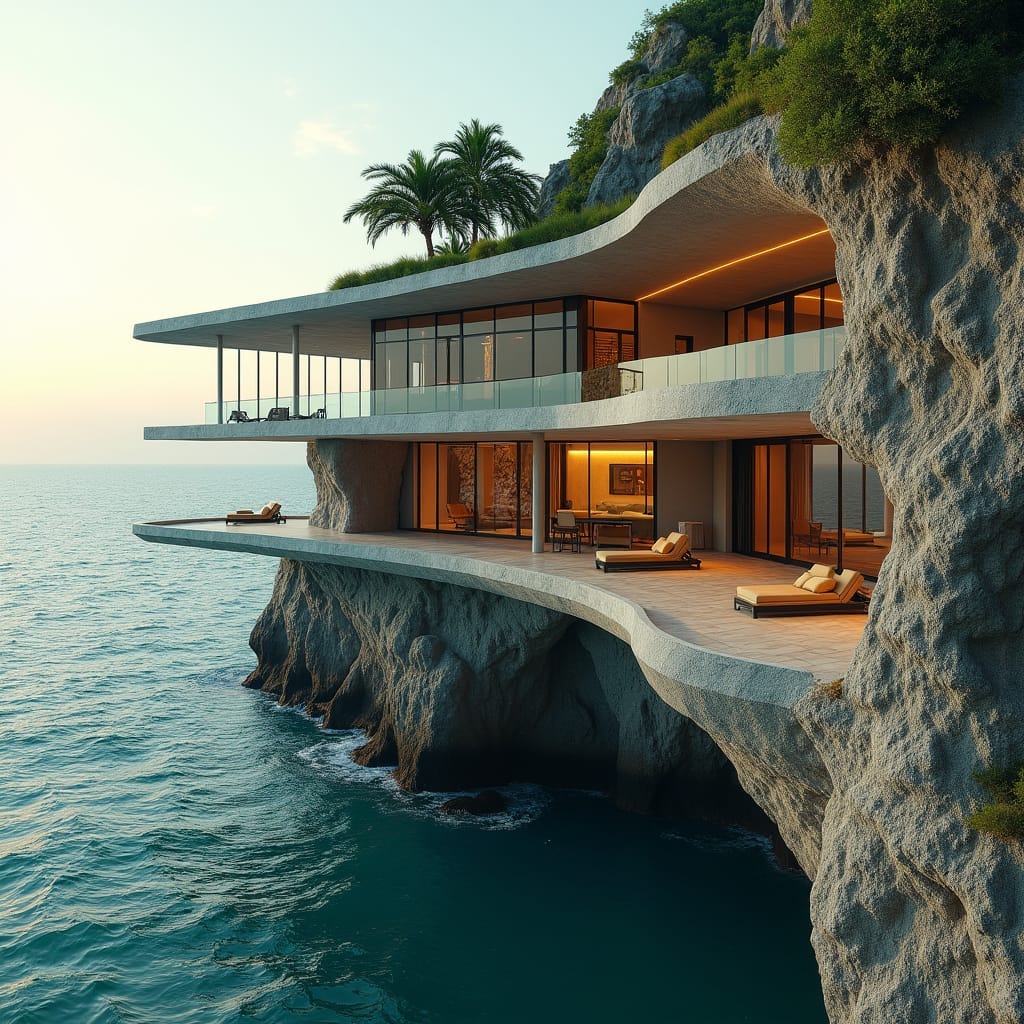
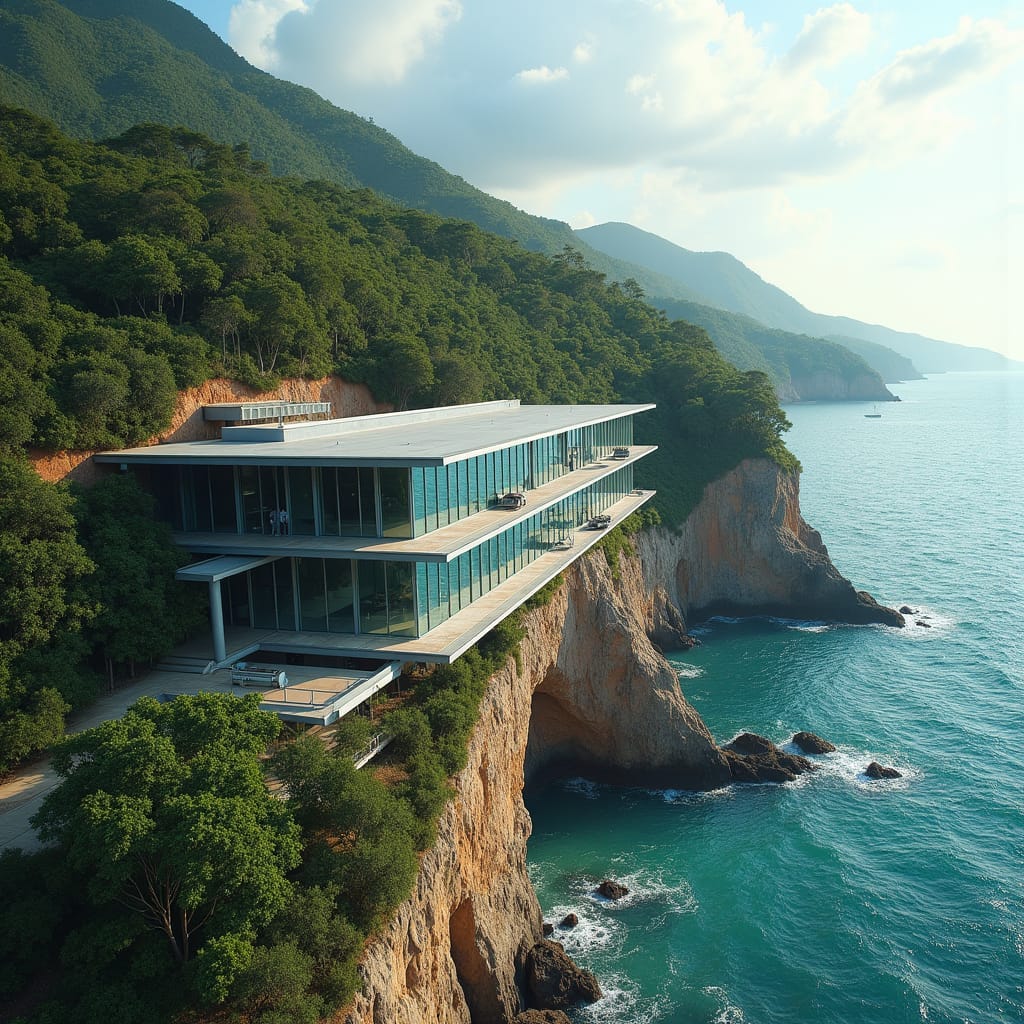
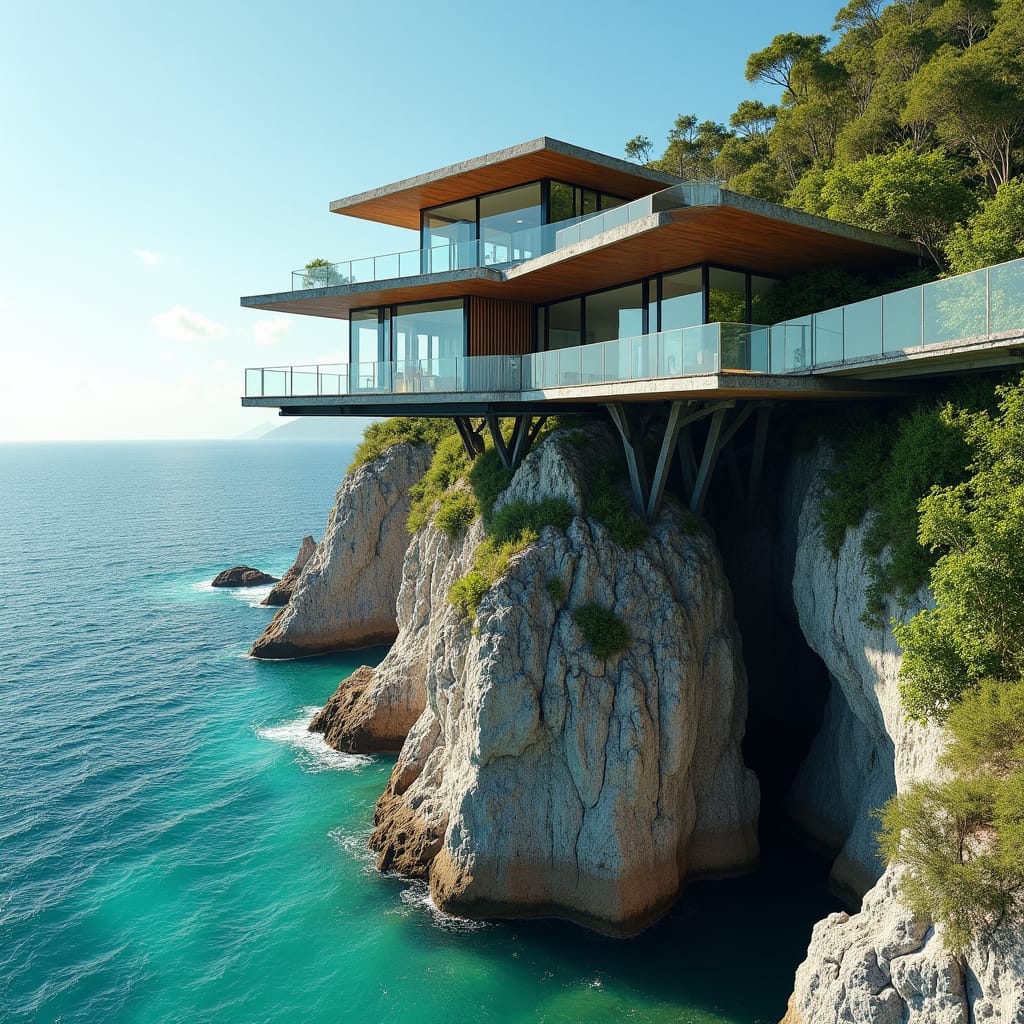
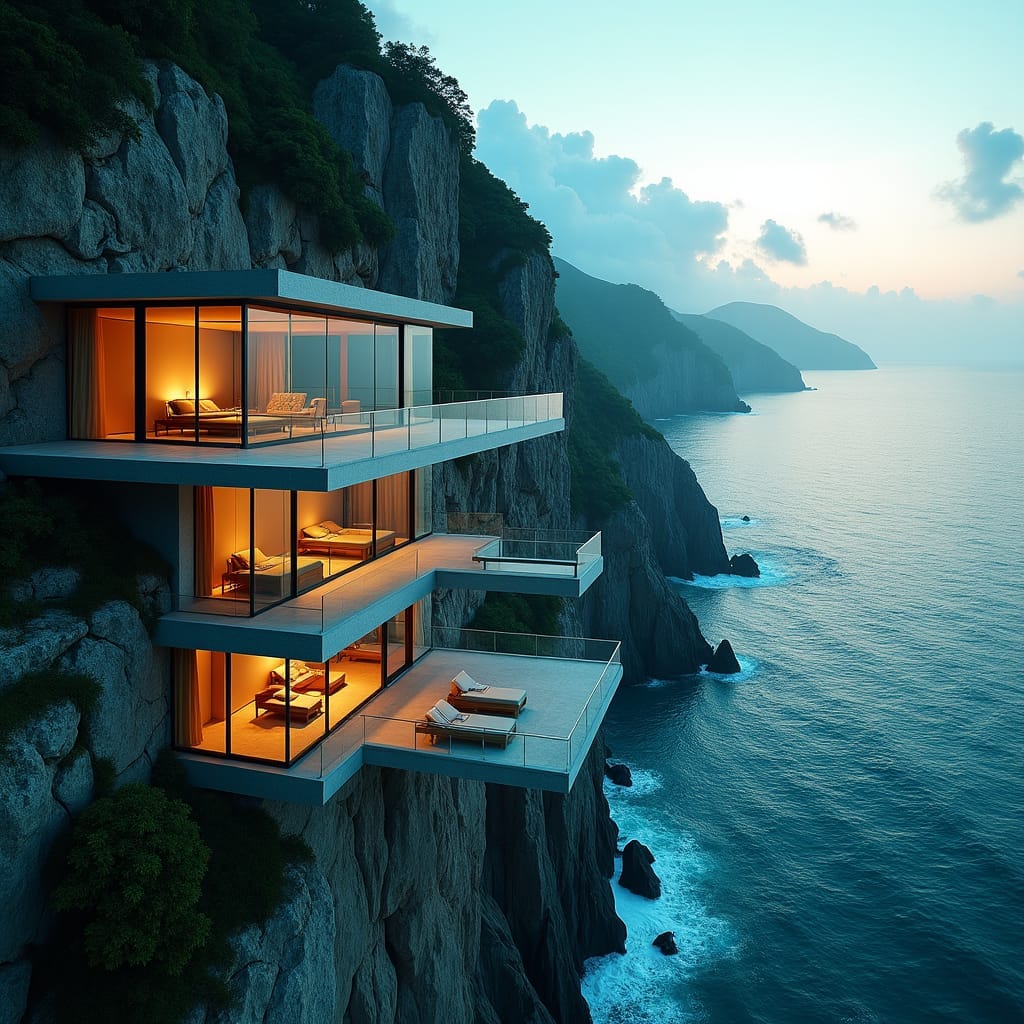
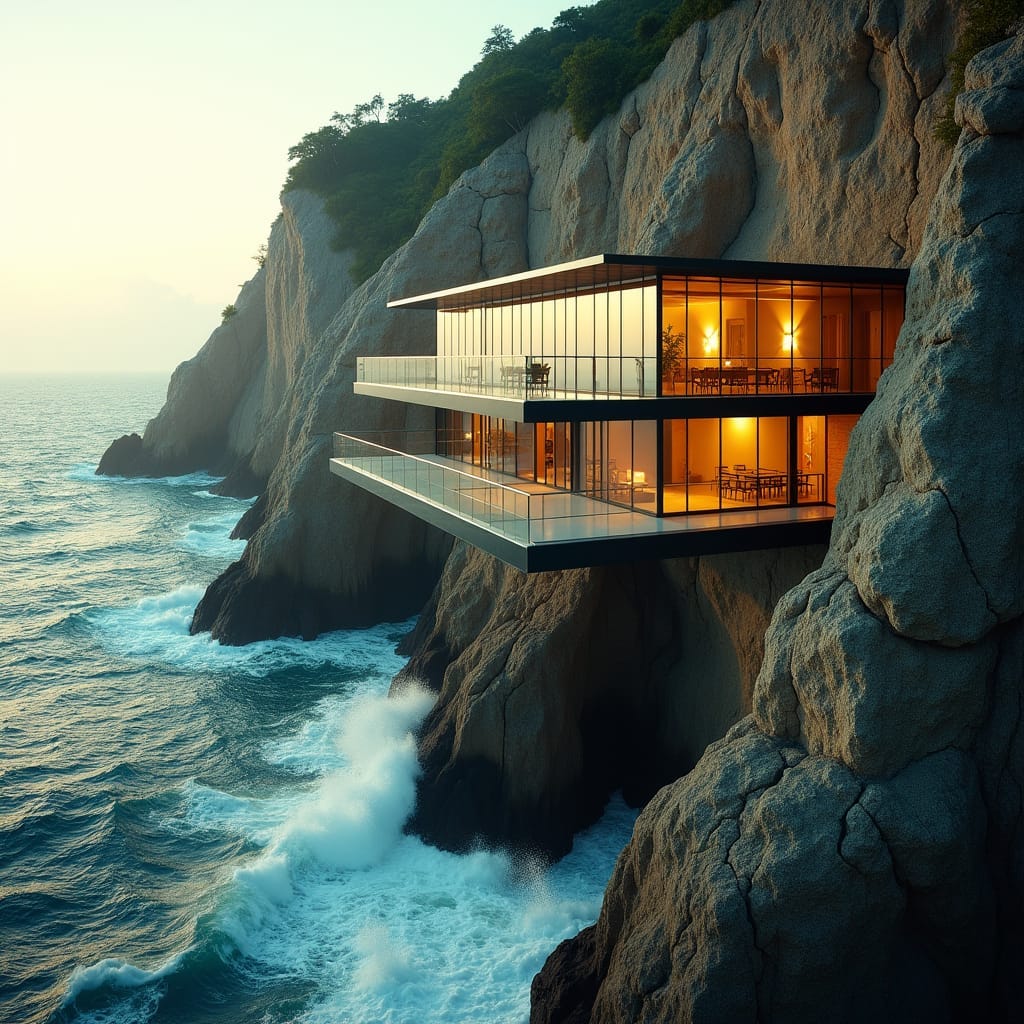
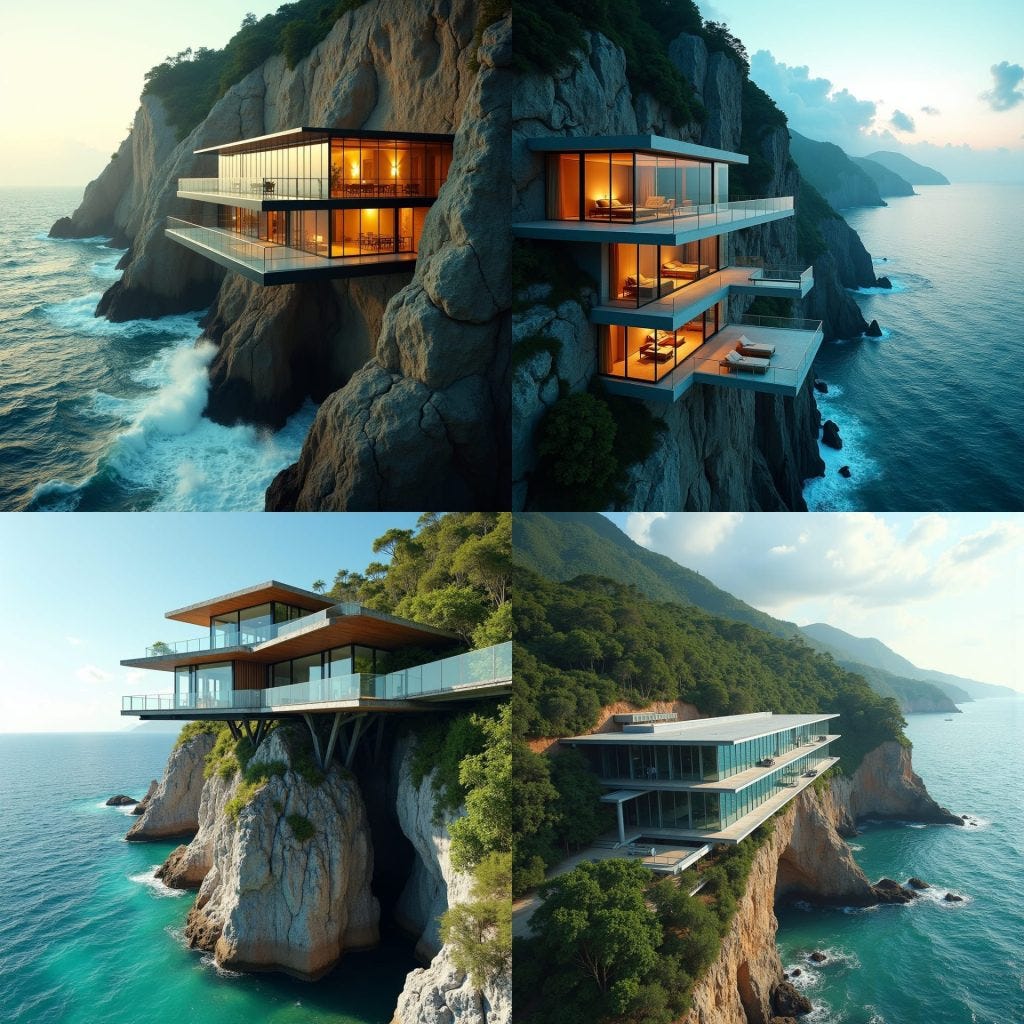
A majestic, modern coastal building in Jamaica’s northern coast, carved into the rugged cliffs, with floor-to-ceiling glass walls that seem to defy gravity, cantilevered over the turquoise ocean, offering heart-stopping views. The building’s façade juxtaposes rough-hewn natural stone with sleek, silver steel and glass, creating a captivating interplay of organic and synthetic textures. Suspended, steel-beamed walkways weave between the multi-tiered levels, while a rooftop oasis beckons with an expansive, ocean-facing vista. Soft, golden light spills across the architecture, accentuating the synergy of natural and man-made elements, as if the structure has grown organically from the cliffside. Please note: The designs and concepts of these schools are purely conceptual and intended for inspiration and visualization purposes only. They do not represent actual construction plans or existing buildings.
A coastal school built directly into the cliffs of Jamaica’s northern coast, featuring glass-walled rooms that extend over the edge of the cliffs
A coastal school built directly into the cliffs of Jamaica’s northern coast, featuring glass-walled rooms that extend over the edge of the cliffs
A coastal school built directly into the cliffs of Jamaica’s northern coast, featuring glass-walled rooms that extend over the edge of the cliffs
A coastal school built directly into the cliffs of Jamaica’s northern coast, featuring glass-walled rooms that extend over the edge of the cliffs. Please note: The designs and concepts of these schools and commercial spaces are purely conceptual and intended for inspiration and visualization purposes only. They do not represent actual construction plans or existing buildings.
A coastal school built directly into the cliffs of Jamaica’s northern coast, featuring glass-walled rooms that extend over the edge of the cliffs. Please note: The designs and concepts of these schools and commercial spaces are purely conceptual and intended for inspiration and visualization purposes only. They do not represent actual construction plans or existing buildings.
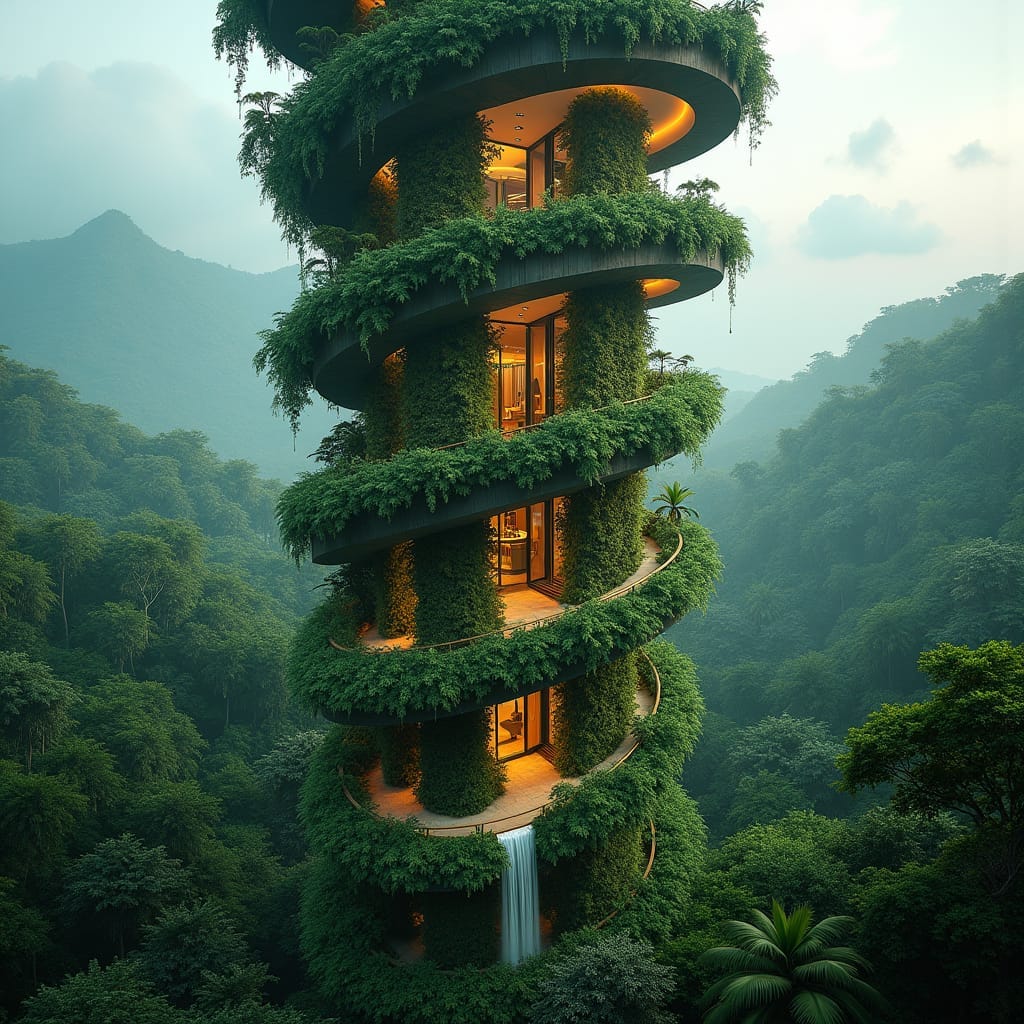
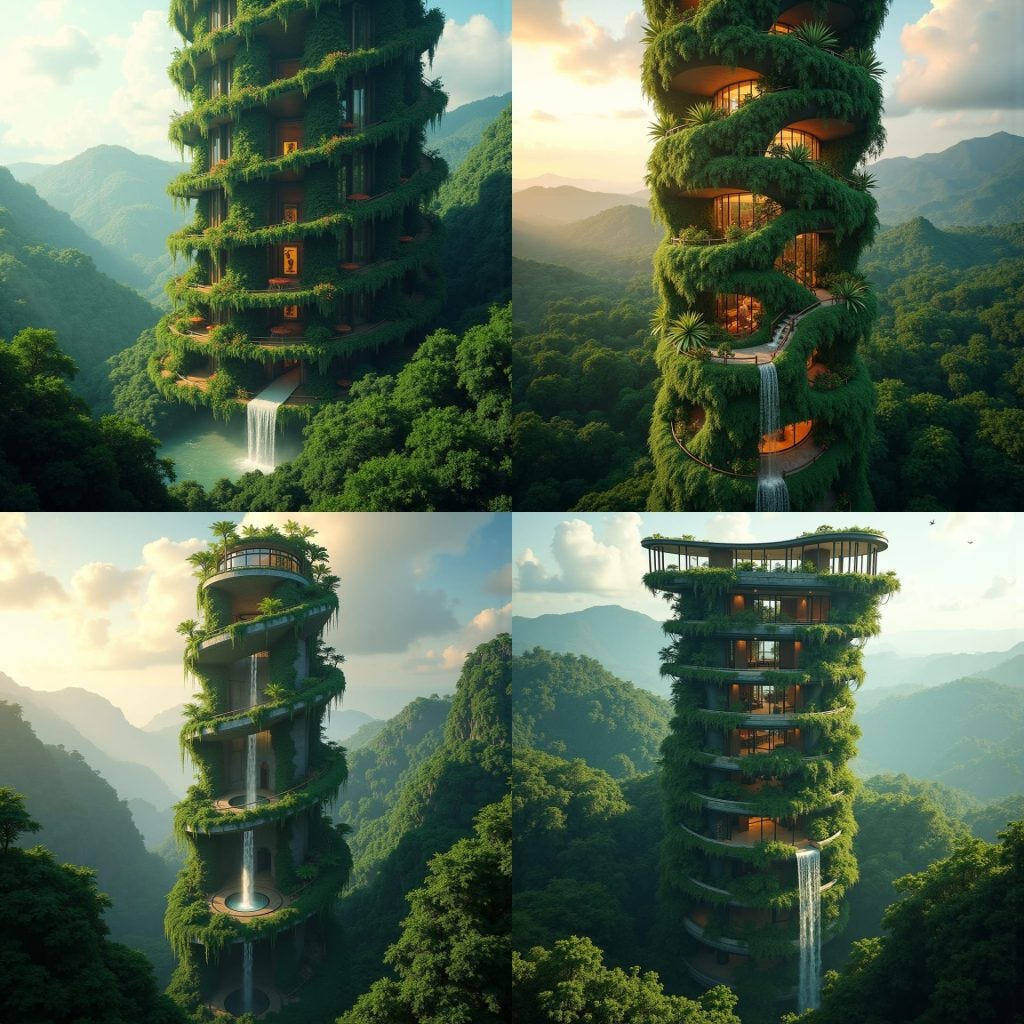
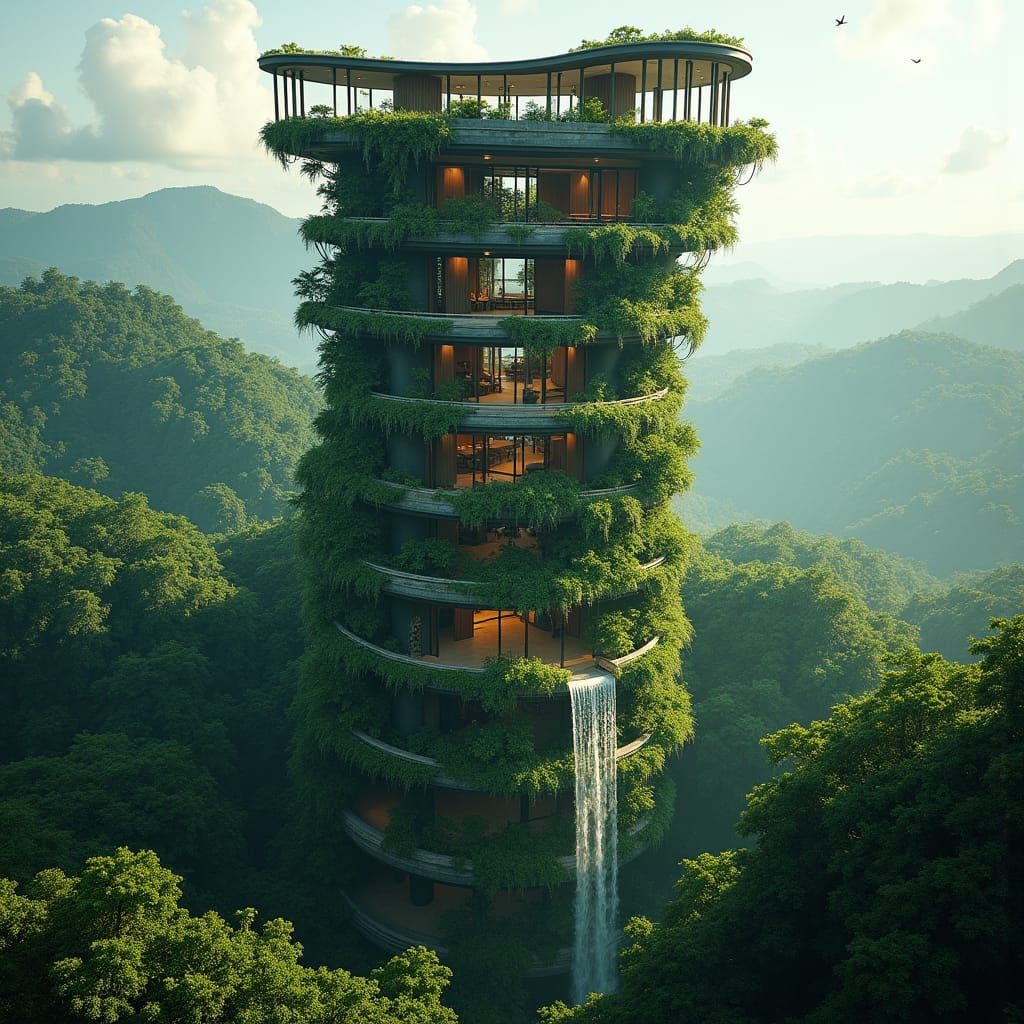
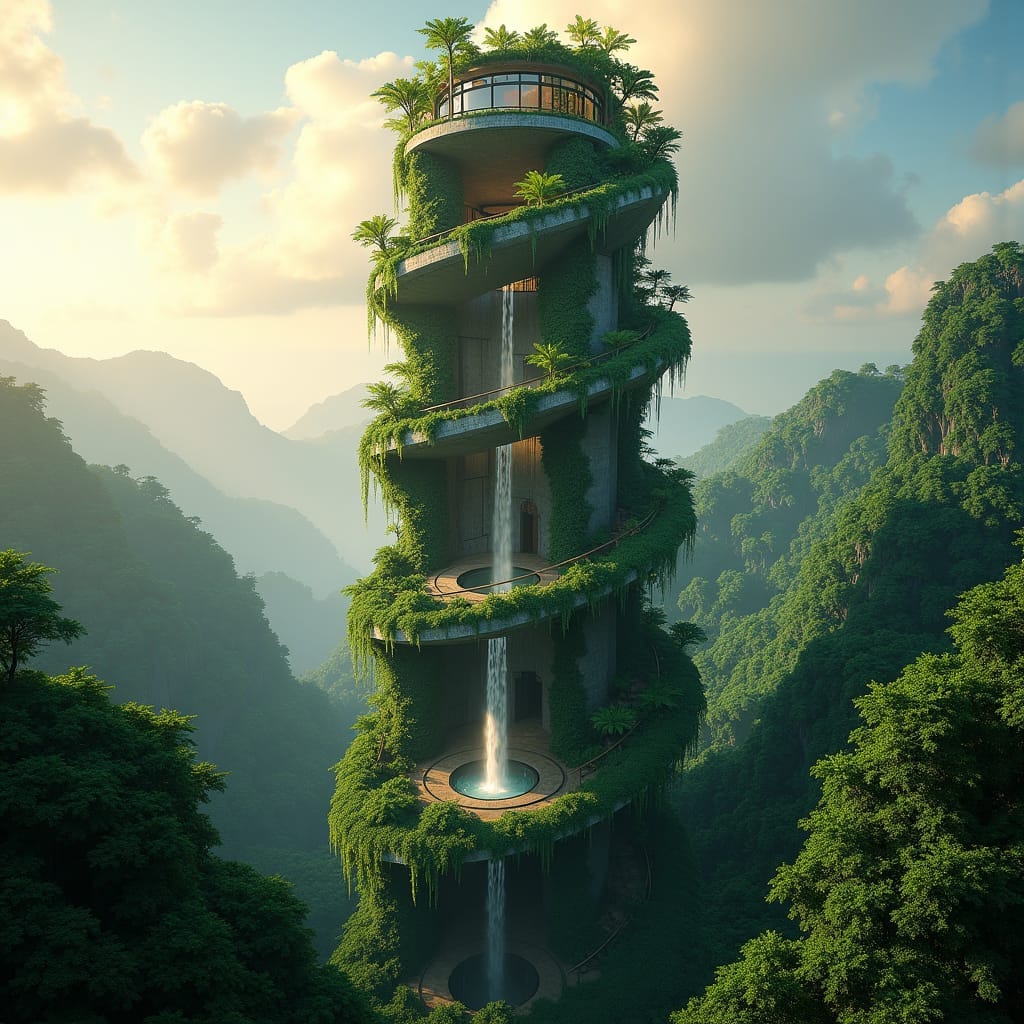
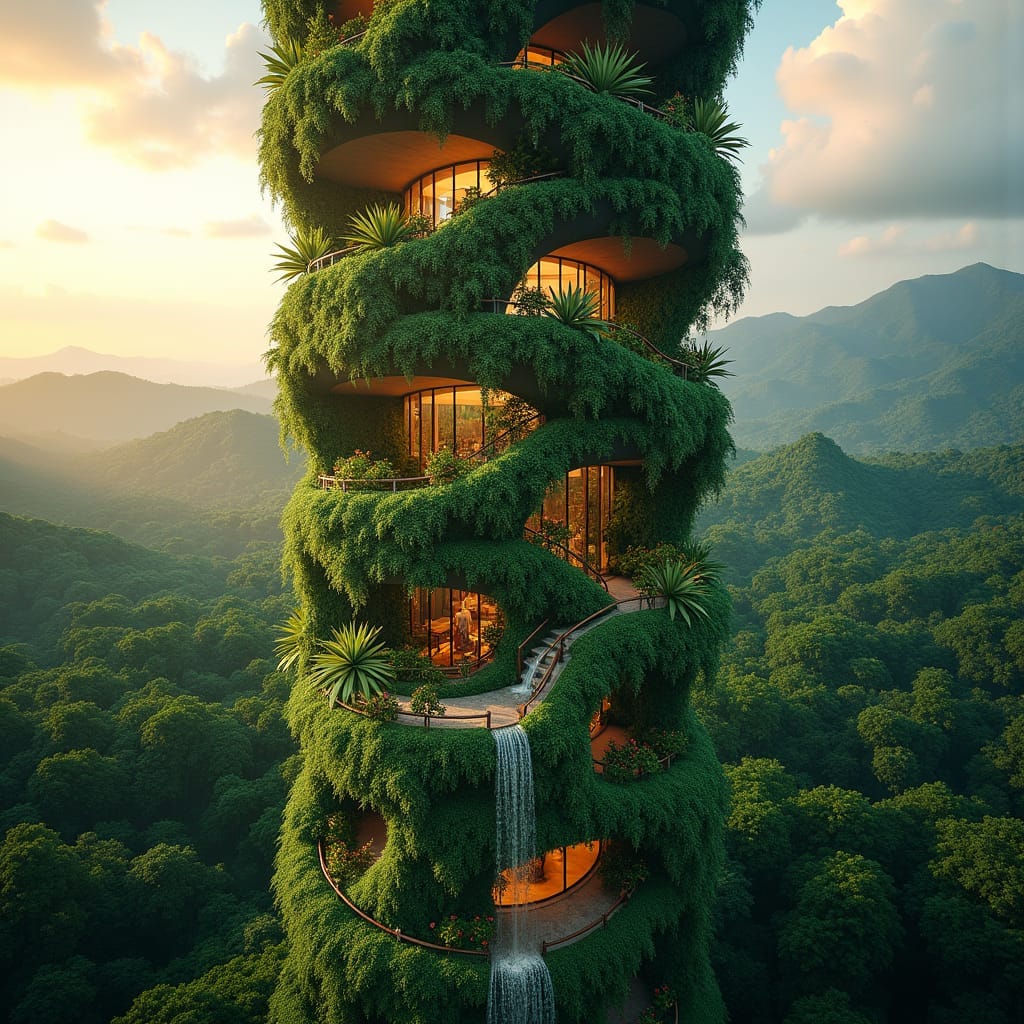
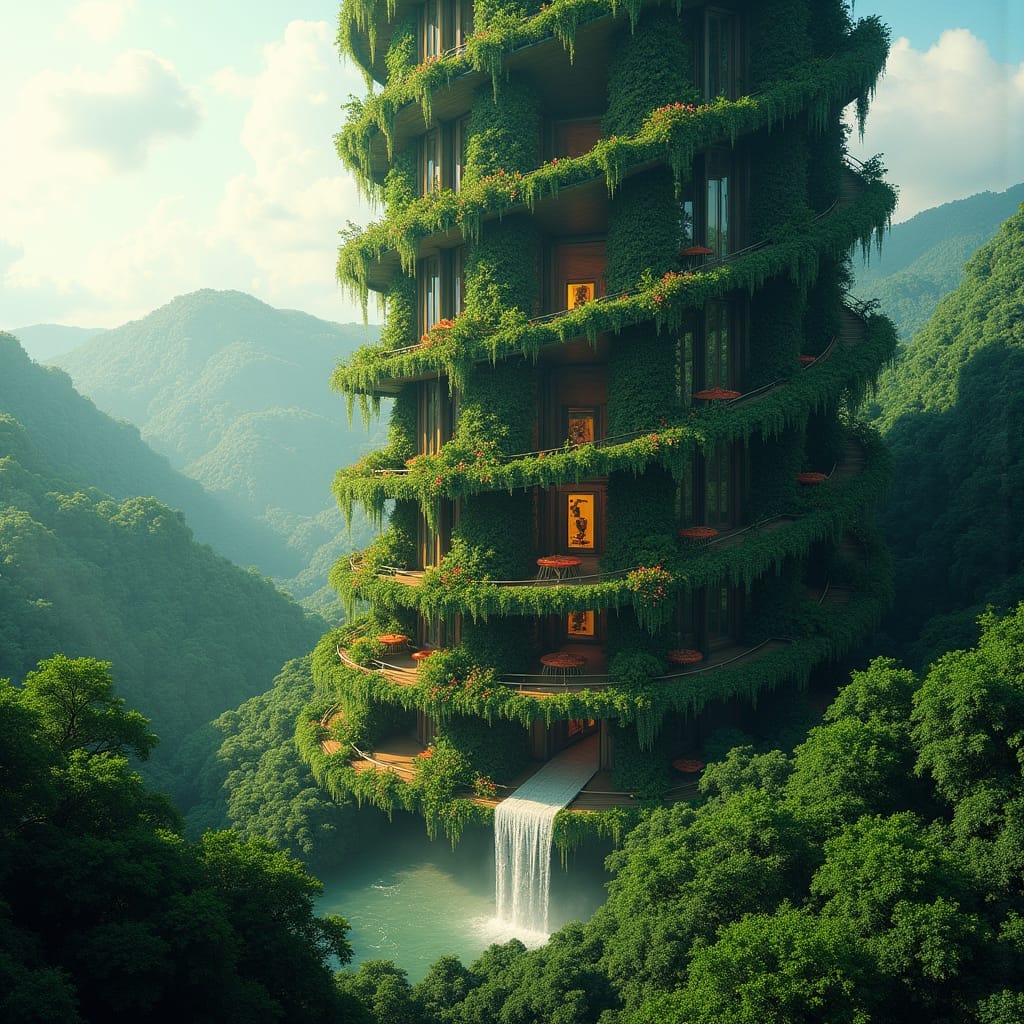
A majestic, twisting tower pierces the Jamaican rainforest canopy, its spiraling form ascending through lush tropical foliage. The exterior is enveloped in a vibrant, living green wall, with exotic plants and vines spilling down its curved façade. Inside, airy, circular spaces are linked by sweeping spiral ramps, evoking a sense of fluid motion. At the pinnacle, a rooftop observatory offers breathtaking, panoramic vistas of the island’s emerald landscape, while a gentle waterfall flows through the tower’s core, creating a serene ambiance.
A twisting, vertical tower rising from the rainforest, spiraling upward through Jamaica’s lush tropical landscape.
A twisting, vertical tower rising from the rainforest, spiraling upward through Jamaica’s lush tropical landscape. Please note: The designs and concepts of these schools and commercial spaces are purely conceptual and intended for inspiration and visualization purposes only. They do not represent actual construction plans or existing buildings.
A twisting, vertical tower rising from the rainforest, spiraling upward through Jamaica’s lush tropical landscape.
A twisting, vertical tower rising from the rainforest, spiraling upward through Jamaica’s lush tropical landscape.
A twisting, vertical tower rising from the rainforest, spiraling upward through Jamaica’s lush tropical landscape.
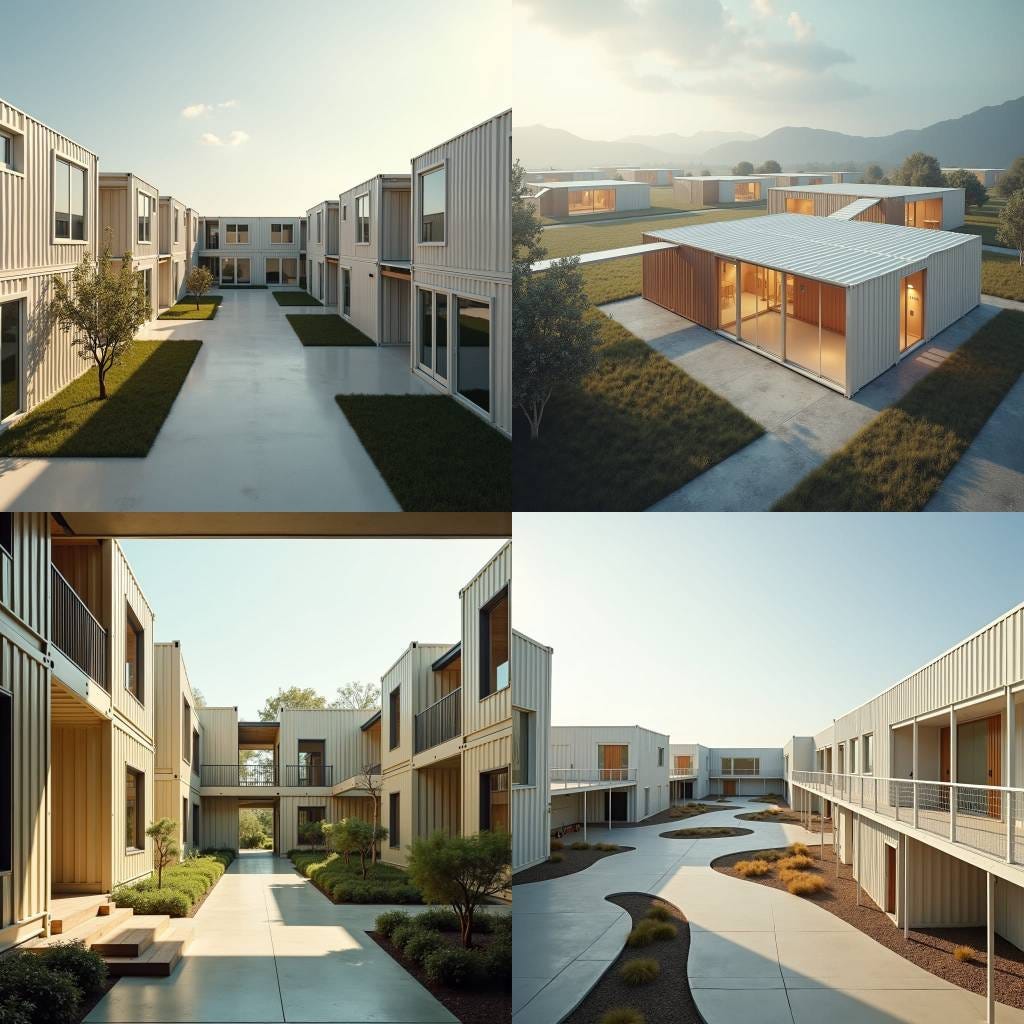
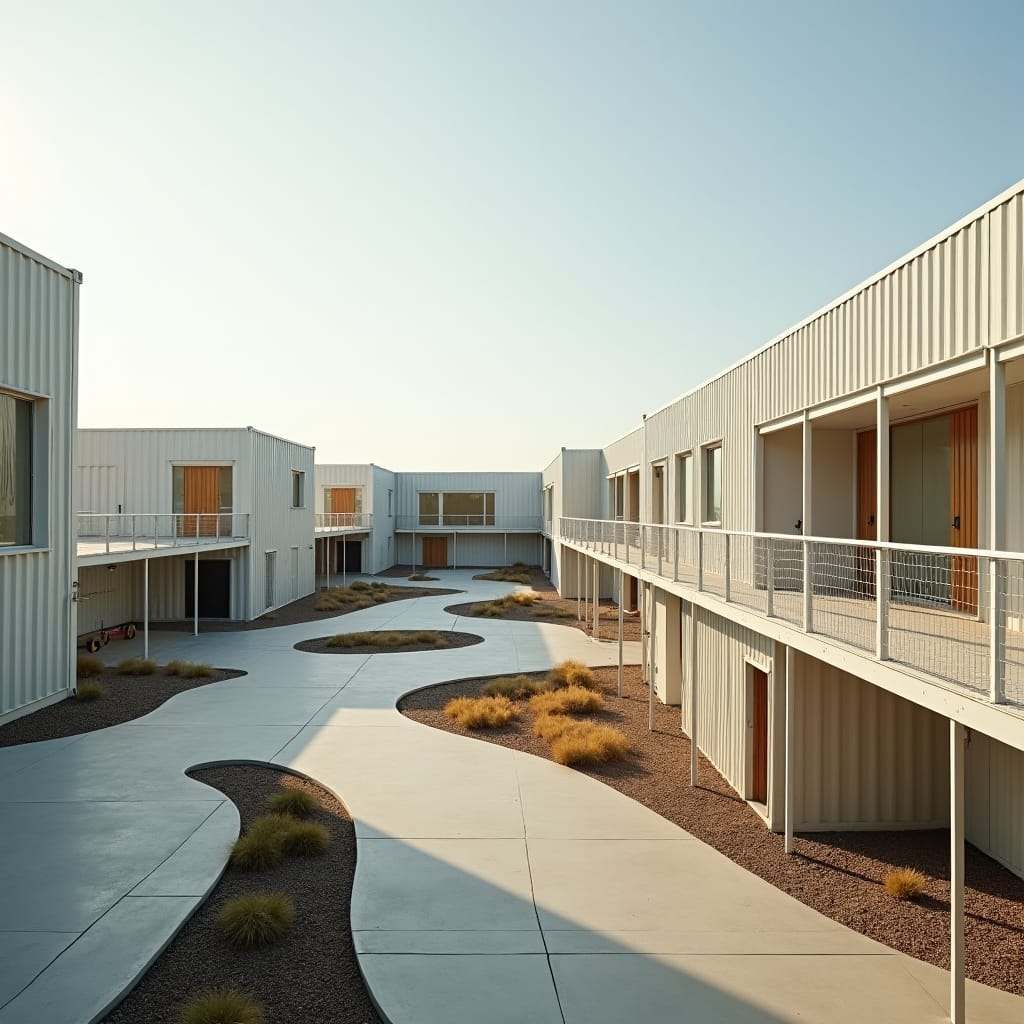
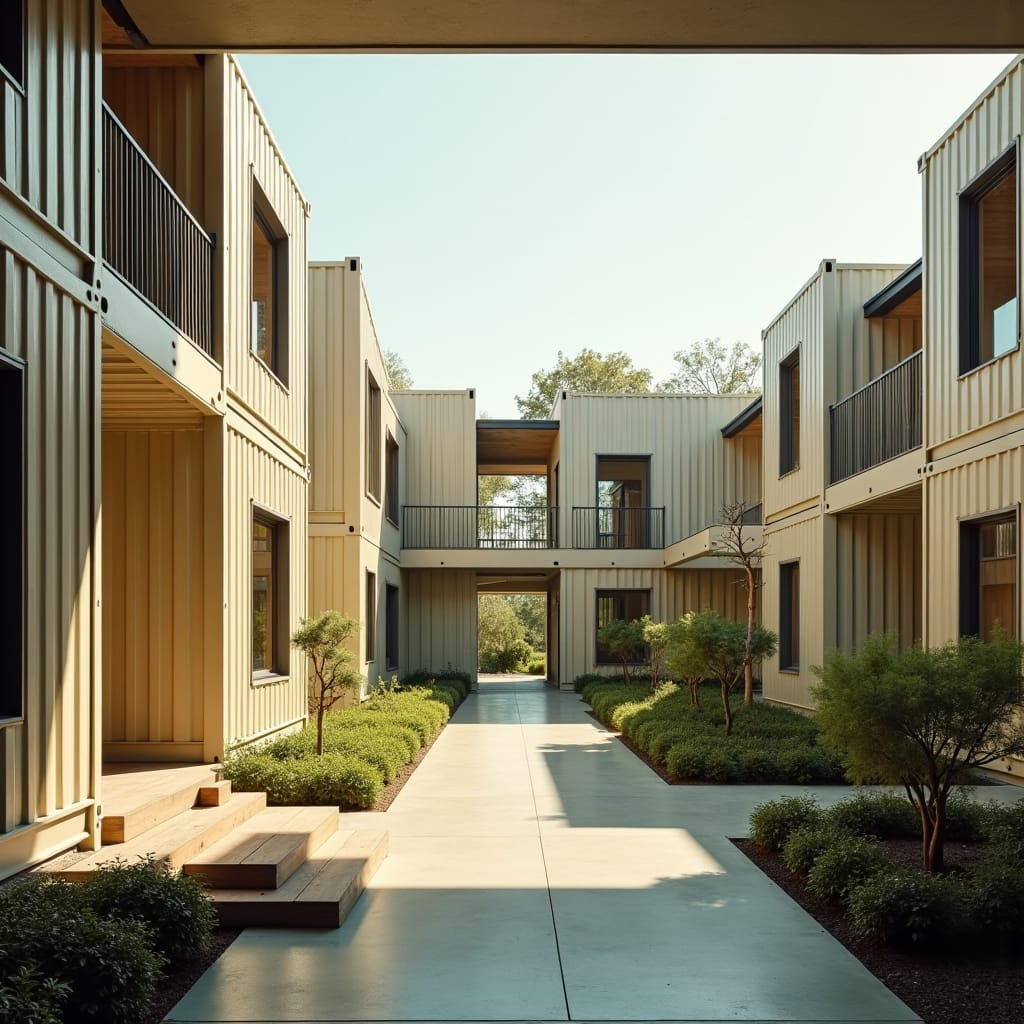
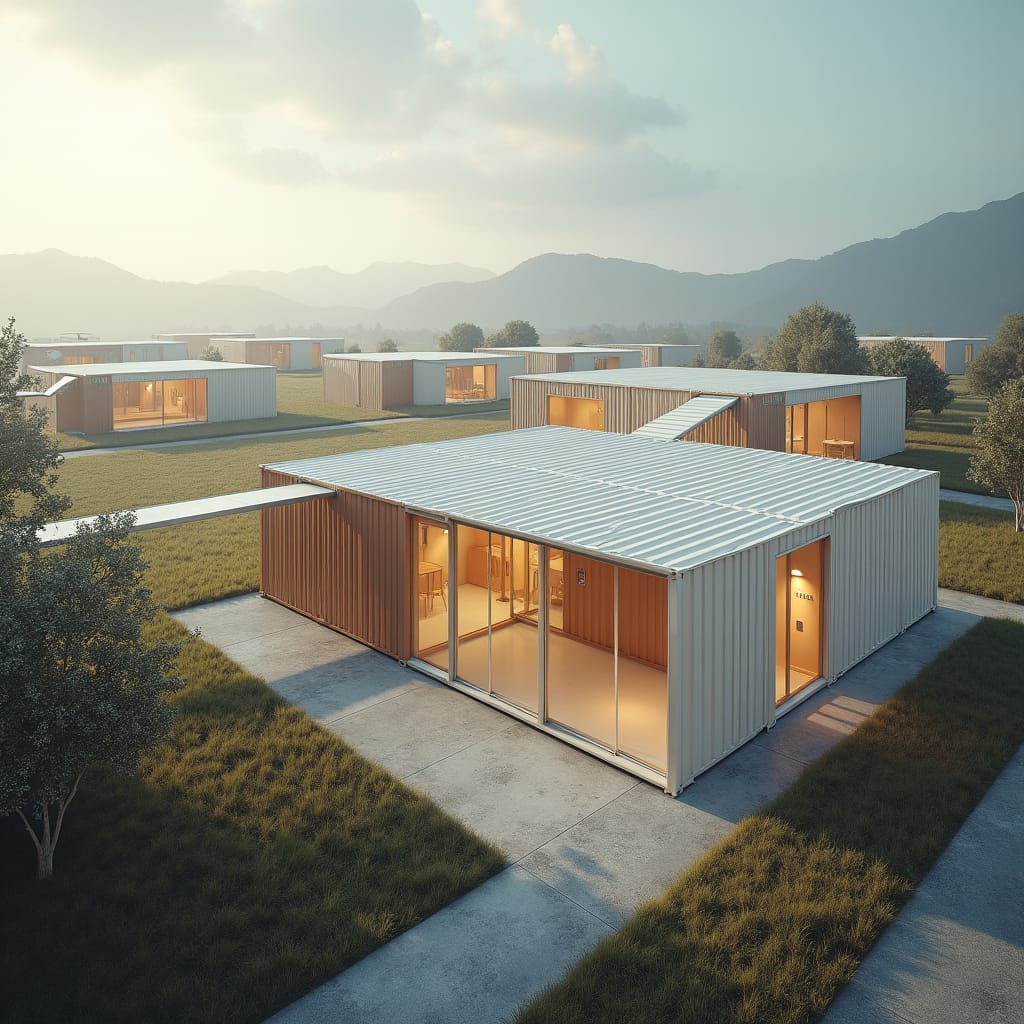
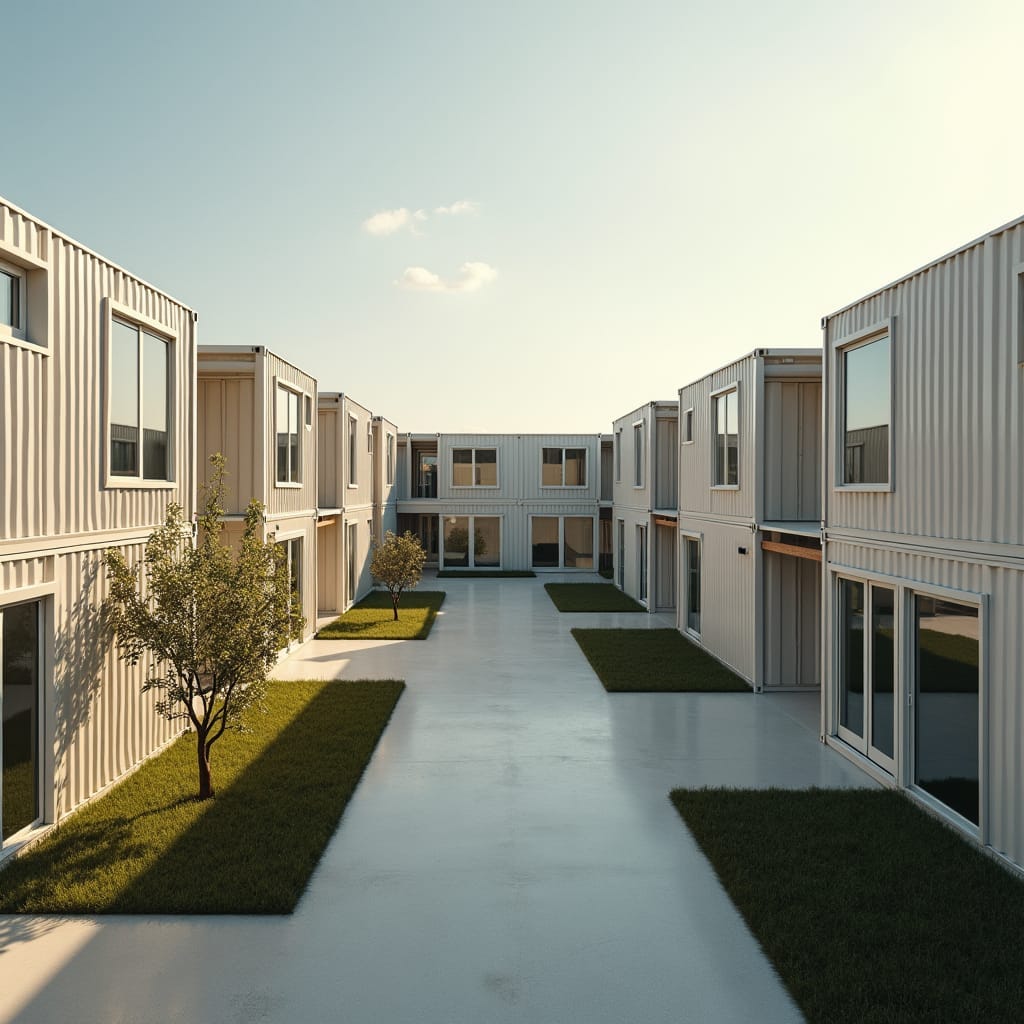
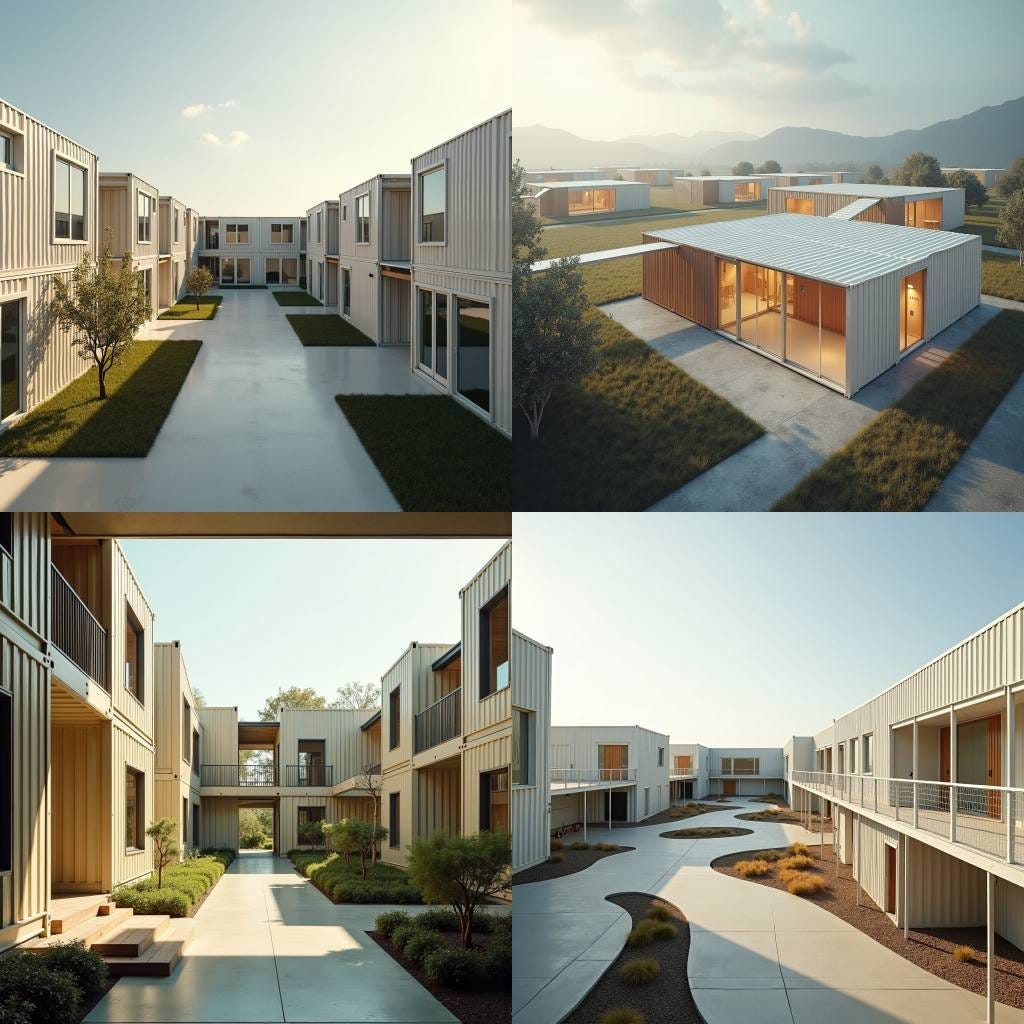
A modern school built entirely from repurposed shipping containers, arranged in a clean and minimalistic design. The containers are painted in neutral tones, with large windows cut into the sides to allow natural light to flood in. Open-air walkways connect the different classrooms, and the layout includes simple outdoor spaces with minimal landscaping. The design is sleek and functional, emphasizing sustainability and efficiency. Minimalist, eco-friendly, modern container architecture.
A modern school built entirely from repurposed shipping containers, arranged in a clean and minimalistic design. The containers are painted in neutral tones, with large windows cut into the sides to allow natural light to flood in. Open-air walkways connect the different classrooms, and the layout includes simple outdoor spaces with minimal landscaping. The design is sleek and functional, emphasizing sustainability and efficiency. Minimalist, eco-friendly, modern container architecture.
A modern school built entirely from repurposed shipping containers, arranged in a clean and minimalistic design. The containers are painted in neutral tones, with large windows cut into the sides to allow natural light to flood in. Open-air walkways connect the different classrooms, and the layout includes simple outdoor spaces with minimal landscaping. The design is sleek and functional, emphasizing sustainability and efficiency. Minimalist, eco-friendly, modern container architecture.
A modern school built entirely from repurposed shipping containers, arranged in a clean and minimalistic design. The containers are painted in neutral tones, with large windows cut into the sides to allow natural light to flood in. Open-air walkways connect the different classrooms, and the layout includes simple outdoor spaces with minimal landscaping. The design is sleek and functional, emphasizing sustainability and efficiency. Minimalist, eco-friendly, modern container architecture.
A modern school built entirely from repurposed shipping containers, arranged in a clean and minimalistic design. The containers are painted in neutral tones, with large windows cut into the sides to allow natural light to flood in. Open-air walkways connect the different classrooms, and the layout includes simple outdoor spaces with minimal landscaping. The design is sleek and functional, emphasizing sustainability and efficiency. Minimalist, eco-friendly, modern container architecture.
A modern school built entirely from repurposed shipping containers, arranged in a clean and minimalistic design. The containers are painted in neutral tones, with large windows cut into the sides to allow natural light to flood in. Open-air walkways connect the different classrooms, and the layout includes simple outdoor spaces with minimal landscaping. The design is sleek and functional, emphasizing sustainability and efficiency. Minimalist, eco-friendly, modern container architecture.
In conclusion, as Jamaica embarks on this journey to reimagine its educational landscape, the design of its schools will be integral to the success of this transformation. The introduction of innovative learning environments—whether they are urban schools with rooftop parks, glass-walled campuses, or beachfront institutions—will help cultivate a generation of thinkers, creators, and problem solvers who are equipped to shape Jamaica’s future. These new STEM schools represent not just a step forward in education but a vision for a modern, sustainable Jamaica, where architecture and learning work hand in hand to inspire the next generation. The future of education in Jamaica will be as much about the spaces in which students learn as the lessons they are taught, paving the way for a brighter, more innovative future.