
 by
by 
“Home isn’t just a location—it’s a vibration. And JamaicaJamaica, with its vibrant culture and stunning landscapes, has a unique position in the global real estate market. The i... More hums with a frequency that calls the soul to attention.”
— Dean JonesDean Jones is a chartered builder, project manager, licensed real estate professional and the founder of Jamaica Homes, ... More, Founder of Jamaica HomesJamaica Homes is a premier real estate company offering a comprehensive platform for buying, selling, and renting proper... More
For millions of JamaicansJamaicans are a resilient and vibrant people with a deep-rooted history defined by courage, resistance, and cultural ric... More scattered across the globe, the idea of returning home is more than a dream—it’s a spiritual calling. Beneath the practical motives—retirement, investment"Investment" in the realm of real estate refers to the allocation of money or resources into property with the expectati... More, family—lies something deeper: a profound yearning to reconnect with one’s roots, to walk on ancestral soil, and to rediscover a self often buried by foreign routines.
This isn’t merely migration—it’s repatriation of spirit.
Subscribe to Jamaica Homes
Jamaica Homes is a reader-supported publication.
Jamaica Homes brings together peopleThe people of Jamaica embody a spirit that is at once richly diverse and unbreakably unified, as captured by the nationa... More, propertyProperty encompasses a wide range of tangible assets that individuals or entities can own, utilize, or invest in, includ... More, and place News, insight, and real opportunities—straight to your inbox.
To understand why returning to Jamaica touches such a profound chord, one must trace the arc of time. Jamaica’s story, and that of its people, is not a straight line, but a sacred spiral—winding from wood and wattle to gated communities, from bondage to sovereignty, from exile to homecoming.
Let’s journey through that sacred spiral.
Before Emancipation: Ancestral Memory in the Soil
Long before Jamaica gained independence, long before it even became a colony, this landIn real estate, land is a foundational element that significantly impacts the value and potential of a property. It enco... More bore the weight and wonder of the ancestors. The Tainos, our island’s first known inhabitants, lived in harmony with the land. Their spiritual practices—rooted in nature, the stars, and sacred rituals—left an imprint that never quite disappeared.
Then came the brutal centuries of slaverySlavery in Jamaica, which began in the early 17th century following the island's colonization by the British, was a brut... More. Africans were stolen, shackled, and shipped, yet their spiritual essence endured. In the hills of Jamaica, enslaved people preserved pieces of Africa through drumming, dance, herbal medicine, and reverence for the unseen. They turned pain into praise, and their resistance wasn’t just political—it was spiritual.
“Jamaica doesn’t just remember you—it holds your grandmother’s prayers, your great-grandfather’s footsteps, your people’s fire. Coming back isn’t nostalgia. It’s resurrection.”
— Dean Jones
1838: Emancipation and the Seeds of Self-Reliance
When emancipation finally came in 1838, it was not the end of the journey—it was the beginning of reclamation.
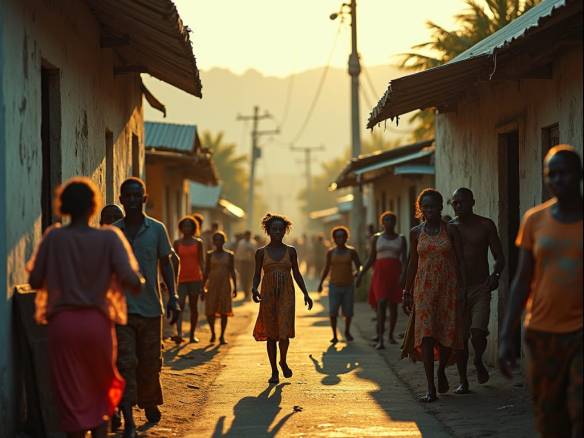
Freed Jamaicans built homes with their hands and hearts—wooden structures that stood like quiet monuments to resilience. Villages sprang up inland and in the hills, away from the plantations. These were more than homes—they were sanctuaries.
Many returnees today can still find remnants of these dwellings, or at least the land their families once owned. To build on that land, or even to walk it again, is often an act of profound spiritual restoration.
“Returning to Jamaica isn’t just buying property—it’s reclaiming legacyLegacy, in the context of Jamaica, real estate, and the broader world, represents the enduring impact of past actions, a... More, even if the deeds were never printed. The land knows who belongs to it.”
— Dean Jones
1962: Independence and the Dream of a New Jamaica
The year 1962 was a turning point. Jamaica, having gained independence from Britain, began to write its own story on its own terms.
That dream—though battered by economic struggles and political turbulence—ignited something powerful in the JamaicanThe term "Jamaican" encompasses the citizens of Jamaica and their descendants in the Jamaican diaspora, representing a d... More psyche: pride. We were no longer subjects of empire. We were free to be ourselves. Culturally, spiritually, and architecturally, this gave rise to an eclectic mix of Afrocentric, EuropeanEuropeans, in the context of Jamaica, real estate, and the global market, refer to individuals from the continent of Eur... More, and CaribbeanThe Caribbean is a vast region made up of over 700 islands, islets, reefs, and cays. Some of the most well-known islands... More identities.
For the diasporaIn the context of Jamaica, real estate, and the broader global sphere, diaspora refers to the community of Jamaicans liv... More, this period planted seeds of return. Parents who left during Windrush years or for better jobs abroad began telling their children, “One day, we’ll go back.” Many of those children, now adults, are making that dream real.
They’re not just returning to a homeland. They’re returning to a possibility.
From Wood Homes to Montego BayMontego Bay, often referred to as MoBay, is one of Jamaica's most popular tourist destinations, known for its stunning b... More: A New Pinnacle
Today, Jamaica offers more than the nostalgia of mango trees and blue mountainsThe Blue Mountains are a famous mountain range in Jamaica, and they’re special for many reasons. The highest point in ... More. It offers growth. From the lush serenity of PortlandPortland is a parish located on Jamaica's northeastern coast, renowned for its lush rainforests, stunning waterfalls, an... More to the luxury enclaves of Montego Bay, the island has evolved in its architectural and infrastructural prowess.
Montego Bay, in particular, symbolizes the new pinnacle—world-class resortsResorts are specialized destinations designed to offer leisure and recreational activities, blending luxury with relaxat... More, luxury condosCondominiums, or condos, are individual residential units within a larger building where owners possess their units but ... More, international schools, fine dining, and thriving expat communities. It’s where returning Jamaicans can live with both roots and refinement.
But the essence remains: even in a gated communityIn Jamaica, "community" refers to more than just a geographic area; it embodies a collective identity rooted in shared e... More with sea views and smart technologyTechnology, in its original definition, refers to the application of scientific knowledge for practical purposes, often ... More, the heartbeat of Jamaica still thumps beneath your feet.
“You can live in modern Montego Bay, but the sunset still feels like a psalm. That’s the mystery of Jamaica—it’s always talking to your soul.”
— Dean Jones
The Spiritual Side of Returning
So what makes returning spiritual?
It’s the moment you wake to the sound of roosters instead of sirens.
It’s when you feel the breeze from the Blue Mountains and something inside you exhales.
It’s finding yourself barefoot in red dirt, planting callaloo, and realizing you’ve never felt richer.
Returning is spiritual because it brings you back into rhythm—earth, culture, family, spirit. It’s a reconnection with your source—not just your birthplace, but your birthright.
Many who return speak of improved mental health, lowered blood pressure, and a sense of peace they couldn’t find in London or New York. That’s no accident.
Jamaica, despite its struggles, remains energetically sacred. The Maroons knew it. The Rastafari know it. The land still pulses with life, resistance, healing, and hope.
It’s Not Just a Move. It’s a Pilgrimage.
The journey back to Jamaica is different from going to any other island. It’s not a simple relocation—it’s a pilgrimage. And like all pilgrimages, it requires courage, sacrifice, and faith.
You might leave behind material conveniences or face the inefficiencies of a developing nation. But you gain something immeasurable—soul alignment.
For returnees, building a home in Jamaica is often about more than square footageIn real estate, square footage refers to the measurement of livable space within a property, which plays a critical role... More. It’s about legacy. Whether it’s refurbishing a family yardIn Jamaican Patois, the term "yard" carries a special significance beyond its literal meaning of a plot of land. Traditi... More or investing in a hillside villaIn Jamaica, a villa is a prestigious type of residence known for its spaciousness, elegant design, and luxurious feature... More, it’s a statement: I’m home.
“We are the answered prayers of our ancestors. When we come home, we complete a circle they died hoping we’d walk.”
— Dean Jones
A Quiet Revolution
Every time a Jamaican returns home, it is an act of quiet revolution.
It’s saying no to assimilation and yes to authenticity.
It’s choosing ackeeAckee, Jamaica’s national fruit, holds a special place in the heart of Jamaican culture and language, with its name se... More over angst, breeze over burnout, and community over concrete jungles.
In a world that tells you to hustle till you break, returning to Jamaica is a radical act of healing.
Is It for Everyone?
No. And that’s okay.
Some return and find it too slow. Others wrestle with inefficiency, or the realities of developing infrastructure. But for many, the trade-off is worth it: A little inconvenience in exchange for meaning, for silence, for joy.
And most of all—for home.
Closing Reflection
So why is returning to Jamaica a spiritual journey?
Because it rewrites the story. Because it connects past to present. Because it grounds you in something bigger than yourself.
Because Jamaica isn’t just where your passport says you’re from.
It’s where your soul remembers who you are.
“Some places are where you live. But Jamaica is where you belong.”
— Dean Jones
DisclaimerA disclaimer is a statement that serves to limit or exclude liability, usually found in legal documents, websites, produ... More
This article is for inspirational and informational purposes only and does not constitute legal, financial, or real estateReal estate refers to property consisting of land and the structures on it, such as buildings and homes. It also include... More advice. Always consult a licensed real estateIn Jamaican real estate, an estate refers to the total collection of assets and property owned by an individual, especia... More professional when considering property investment or relocation.
Discover more from Jamaica Homes
Subscribe to get the latest posts sent to your email.
Discover more from Jamaica Homes
Subscribe to get the latest posts sent to your email.

Join The Discussion