
 by
by 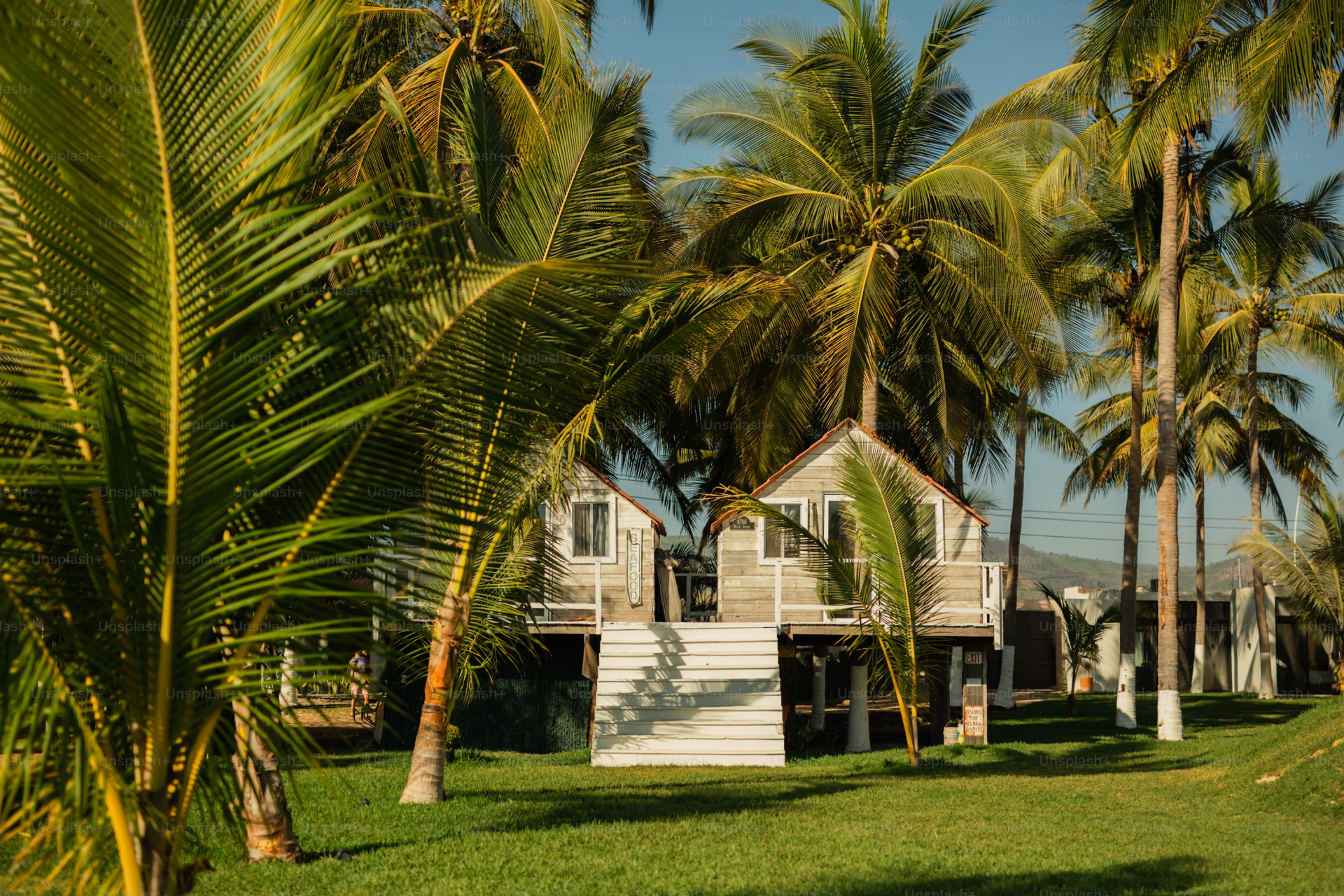
JamaicaJamaica, with its vibrant culture and stunning landscapes, has a unique position in the global real estate market. The i... More, a picturesque island in the CaribbeanThe Caribbean is a vast region made up of over 700 islands, islets, reefs, and cays. Some of the most well-known islands... More, is renowned for its vibrant culture, stunning landscapes, and tropical climate. However, this tropical paradise is not without its challenges. One of the most significant natural threats faced by Jamaica is hurricanesHurricanes, powerful tropical storms characterized by strong winds and heavy rains, significantly impact both Jamaica an... More. Understanding the history of hurricanes in Jamaica and the best types of homes to invest in given this history is crucial for both residents and investors. This piece willIn Jamaica, a will is a legal document created by an individual to specify how their assets, including their belongings ... More delve into the historical context of hurricanes in Jamaica, their impact, and provide insights into the most suitable housing investments considering the island’s susceptibility to these natural disastersNatural disasters, such as hurricanes, earthquakes, and floods, arise from environmental processes that can cause signif... More.
Historical Overview of Hurricanes in Jamaica
Early Records and Impact
Jamaica’s history with hurricanes dates back several centuries. The earliest recorded hurricane hit the island in 1559, causing widespread devastation. Over the centuries, hurricanes have consistently impacted Jamaica, bringing not only strong winds and rains but also significant floodingFlooding is a significant concern in Jamaica's real estate market, particularly in areas prone to heavy rainfall and hur... More and landslides. The 18th century alone saw several devastating hurricanes:
- 1722 Hurricane: This hurricane caused severe damage across the island, particularly in KingstonKingston, the capital city of Jamaica, embodies a dynamic fusion of historical depth and contemporary vitality. Establis... More and Port RoyalPort Royal is a historic town located at the end of a narrow peninsula in southeastern Jamaica, known for its significan... More, with water levels rising 16 feet above normal. It left 400 peopleThe people of Jamaica embody a spirit that is at once richly diverse and unbreakably unified, as captured by the nationa... More dead and the island’s infrastructure in ruins.
- 1744 Hurricane: Described as a “great hurricane,” it wrecked 104 ships in the harbor and destroyed wharves in key towns like Port Royal and Kingston.
Notable Hurricanes in the 19th and 20th Centuries
The 19th century continued to see destructive hurricanes:
- 1812 Hurricane: A large cyclone that affected the entire island, destroying houses and boats and causing an earthquake.
- 1874 Hurricane: This hurricane caused real damage across Kingston, St. Andrew, St. AnnSt. Ann, Jamaica's largest parish, is located on the northern side of the island, bordered by St. Mary, Trelawny, St. Ca... More, and St. Mary, twisting iron bridges and washing away whole villages.
The 20th century saw even more significant hurricanes, including:
- 1951 Hurricane Charlie: This hurricane killed 154 people and left 9,000 homeless, severely impacting Jamaica’s agricultural sector.
- 1988 Hurricane Gilbert: Perhaps one of the most infamous, Hurricane Gilbert caused an estimated US$800 million in damages, wiping out the banana industry and leaving one-fifth of the island’s houses either wrecked or severely damaged.
21st Century Hurricanes
The trend of severe hurricanes continued into the 21st century:
- 2004 Hurricane Ivan: A Category 4 hurricane that made landfall in September 2004, it left 18,000 people homeless and caused significant infrastructural damage.
- 2007 Hurricane Dean: As a Category 5 hurricane, Dean was the most intense since Hurricane Wilma in 2005, causing widespread damage across ClarendonClarendon is a parish situated in central Jamaica, known for its diverse landscape that includes fertile plains and roll... More, St. CatherineSt. Catherine, established in 1664, is one of Jamaica’s seven oldest parishes. Spanning 459.7 square miles, it became ... More, and Kingston & St. Andrew.
Economic Impact of Hurricanes
Hurricanes have had a profound economic impact on Jamaica. For instance, the Annual Average Loss (AAL) from hurricanes is estimated at US$67.3 million, representing 0.5% of Jamaica’s GDP. The Probable Maximum Loss for a hurricane with a 250-year return period is a staggering US$3.5 billion, which is 25.3% of the GDP.
Best Types of Homes to Invest In
Given the historical context and economic impact of hurricanes on Jamaica, it is crucial for investors to consider hurricane-resistant housing. The following types of homes have been identified as particularly suitable for investment"Investment" in the realm of real estate refers to the allocation of money or resources into property with the expectati... More:
1. Reinforced Masonry Homes
Reinforced masonry homes with concrete diaphragms are among the most resilient against hurricanes. These homes can withstand high winds and flying debris, which are common during hurricanes. Investing in such homes can minimize potential damage and reduce maintenance costs post-hurricane.
2. Elevated Homes
Elevated homes are designed to prevent flood damage. Given Jamaica’s history of severe flooding during hurricanes, homes raised on stilts or elevated foundations can protect against water damage. This designDesign is the art and science of creating plans and specifications for the construction of objects, structures, and syst... More is particularly effective in coastal areas prone to storm surges.
3. Steel Frame Structures
Steel frame homes offer robust resistance to hurricane-force winds. Steel’s strength and flexibility allow these structures to absorb and dissipate the energy from strong winds, making them less likely to collapse during a hurricane.
4. Hurricane Straps and Clips
Homes equipped with hurricane straps and clips are better secured against high winds. These metal connectors tie the roof to the walls and the walls to the foundationThe foundation of a building is its underlying support system, designed to distribute the load of the structure and prov..., ensuring that the structure remains intact during a storm.
5. Impact-Resistant Windows and Doors
Investing in homes with impact-resistant windows and doors can prevent wind and debris from entering the houseA house serves as a fundamental structure designed for residential living, providing shelter and a place for individuals... More, thereby protecting the interiorThe interior of a building encompasses the spaces within its walls, floors, and ceilings, including all rooms, corridors... More and structural integrity of the building. These features are essential in hurricane-prone areas to minimize damage and potential repair costs.
Case Study: Hurricane Dean
The response to Hurricane Dean in 2007 provides a clear example of the importance of building resilient homes. The Jamaica Red Cross Society, in collaboration with international partners, focused on rebuilding and repairing homes using hurricane-resistant technologies. This initiative not only provided immediate relief but also ensured long-term resilience for affected communities.
Conclusion
Understanding the history of hurricanes in Jamaica underscores the importance of investing in resilient housing. The frequent and severe nature of hurricanes necessitates that homes be built to withstand these natural disasters. Reinforced masonry homes, elevated structures, steel frame buildings, hurricane straps, and impact-resistant windows and doors are all critical features that can help protect investments and lives. By prioritizing these types of homes, investors can contribute to a safer and more resilient Jamaica.
Support Jamaica HomesJamaica Homes is a premier real estate company offering a comprehensive platform for buying, selling, and renting proper... More
Clear, independent information helps people make better decisions about buying propertyProperty encompasses a wide range of tangible assets that individuals or entities can own, utilize, or invest in, includ... More, living in Jamaica, and understanding the housing market. We value whatever you can spare, but a monthly contribution makes the biggest impact, helping us continue creating guides, insights, and resources for JamaicansJamaicans are a resilient and vibrant people with a deep-rooted history defined by courage, resistance, and cultural ric... More and the diasporaIn the context of Jamaica, real estate, and the broader global sphere, diaspora refers to the community of Jamaicans liv... More. Thank you.
Discover more from Jamaica Homes
Subscribe to get the latest posts sent to your email.



Join The Discussion