


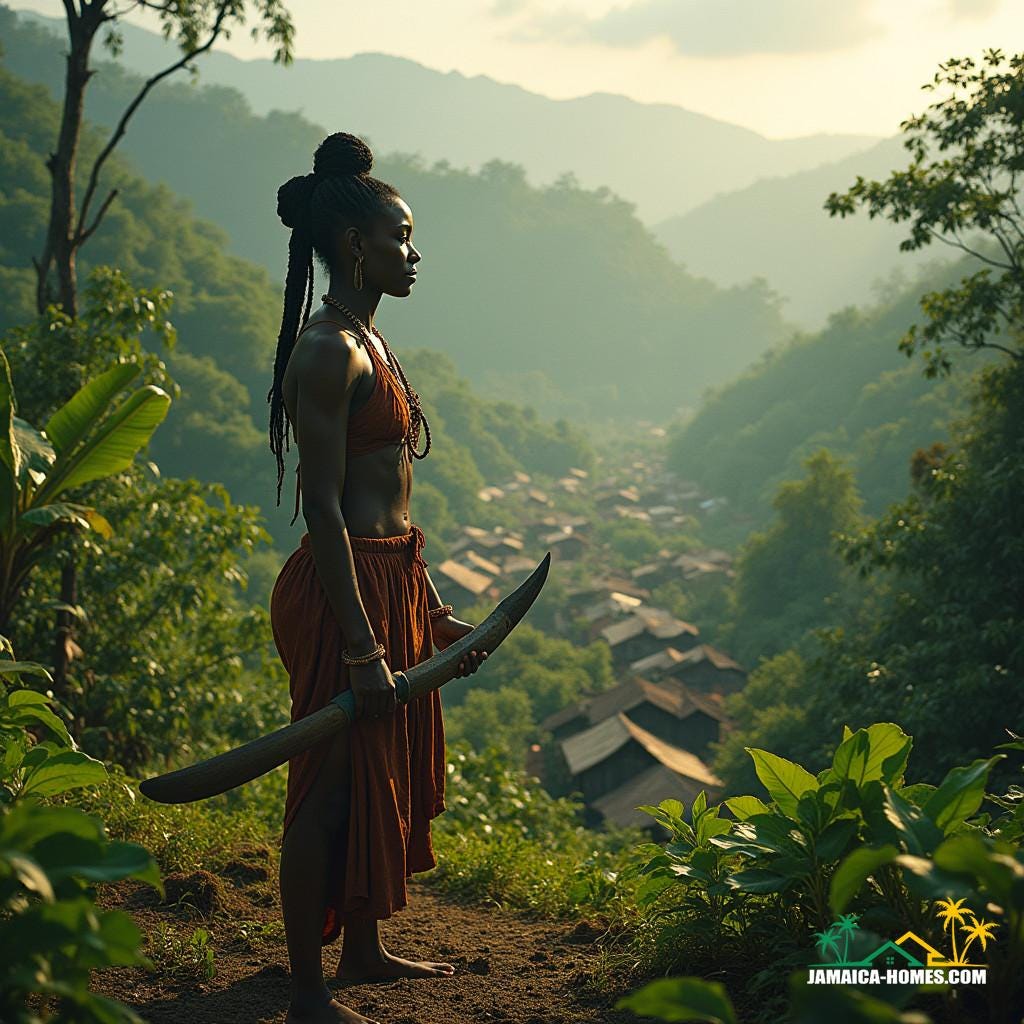
“Every building tells a story, but Jamaica’s architecture sings.”
Jamaica is more than beach and breeze—it’s a layered land where colonial shadows, maroon resilience, and modern ambition meet on the same square footage. At NYAM, we explore not just property—but the spirit of place. And few stories capture that spirit quite like the winding, defiant, and often poetic history of Jamaican real estate and architecture.
Let’s take a step back—before blueprints, before deeds, before gated developments and digital listings. Let’s talk roots.
Where We Came From: The Ground Beneath Our Feet
Long before the colonial conquest, Jamaica’s first “developers” were the Taíno people, whose settlements were woven into nature—no concrete, no sprawl, just harmony. Land was sacred, shared, and central to identity. That ethos was shattered with the arrival of the Spanish, and later the British, whose idea of land was less about home and more about ownership. Sugar, not shelter, shaped the land for centuries. Estates sprawled across parishes—places like Rose Hall and Good Hope bore the grandeur of Georgian architecture, but they stood on the bones of slavery.
After Emancipation in 1838, something radical happened: land ownership became a dream for the formerly enslaved. Tiny plots were bought, sometimes in cash, sometimes through hard-fought settlements—thus birthing the yam hill, a humble rise where a Jamaican family could plant food, raise children, and build a future. The “yam hill” wasn’t just farmland—it was freedom.
The Middle Chapters: Building Up and Reaching Out
The 20th century brought major waves. Urban migration swelled in the 1940s and 50s as Jamaicans moved to Kingston in search of jobs and opportunity. Trench Town, one of the first government housing schemes, was born not just of necessity but of vision. It introduced the concept of affordable housing to the working class, even if unevenly executed. Cement and zinc became symbols of survival.
Post-independence, architecture began to speak with a Jamaican accent. Designers like Veronica Campbell and Franklyn Bennett (not household names, but quietly revolutionary) began blending local materials, climate-savvy layouts, and Afro-Caribbean influence. Breezeways. Slanted roofs. Courtyards shaded by ackee trees. A new voice emerged—still echoing the colonial past, but refusing to be bound by it.
By the 1980s and 90s, gated communities began to rise in places like Portmore, Stony Hill, and Mandeville. Real estate became an aspiration, not just a necessity. “Owning a piece of the rock” wasn’t just patriotic—it was powerful. Still, the dream was unequally distributed. Informal settlements continued to grow alongside formal developments, echoing global patterns of urban inequality.
Today’s Landscape: Digital Deeds & Diaspora Dreams
Fast forward to today—where listings live online, virtual tours replace open houses, and the market is both local and global. Jamaicans abroad are increasingly snapping up properties back home—returning not just with remittances but with reimaginations of what a Caribbean life can be.
Montego Bay villas command seven-figure USD prices. Kingston’s skyline inches upward with new apartment towers. Eco-resorts spring up in Portland and St. Elizabeth, marrying sustainability with luxury. Technology has entered the chat—and it’s changing the game.
But in the noise, we hear an echo: whose Jamaica is being built?
Where We’re Heading: Soulful Sustainability and Smart Spaces
The next chapter of Jamaican real estate must answer that question with courage. The future is smart, yes—AI-driven platforms, digital closings, and 3D-printed homes are on the horizon—but it must also be soulful. Our heritage demands it.
There’s growing momentum toward green building, towards community-centric design that respects our environment and culture. The climate crisis makes this urgent. Architecture can no longer ignore the land; it must dance with it.
We’re also witnessing a return to roots—young professionals seeking family plots in rural parishes, investing in tiny homes, food gardens, and solar panels. The yam hill is evolving—but it’s not gone. It may, in fact, be the model for what comes next.
NYAM: More Than a Name
The word “nyam” in Jamaican Patois means to eat—to nourish, to consume, to live. At NYAM, we believe the land feeds us—not just through farming, but through identity, through shelter, through legacy.
Real estate in Jamaica isn’t just about property. It’s about belonging. It’s the home your grandmother built with her hands. The mango tree out front. The veranda where stories are told. The plot that helped a family rise from post-emancipation struggle to middle-class pride.
And now, it’s about future-forward thinking. It’s about ensuring that Jamaica’s next skyline doesn’t erase its soul.
So what’s next?
We build.
We preserve.
We innovate.
We nyam.
Welcome to the journey. Welcome to NYAM.